Investigating the federal budget blueprint promoted by the Trump administration of late certainly wouldn’t suggest candidate Trump had even the slightest populist inclinations, to say nothing of promising universal healthcare and a more relaxed student loan schedule. Serious policy analysis from various agencies and organizations declare his budget to be a sharp, deep kick to the solar plexus of the poor rural whites, a constituency which, according to Bloomberg, largely carried its bitter class enemy to electoral victory. Budget chief Mick Mulvaney assures us that all of this is in the interest of prioritizing the “taxpayer” rather than compassion for the recipients of soon-to-be decimated social programs; that is, as analyst Noam Chomsky cleverly puts it,
Tough love is just the right phrase:
love for the rich and privileged, tough for everyone else.
Notably, education, housing, human services (above and beyond the ACA repeal underway), and labor agencies will face erosion; among the biggest losers are
- the poor with cuts to food stamps, temporary assistance for needy families (TANF), and housing subsidies,
- children with cuts to the children’s health insurance program (CHIP),
- the disabled with cuts to social security disability insurance, contravening Trump’s promise to protect social security and medicare,
- women with cuts to healthcare and family planning services if they even mention abortion,
- college students with cuts to student loans,
and so on. Social security disability insurance is of particular note, as candidate Trump and traditional conservative dogma suggests rampant fraud. In reality, SSDI fraud occurs in no more than one percent of cases, despite a media campaign to marginalize the disabled and eligibility requirements more stringent than anywhere else in the developed world, tying with Japan, Canada, and South Korea. Though we could spend some time unearthing every ghastly, despicable policy choice and respective consequences to the population in what appears to be one of the most malevolent, destructive budgets offered by any administration in recent memory, I’d rather discuss the broader economic dogma of austerity, both in fact and in form, to which we’ll return.
A former teacher and dear friend of mine remarked recently that the costs of her health insurance, provided through the Texas Teacher Retirement System, are skyrocketing, “thanks to the Texas legislature [and those] who only vote on issues like abortion or bathroom use.” In fact, I need not look far among my own friends and family to find victims of an increasingly austere social policy, including retirees, disabled family members, and the like. It turns out that even those who supported Trump very much so will not escape unscathed, as suggested in earlier posts. Particularly of note to me are rare agency reports praising Trump’s budget : the conservative Heritage foundation dispatched their usual lockstep ideologues to praise slashing aid for the poor in the interest of meeting economic projections, bolstering the already grossly over-funded military in overestimating non-nuclear threats to our safety, and building of exceedingly costly walls along borders to protect us from the imagined terrorism of Mexicans. An analyst named Adam Michel, in admittedly what is a shock even to me, repeats the tired, heavily disproved supply-side argument that tax cuts increase revenue; some years ago, Neera Tanden pondered rather lucidly this seemingly immortal economic theory, if one can dignify it with a legitimate scientific label. Trump’s melodrama around corporate tax rates is particularly Quixotic, considering that the share of the federal budget funded by corporate taxes has fallen to ten percent over the last sixty years, according to Americans for Tax Fairness, and so many of the largest corporations pay no taxes at all. Speaking of Quixotic hysteria, Heritage complains that the military budget isn’t receiving a sufficiently large bump to combat our imagined enemies; we’ve discussed previously how military spending is mostly state capitalism, or transfer of public monies to corporations largely unconstrained by Lippman’s “meddlesome outsiders,” so we’ll leave it at that.
More troubling than the expected bias from Heritage is an op-ed I found on CNN by Douglas Holtz-Eakin, a former chief of the Congressional Budget Office (CBO). He concedes early that Trump’s budget is a mixed bag yet omits any specific criticism, rather defending the heavy-handed assumption that entitlements are out-of-control, and thus must be curtailed to support programs envisioned by the “Founders… as the actual responsibilities of government,” including security, research, and the like. That is to say, retiree pensions and programs supporting the vulnerable members population must be subjected to stark economic constraints to offer incommensurate support for Holtz-Eakin’s interpretation of what the government should be doing : pouring money into private firms for defense research, weapons manufacture, and so on. Though this catastrophizing around entitlements may seem isolated amidst a sea of negative analyses of Trump’s disastrous budget, it is in fact a persistent and essential feature of the austerity dogma, one tinging even more balanced critiques of his budget.
Austerity is an economic policy which mitigates national debt and capital shortages through either increases in taxation or slashing of government spending, usually social spending or entitlements. John Maynard Keynes, perhaps the most influential economist of the depression years and co-architect of the financial regulatory apparatus codified in the Bretton Woods agreement, famously quipped,
the boom, not the slump, is the right time for austerity,
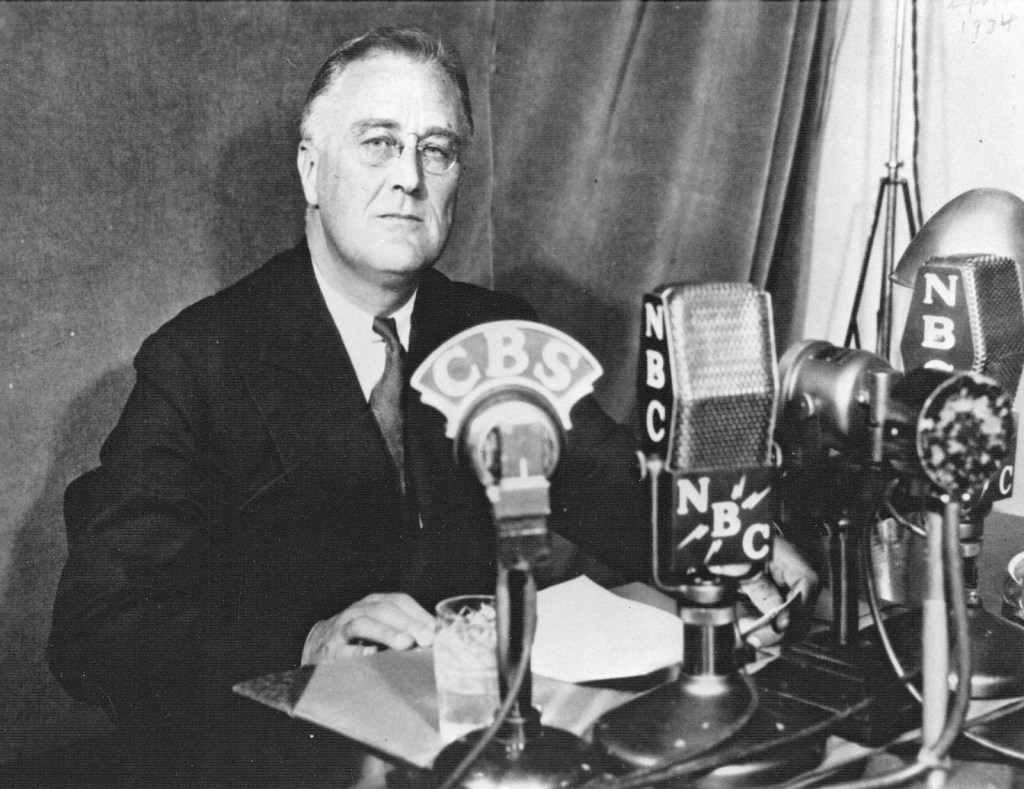
as discussed by political scientist Mark Blyth in his book Austerity: The History of a Dangerous Idea. As Blyth illustrates, nations have nonetheless attempted to implement austerity measures often at the wrong time, such as during recessions, depressions, and the like, often to cataclysmic consequence. On the more moderate side of error, Franklin Roosevelt implemented austerity in 1937, much too early in the Great Depression to salvage the meager restoration of money flow. On more extreme examples, we have starvation of third world nations through both transfer of debt from corrupt, undemocratic leaders to the unwitting population and neoliberal antilabor policies driving wages down and forcing migrant workers and farmers off the farms and into crowded factories with diminished protections and standards, as we’ve seen in Pinochet’s Chile after the CIA-backed overthrow of Salvador Allende, various Latin American countries through violent overthrows, Argentina, China under trade policy with Europe, Japan, and the US, Mexico under NAFTA, north Africa, and the like; Riad Azar discusses the uncomfortable relationship between neoliberalism and authoritarianism in many of these cases. Elites in these nations generally tell their populations that times are tough, thus we must all give up a little luxury here and there to cover debts. In the past forty years, we’ve experienced the same here in the United States; president after president has asked us to surrender more and more of the entitlement programs enacted under the New Deal, citing imminent fiscal meltdown and an absurd promise that somehow cutting taxes on the rich will more than meet the shortfall. Paul Krugman, economist at the New York Times, lambasted the theoretical support for austerity in an article for the New York Review of Books a few years ago, demonstrating flaws in the arguments of austerians and exhibiting data from the international monetary fund (IMF) demonstrating both the disastrous results of austerity measures in Greece, Portugal, and other European countries, and the low cost of deficits for nations capable of expanding their own currency, the USA being a principal example. So if so much evidence abounds weighing against austerity, why does it persist?
Krugman cites Andrew Mellon’s suggestion to President Herbert Hoover at the beginning of the Great Depression to
liquidate labor, liquidate stocks, liquidate farmers,
liquidate real estate...
it will purge the rottenness out of the system.
High costs of living and high living will come down.
People will work harder, live a more moral life.
Values will be adjusted, and enterprising people will
pick up from less competent people,
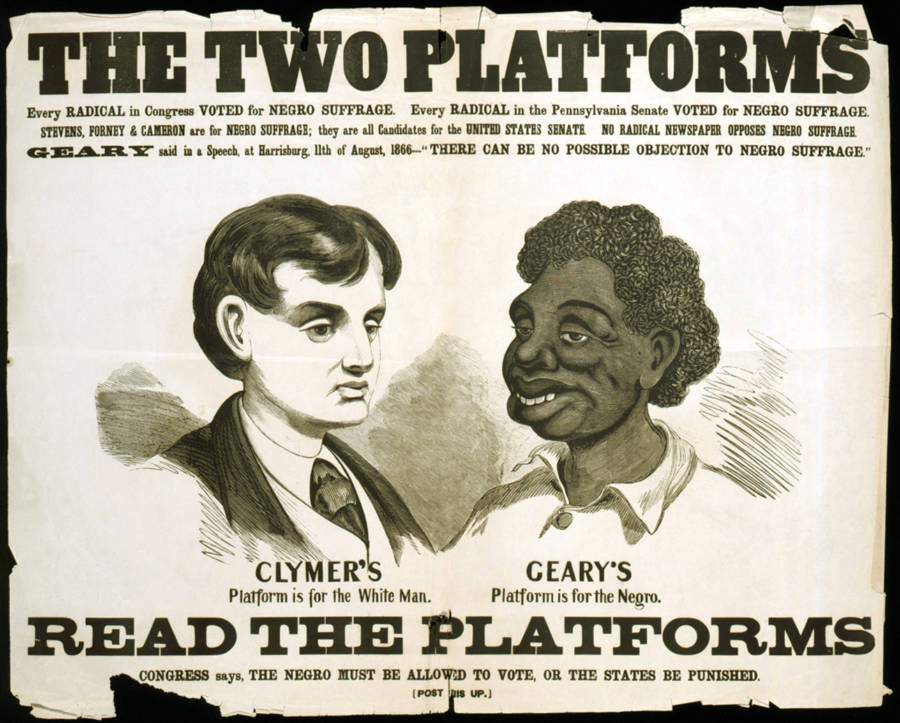
indicating a belief that the depression was a natural consequence of the largesse of the 1920s. Naturally his position among the banking elite of the day obscured from his sight that income inequality was stark in that roaring decade, rivaling today’s lopsided wealth distribution; the Americans hit hardest by the Great Depression were those farmers victimized by the Dust Bowl, poor city dwellers, and, of course, marginalized minorities, most of whom weren’t participants in the immoral ways torturing Mellon’s lily-white soul. Krugman cites this example, along with The Great Deformation, David Stockman’s multiple-page content-free rant against economic excesses, and others as the innate need for elites and others to interpret the goings-on of economics as a “morality play,” despite Keynes’ claims to the contrary. Austerians, Krugman contends, grasp at any opportunity to fortify their central thesis, expecting that punishment is in order to correct the moral balance of society. With even a cursory glance, one can find striking evidence of a desire to excise reliance on government services among Trump supporters, elitists, and the like: for nearly thirty years, I’ve listened to the Trump supporters in my family bemoan abuses to the system by black recipients of welfare, despite years worth of nonpartisan General Accounting Office (GAO) studies suggesting that most recipients of welfare are on the rolls less than two years, and those remaining are mostly elderly and children. Most seriously, entitlements intended to buttress the poor make up an almost trivial amount in the budget: food stamps alone account for maybe three percent, depending on how one counts it. Any analyst serious about cutting expenditures should tackle the most obvious offender, the military.
Krugman and Blyth offer an excellent critique of austerity within an economic framework, but my thinking is that the problem is actually far more elementary. As suggested earlier, military spending is an undemocratic transfer of wealth to corporations, somehow magically shielded from the harsh, requisite market principles applied to retirees, the disabled, and so on. A confluence of interests largely explain the pervasiveness of the dogma, including
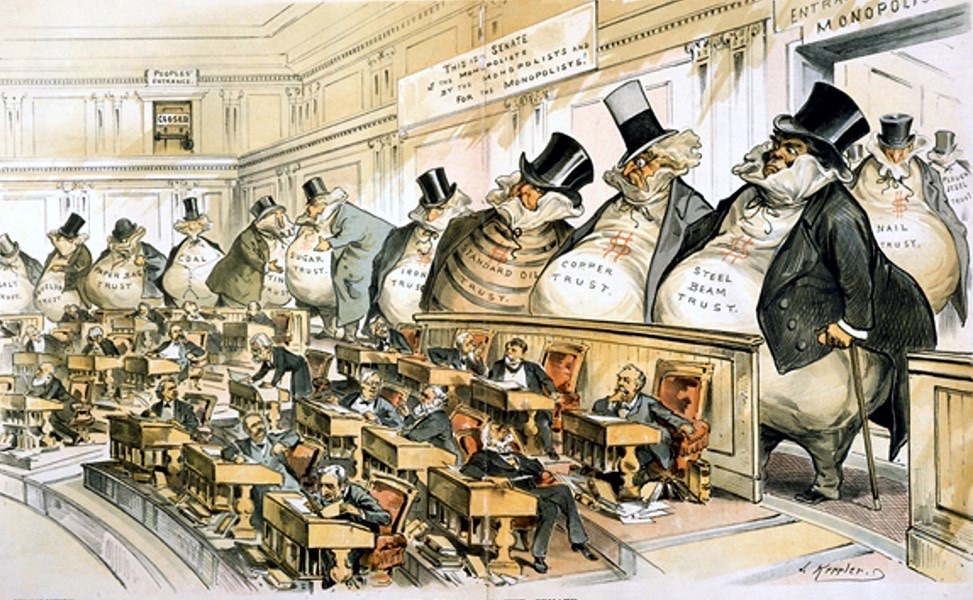
Circling back to Holtz-Eakin’s claim, even argued in the Washington Post op-ed included above, that entitlements will run out of gas in a few decades, I’m astounded by the almost cultish adherence to market ideology, which taken to its natural conclusion, leads to a key, immoral tenet of austerity : liquidity over livelihood. Human life apparently isn’t worth a balanced budget. In any case, I would argue that even without Krugman’s rather elegant take-down, the theoretical underpinnings collapse by virtue of sheer hypocrisy: somehow defense, very much overblown and over budget well beyond necessity, as repeatedly discussed by peace activist David Swanson, enjoys exemption from the natural law of markets, it would seem. Even more absurd is that avaricious financial institutions somehow earn special dispensation, such as a sizable bailout in 2008 following a crisis of their own making, to say nothing of the economic protectionism of the Gilded Era, the post-war years, and the Reagan years, discussed previously, and that the super wealthy should receive enormous tax cuts at the expense of social programs on the merits of the debunked supply-side thesis as they did in 1982 and 2002; somehow, we’re told, these unusual events perfectly harmonize with the inscrutable free market ideology. The alarmist perspective of extremists, the Republicans, (and some centrists, the Democrats) in our government holds that despite experiencing enormous growth in wealth over the past four decades, the top tier must receive more than those below, and furthermore democracy cannot overcome the natural order of market ideology. That is, once entitlements run aground as currently financed, there simply is no way to transfer monies downward, as this would violate the sacred natural order. No amount of votes or popular pressure should overcome this dastardly outcome, so naturally, elderly and disabled people, along with children unfortunate enough to be born into poverty, should simply suffer.
Frankly, only an imbecile would assent to these ludicrous notions. First of all, there is no natural law of markets, well-argued by Kerry Anne Mendoza. Second of all, there is no shortage of capital. To create the obvious analogy to hopefully emphasize this point, suppose one hundred people are marooned on an island without outside help and no way to escape, yet the island offers enough food and water to support these hundred people. Further, consider that by some fluke exactly one person on that island manages to control 90% of the precious food and water, yet since he’s unwilling to share even a crumb with his fellow inhabitants, a shortfall in the next year is a guarantee for the remaining 99. What law of markets or private property justifies the greed of one person at the expense of the others? To sketch the analogy further, suppose the other 99 inhabitants perform most of the work to accumulate the food and water over time, yet they cannot partake without his magnanimous permission. As outrageous and unrealistic as this may sound when the problem appears so concretely, it is precisely what we’re facing with the entitlements crisis. Compounding the lunacy of the hysteria is that money isn’t a precious, limited resource like drinkable water, breathable air, and consumable food stuffs; it’s a construct, or an abstraction designed to provide an intermediary exchange for goods and services, something which the US can expand and contract freely as it has since the founding of the Federal Reserve. And even without artificially inflating capital, there is plenty to go around. I’ll repeat, as this is crucial : there is no real shortage of capital. Unfortunately, there isn’t a surplus of morality and principle where most of this capital lives; in its place is a malignant, metastatic greed leeching resources and wealth away from the workforce and vulnerable recipients of these entitlements; I’m reminded of a quote by Martin Wolf, economic correspondent for the Financial Times, repeated by Chomsky,
an out-of-control financial sector
is eating out the modern market economy
from inside, just as the larva of the spider
wasp eats out the host in which it has been laid.
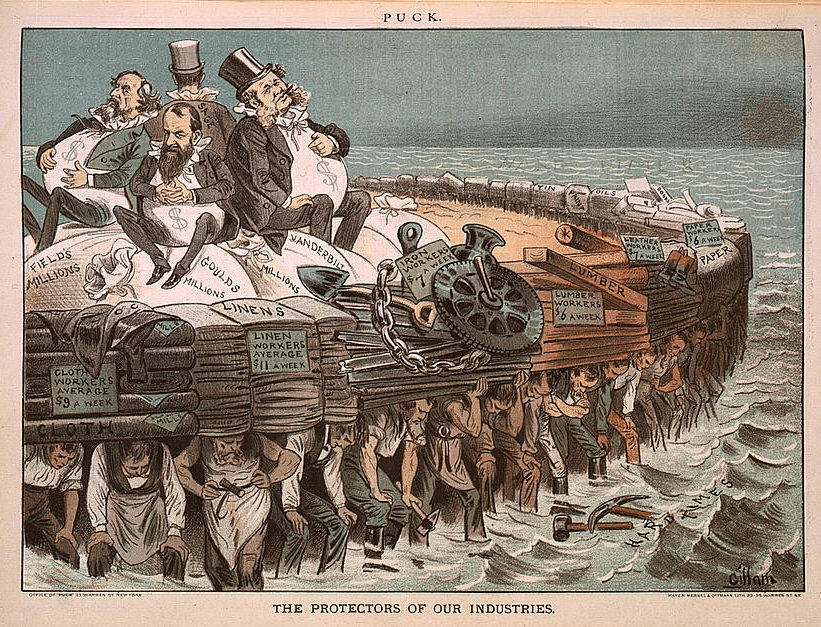
The irony here is the far-right hysterics’ fanaticism with apocalypse doesn’t seem to extend to the real threats : terminal nuclear war and ecological disaster; instead, I feel their motives are clear. Like those textile mill workers of 120 years ago, we can lament in this second gilded age
the new spirit of the age...
gain wealth... forget all but self.
We need not surrender now.





 Scire Populum et Potentiam