Pat’s Corner: Lessons from Hannah

September 10, 2025

To the Editor:

Since Hitler and Stalin threw the world into chaos and ultimately the deadliest of all wars, scholars have studied how democracies fail and autocracies prevail. The great pioneer in this field was Hannah Arendt, who fled the Nazi regime herself and devoted much of her career to explaining how good people can be convinced to follow evil leaders. As she noted, “The ideal subject of totalitarian rule is not the convinced Nazi or the dedicated communist, but the people for whom the distinction between fact and fiction, true and false, no longer exists.”

Please note: My argument is not that Trump IS Hitler, only that he is following the same pattern that an important field of scholarship has being describing in case study after case study for the past 80 years. 

First, wannabe autocrats turn political opponents into “enemies within” who must be destroyed, not just defeated at the polls.  (“You won’t have a country anymore;” “No one is safe;” “They’ll stab you in your kitchen,” etc.)  To weaponize fear and demonize opponents all such powermongers target the same people: the press, historians, lawyers, college professors, scientists, theologians, even entertainers, anyone who might help people make “the distinction between fact and fiction, true and false.” People unite against external enemies; they divide to combat “the enemy within,” (“radical left lunatics.”) For that, they will allow a wannabe autocrat to destroy democracy and assume absolute power based on fictional threats.

As Trump follows this playbook, most of us have pretended it is normal behavior for politicians or that it’s just a temporary challenge to our otherwise safe democracy or even that he is the hero of the hour.  He began his career on a lie (“Obama’s birth certificate is a fraud”), proceeded to undermine the integrity of elections (“The system is rigged”), convinced a segment of the public he will protect them (“Only I can save this nation”), and is now moving to consolidate his power.  It’s time to face the fact that this is not normal.

In times past, the Texans I knew were too independent minded to take orders from a wannabe dictator, but Trump has now demanded that our state “deliver” five more loyal Representatives by re-gerrymandering our congressional districts. Apparently because Democrats are “destroying our country,” our congressmen must represent Trump, not Texans.  Texas Republicans didn’t even pretend they were drawing districts to better represent our state; instead, they proudly declared they were manipulating districts to consolidate one man’s power to rule over us.  Trump even shamelessly declared, “We [not Texans] are entitled to five more seats.” Fiction trumps truth. 

As Hannah Arendt noted many years ago, the aim of autocrats “has never been to instill convictions but to destroy the capacity to form any.” Texas Republicans have just verified her political theory.

One Quarter Milennium and Cruelty Reigns Supreme

by Pat Ledbetter

It’s hard to determine which is the more serious threat to our democracy: Trump’s cruelty or his corruption. What is clear is his determination to destroy our 250-year-old experiment in government “of the people, by the people, for the people.” As constitutional safeguards against tyranny crumble, Congress becomes his cheering section, the Supreme Court his rubber stamp, and the Texas governor his accomplice. When power derives its strength from fear, anger, and hate (his favored tools) democracy doesn’t stand a chance; cruelty, is normalized, and corruption becomes business as usual.

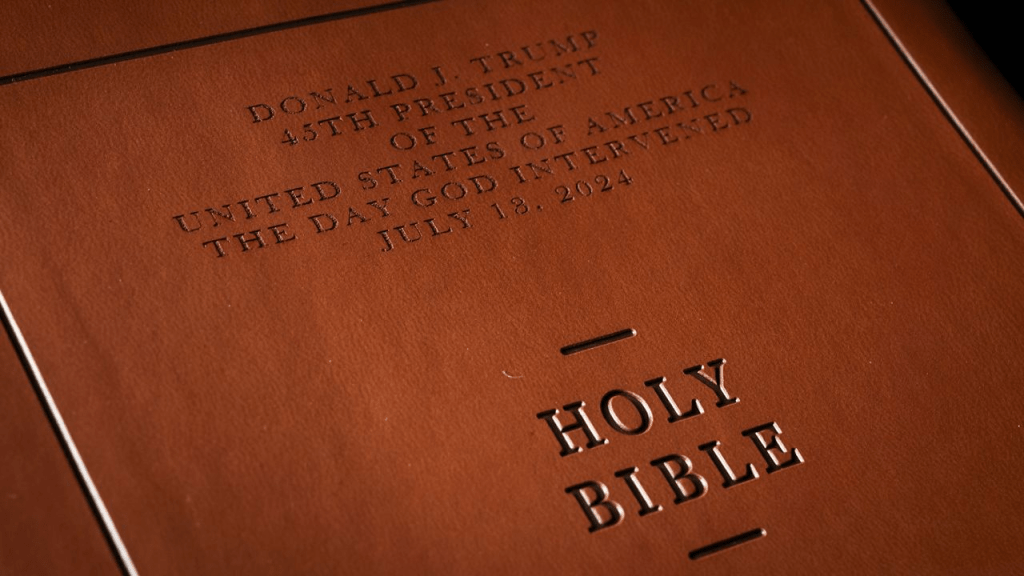
Trump began normalizing corruption before taking office when he announced his new family “business,” World Liberty Financial, and issued his meme coins, $Trump and $Melania, a sophisticated way to take bribes. (He has already made over $300 million in fees alone.) Once in office, he dismantled government agencies charged with regulating such schemes, thus maximizing further corrupt profits for himself and his new crypto friends.  Meanwhile, Don, Jr. is blatantly selling access to the president. For a mere $500,000 you can join his private club in Washington.  In case there is any doubt about what you are buying, the club’s name should reassure you—the Executive Branch. But if you don’t have that kind of cash on hand, you can still access his Trump-branded merch, everything from imaginary digital “collectibles” to Bibles and shoes.

If you are a poor nation like Vietnam, you can purchase a lower tariff rate by greenlighting a Trump golf course. If you are a rich nation like Saudi Arabia, you can curry favor by committing $2 billion of the nation’s sovereign wealth fund to his son-in-law’s real estate investment firm.  And the list could go on and on.

The corruption is bad, but I think the cruelty is worse. His campaign rhetoric began preparing the public to view cruelty as normal, even necessary.  When he told us immigrants are murdering and raping Americans, corrupting our children, and eating our pets, he made building concentration camps and joking about feeding them to alligators acceptable.  When he demonizes government workers as lazy, corrupt, and wasteful, our hearts are hardened against their tears over wrecked careers.  When he identifies reporters, government workers, college professors, scientists, lawyers, and, of course, all Democrats as “enemies of the people,” he appeals to the worst of our human instincts: fear, anger and ultimately hate. It’s easy to be cruel to those you consider dangerous. 

His tactics have given us policies that are both corrupt and cruel.  His “big, beautiful bill” takes from the poor to give the rich tax breaks. His destruction of USAID has already resulted in over 300,000 deaths, including many children.  His gutting of the IRS makes paying taxes optional for the wealthy, and his layoffs of Veterans Bureau and Social Security staff make their programs almost inaccessible. Even though 70% of the people oppose gerrymandering voting districts, he can simply order Gov. Abbott to redraw the Texas map to deliver five more lackeys to his Congress, and opponents are dismissed as a “radical left lunatics.”

The good news is that American democracy has been under assault in the past, but it has always been rescued by those who believe in its promise of “liberty and justice for all.” Our government was founded by “We the People” and, despite all efforts to the contrary, still belongs to “We the People.” The Civil War was a far graver threat than any we have experienced so far, and on the brink of that catastrophe, Lincoln reminded Americans, “We are not enemies, but friends. We must not be enemies. Though passion may have strained it must not break our bonds of affection. The mystic chords of memory, stretching from every battlefield and patriot grave to every living heart and hearthstone all over this broad land, will yet swell the chorus of the Union, when again touched, as surely they will be, by the better angels of our nature.” Still a powerful appeal and much better said than Trump’s garbled “weave.”

The Big Beautiful Nothins’ of the Illiterate Caucus

Before turning the post over to Pat, I would add here that the bill also contains provisions for defanging the judiciary in a petty attempt to further immunize Trump from consequences. MSNBC reports that republican house member Mike Flood admitted not even knowing about the provision during a testy townhall. They’re afraid to hold townhalls. My own representative Juan Ciscomani eeked out a victory here because of Green party votes diverting away from the democrat Kirsten Engel. It’s a moderate district, and Ciscomani promised on his website to protect Medicaid, Medicare, and Social Security. But he voted for the bill. One defection would have derailed it. Ciscomani won’t hold a townhall here. These folks ought form the Illiterate Caucus and farm out the heavy lifting to ChatGPT. OK, that’s a joke. What isn’t? An utterly mad ban on AI regulation by the states for 10 years. I’ll write a more expanded post on this later, but one can find great material with Gary Marcus, a technologist and thinker in this space.

Let’s get to Pat’s concerns, after which you can entertain yourself with San Fernando Red and his criminal misdeeds.

Pat’s Letter to the Editor

May 29, 2025

Which is more likely to kill a Texan: a violent immigrant or lack of access to healthcare?  I personally know at least three Texans who have died needlessly in recent years because they could not get medical care—I don’t know a single victim of an immigrant killer.  Yet we are in a state of near panic over immigrant crime while we complacently watch Congress gut our already limited healthcare system.  They spend untold billions to militarize our southern border (even though illegal crossings have been dropping for well over a year), while they recklessly fire the good people who keep our limited access to healthcare patched together as best they can. 

One sure way to stop immigration is to make America such a cruel nation that no one will want to come anyway.  Congress seems to be vigorously pursuing that goal with Trump’s “big, beautiful bill.”  They claim to be cleaning out “graft, corruption, and fraud,” but Social Security is already one of the most efficiently administered systems in the world. Only about .5 cents on the dollar goes to administration and the rest to beneficiaries.  Just try to find another system that can match that record!  But cutting workers while increasing workloads is a sure way to destroy it. 

For example, the way the Republican Congress plans to “save” on Medicaid is by enacting work requirements for recipients, adding a whole new layer of bureaucracy to an already understaffed Social Security system.  I don’t disagree with encouraging work, but we must demand evidence that the goal actually is to save tax money, not just to impose burdens on recipients that obviously can’t be met without staff increases.  The game seems pretty clear: When needy people drop off the Medicaid roles because they can’t get the paperwork processed, more money will be available to cut taxes for rich political donors. 

Texans could tell the rest of the country how this is working out because we already have work requirements to qualify for Medicaid. An adult Texan who is not elderly, pregnant, or disabled doesn’t qualify. Of my three friends who died under the Texas system, one had breast cancer but had to wait until she was old enough for Medicare to get treatment—the delay took her life; another had skin cancer that had eaten off half of his face but was able to work until it had advanced too far for effective treatment; and the third had a neurological disorder that caused such excruciating pain without medical care that he took his own life.  I’m currently working with a friend who has disabling epilepsy that could be controlled if only he could get the medicines he needs—I’m praying that I don’t see another Texan perish because of our broken system.

The average wait-time to get a Social Security disability claim processed is already over 15 months, a long time to wait for treatment.  Staffing cuts and newly imposed requirements will surely extend that time and kill far more people than the total number of murder victims in the entire nation.

You may think this won’t affect you personally, but we all suffer when the culture we live in becomes cruel and focuses entirely on saving money and redistributing it to the already wealthy.  If you take your Christian faith seriously, please contact your senator and representative and stop this moral decline.  America, in making her fortune, is in danger of losing her soul!

A Return to Gainesville

Returning to the issues of today has been overwhelming.  Last year, I suffered a health crisis nearly taking my life.  I’ve since returned to a better place, though I remain deficient.  So many issues are current and pressing, and it’s difficult to know where to begin.  The separation of children from their parents by Trump’s border gestapo seems in need of triage, though Trump seems to have understood that harming children isn’t a reasonable means of coercing cooperation from Democrats on the wall funding.  We could examine a myriad of issues, including North Korea, DuPont’s coverup of the dangers of teflon, Scott Pruitt’s $43K phone booth, the ongoing Mueller investigation and Trump’s repeated witness tampering, and so on.  But instead, I’d like to talk briefly about a journey I made recently.

Home Again

To support my best friend during a difficult loss, I returned to my hometown of Gainesville this past month.  Cathartic and lengthy, my visit permitted time to get a good look at how the city of my youth has changed in the eighteen years since I lived there, along with a reunification with my college history professor, Pat Ledbetter, faculty at North Central Texas College (NCTC), and my high school calculus instructor, E. Clyde Yeatts.  It just so happens that my twenty year class reunion transpired during the time I was there, as well as a town hall by Beto O’Rourke, Democratic representative from El Paso, and most recently candidate for the upcoming U.S. Senate election, pitting him against Ted Cruz.  I attended the latter, eschewing the former.  The town hall was lively and energized, though a fair amount of shallow, rally-around-the-flag banter and gladiator hero worship persisted.  I did manage to query Beto on economic issues during the question and answer, available around 50:00 or so in his recorded version.  The issues raised there, along with the drawn, sober look at my city of origin, are topical of this post.

IMG_1975

Beto, Piketty, and Income Inequality

My question specifically asked about the approach one might take in addressing income inequality, something we all understand, at least in the first order.  I referenced Thomas Piketty, the eminent French economist with rather dire predictions for industrialized nations with respect to the current balance of rents and labor.  In Capital in the Twenty-First Century, he describes an economic dystopia in which the super-wealthy need not invest in labor, as the return-on-investment (ROI) for capital exceeds that of material investment.  Put more simply, money by itself makes more money than any kind of investment benefiting the apocryphal middle class, so investing in manufacturing, science, health care, and so on, simply isn’t as lucrative as investing in real estate, credit cards, and the like.  Piketty describes this as a grim portent of political instability, as a larger and larger share of household wealth becomes inherited.  Once all capital is owned and controlled by heirs, the extreme poverty imposed on working class and indigent people reaches a breaking point.  It’s worth considering that fact for a moment.

The Role of Public Relations

Since the dawn of the public relations industry, sociologist Anne M. Cronin suggests that we’ve been told rather feverishly that occult forces, be it God, the market, patriotism, and so on require that we accept the station to which a would-be wizened corporate and political elite may assign us; it’s a kind of brainwashing, guaranteeing society-wide compliance in tyrannies historically entrenched.  Walter Lippmann said it best:

[t]he public must be put
in its place…so that
each of us may live
free of the trampling
and the roar of a
bewildered herd.

The framers believed this problem compelled the formation of a strong government:

[t]he primary function of
government is to protect
the minority of the
opulent from the
majority of the poor.

Edward Bernays, nephew of Sigmund Freud, spear-headed the wartime propaganda from within Woodrow Wilson’s administration by exploiting his uncle’s pioneering work in psychoanalysis to shape public attitudes.  As the great war ended, he recognized that these same mechanisms ought apply to peacetime attitudes as well; he successfully increased revenue for the American Tobacco Company after originating the “torches of freedom” campaign, a means of convincing women to smoke by equating the cigarette with a penis.  Subsequent to this and similar campaigns, Bernays emerged a superstar and corporate darling, fathering public relations, a watershed science capable of convincing very large numbers of people to purchase the unnecessary and ignore the uncomfortable.  These facts are public record, and they’re invaluable in partially contextualizing how my hometown has deteriorated since the post-war boom.

Gainesville, Boom and Bust

Gainesville prospered significantly following the second world war, benefiting principally by railways constructed in the nineteenth century and the intersection of two significant highways, one being I-35, an federal interstate running from Mexico to Canada, the other locally known as state highway 82.  Armco Steel and National Supply, steel and oil pump manufacturing companies, co-owned a plant where my grandfather and many other Gainesvilleans found employment.  The population dipped with the closing of the plant in the 1980s, and big retail became bigger retail, closing hosts of stores.  Thus, the Gainesville of my childhood was stagnant economically, and downtown rapidly became a series of vacant buildings and warehouses.  My grandmother recollected to me that municipal leadership of the town deliberately limited growth, though I’ve not been able to corroborate that.  Principal employers in the city were the local college, the independent school district, Weber Aircraft, and retail, grocery stores, and restaurants.  My mother worked for Weber for a couple years, but lack of jobs led my family out of town during the 1990s, though we returned for my high school years.

Gainesville Gambles, Floods, and Stagnates, Regressing Toward Trump?

In the years since I left town, the Winstar Casino opened across the Red River in rural Oklahoma.  Despite the pervasive religious overtones of Cooke County, its primary source of employment now is said casino. Crime rates spiked after my exit, though they settled downward in the decade to follow; a devastating Biblical flood struck the town in 2007, killing some people and destroying considerable property.

Is it possible many of the run-down buildings I saw in my recent visit were condemned after the flood?  I’m uncertain, but the demographics have changed, the poverty seems deeper, and Gainesville seems more dangerous to me.  On the other hand, some downtown stores have appeared, and there are places in town reminiscent of a more economically rich history.  In any case, should Gainesvilleans accept their station on the strength of the word of Trump or some other demagogue?  Considering that capital is more valuable than labor, the future is grim for a city with a quarter of residents living below the poverty line, per City Data.  A large number of toddlers and slightly older children fall into this category.   Eight-in-ten Gainesville voters selected Trump in the 2016 election.  This must include a large fraction of those quarter denizens below the poverty line.  With such striking numbers, I may very well know personally every person in Cooke County who didn’t vote for Trump…

Where Next?

To escape poverty and lack of jobs, many of us expatriated elsewhere; I also find the sharp support of far right politics reviling.  To that end, I found employment in the midcities, then Atlanta, and finally Seattle.  My good friend Pat Ledbetter, whom I’ll interview for this blog in the days ahead, mentioned to me that Texas needs “thinking people” now more than ever, and considerably moreso than does Seattle.  Though a permanent return to Texas isn’t on the radar, I do think it’s time to offer aid to my city of origin.  Beto’s campaign seems a good starting place.  He, like Bernie Sanders before him, refuses funding from PACs, relying on local and individual donors.  Perhaps there’s more to be done.  Pat, my former teacher Clyde Yeatts, and I will have to cogitate…