Satire guest post by P. Ledbetter, Historian and Professor
Our Great Leaders President Trump and Governor Abbott are doing an incredible job stamping out diversity, equity, and inclusion, but I fear they haven’t yet gotten to the root of the problem. To destroy evil permanently you have to rip it out from its foundations.
We are all aware of the America’s 1776 original sin—the Declaration of Independence. When the radical woke leftist Thomas Jefferson described all men as being created equal and endowed with inalienable rights, he imposed absolute Marxism on our young, unsuspecting republic. How could real Americans have guessed that even slaves and women would soon think that applied to them!
But most Americans are unaware that soon after we gained our independence the same leftist woke agenda got implanted in the Preamble of the Constitution itself: “We the People of the United States, in Order to form a more perfect Union, establish Justice, insure domestic Tranquility, provide for the common defence, promote the general Welfare, and secure the Blessings of Liberty to ourselves and our Posterity, do ordain and establish this Constitution for the United States of America.”
Let’s take a close look at that DEI language. “We the People” tragically started the woke idea of inclusion, and “a more perfect union” implies that our great Founding Fathers were not already perfect, an idea calculated to destroy future generations’ patriotism. The clause “establish justice” is obviously where the woke idea of equity comes from. “Insure domestic Tranquility” makes some stupid people think that true patriots can’t even storm the capital to overturn elections they don’t like. “Common defence” implies that the government should defend everyone, even radical leftists! Perhaps the most dangerous phrase is “promote the general Welfare.” We all know how that has been abused to further the dangerous idea that even poor children should be educated, and old people should get pensions and health care. Finally, that last clause extends liberty even to “Posterity”—talk about inclusion! That would include millions of people from all over the world!
With the Declaration and this Preamble, the woke movement almost immediately started the antislavery and women’s rights movements. The radical leftist Marxist Frederick Douglass even claimed the Constitution itself was an antislavery document! His extremism helped start the Civil War! Then things got even worse after the War when the noble South failed to stamp out diversity, equity, and inclusion. The radical left added the 14thAmendment with its woke language about birthright citizenship, even though everyone knew that the drunken, lazy, violent Irish were already poisoning our blood and polluting our gene pool. Under that Marxist Amendment, all kinds of people, even the Chinese and Eastern Europeans, got to call themselves Americans and thought that as “persons” they were entitled to equal protection and due process under the law (equity rears its ugly head again!)
Throughout the 20th century, the woke agenda made it impossible for children to get jobs in the textile mills and coal mines, encouraged workers to form unions, forced businesses to provide safe workplaces, broke up our cherished monopolies ,and demanded DEI even for African Americans—there seemed to be no end to their nonsense! To top it off, they created the Deep State that continues to tyrannize over true Americans, just to stop common sense from overturning their agenda.
Finally, With President Trump and Governor Abbott we have Great Leaders with good genes and common sense who recognize the evils of diversity, equity, and inclusion. If we can’t get all of the people with bad genes deported, maybe we can adopt Jonathan Swift’s “Modest Proposal” to get rid of them. As he noted, “A young healthy child well nursed, is, at a year old, a most delicious nourishing and wholesome food, whether stewed, roasted, baked, or boiled.” If we eat the children, as Swift proposed, we can bring down the price of groceries even as we get rid of the immigrant infestation!
I have finally worked my way through all 922 pages of Project 2025, every word, line, and terrifying paragraph of it. Because of its radicalism and unpopularity, Trump tried to distance himself from it during the campaign; now he is appointing its authors to carry out an agenda he is sure to claim for himself. I strongly recommend that everyone who is proud of “doing their own research” do what historians in the future will surely have to do: READ IT!
Its message can be summed up in three words: purge, privatize, and politicize, all with the purpose of establishing a government of billionaires, by billionaires, and for billionaires. After all, their right-wing think tanks wrote it.
Step one, the purge, depends on demonizing any opposition to the Project’s agenda. For example, climate scientists are dismissed as part of a dangerous left-wing conspiracy that must be eliminated from all federal agencies. As these billionaires know, data-driven studies can only limit their concentration of wealth and power. Likewise, all efforts to support diversity, equity, and inclusion or to give serious consideration to the causes and consequences of racism in American society must be purged. Such efforts threaten the authors’ social control and thus must be portrayed as the “enemy within.” Those who seek power always know how to mobilize fear of the “other” to divide and destroy opposition. This Project is truly a masterpiece in that long line of literature.
Step 2, privatize, is simply the continuation of a long-standing determination to redirect public funds into the pocketbooks of the super-rich. We have seen the failure of this approach with such public functions as prisons and social services. But this Project’s primary focus is even more dangerous than past efforts: Their vicious attack on public education threatens to destroy an essential foundation of democracy itself. Not only do they propose abolishing the Department of Education, but they also put forth a nationwide plan for vouchers to undermine publicly-funded schools and empower the billionaires themselves to direct all learning. They attack higher education as part of the left-wing conspiracy they blame for disrupting their power. Instead, the Project defends private, for-profit colleges that dispense “degrees” without actually educating anyone. According to the Project, these for-profit systems should be able to create their own accrediting agencies and establish their own standards without oversight. As they know, perpetuating ignorance makes people more susceptible to fear and thus easier to control.
Step 3, politicize, involves their plan to essentially repeal the Pendleton Civil Service Act of 1883 and return to the infamous 19th century “spoils system” (“To the victor belong the spoils”, i.e. government jobs). That system was a great way to create a powerful political party, but an inefficient and corrupt way to run a government. Now it seems the billionaires once again prefer a corrupt system where government jobs depend on political loyalty, rather than merit or expertise. The intent of the Project’s proposals is to create a “unitary” executive, a president with near monarchical, unchecked power. All significant government jobs (the so-called “deep state”) are to be appointed based on their loyalty to the president’s agenda. Note that demonizing government workers as the leftist “other” has become yet another way to mobilize fear in order to aggrandize and concentrate power.
In 1933 when Franklin Roosevelt declared, “All we have to fear is fear itself,” he was offering advice that remains relevant to every democracy in every age.
It happened because of our disbelief, not despite it.
It’s been some time since I’ve contributed to this blog–a long crippling illness has kept me running low, and I genuinely believed 2024’s election would go differently. If you’re reading this, it’s most likely that you will agree with me in my profound concern about the ghoulish fascism mooring itself on the national soul. Eight years ago, I wrote my first blog post in the wake of Trump’s surprise victory in 2016. The charter of this blog has been to explain, imperfectly, the complex ecosystem of people, power, and history. More concrete, my purpose was varied: to explain to my contemporaries and peers in high tech why such an event could happen and to connect with the activist community eager and willing to invoke needed change. I feel I accomplished the first objective by reaching many. The second led to friendships to activists working for change, like George Polisner and Noam Chomsky. Chomsky read my work, and now that we’re in what essentially is a post-Chomsky world, I would happily put on my own headstone that Noam would reply to my posts within 90 minutes. Today is his 96th birthday, and a fitting day for my post to appear. Whether decent existence still awaits us after this remains to be seen. I’m tired, aging, and vulnerable.
Despite the ubiquitous works of others whose importance and prominence outstrips mine, we have found our way back to a horrifying outcome. My tendency would be to offer compassion to the weary in dark times. A refrain comes to mind after I spent a few days with my college history professor over the week of election: it is because, not despite. What do I mean? The virulent madness spreads because of its suicidal march to extinction, not despite. On the other hand, we refuse to give up, because it is perhaps hopeless, not despite.
My Own History
As I’ve written earlier, I was raised in north central Texas in a moderate-to-conservative family. My birth father (whom I’ve not seen in 28 years) proudly wore his confederate flag-emblazoned shirt around town, and my mother struggled to better herself through education. He was a drunk who abandoned his children; she pushed us to seek a better life through college.
We were evangelicals, though my parents’ divorce in 1987 earned our family certified letters that we could no longer attend our Assembly of God home church. We sought spiritual matters through a few other smaller churches before conceding perhaps our souls were already lost. I say it as a joke since I don’t believe most of it these days.
A quarter century ago, I sat in Pat Ledbetter’s American history class 1302 to study Reconstruction until the 1990s. It’s rare that I can point to any one class which guided my adult awareness of the world, the wokeness, if you will (or won’t since woke is now a racist epithet belonging to the class nigger.)
I learned about American exploits in Cuba, Central America, Africa, the Middle East, Malaysia, and East Timor. I learned that Reagan, Nixon, Eisenhower, McKinley, Kennedy, and Johnson ordered their surrogates to murder, pillage, and plunder in far away places. I wept at these facts; we were raised to believe Reagan had restored the Christian dignity of America, yet I learned of the thousands of people murdered in Grenada, Nicaragua, the Congo, and Indonesia.
How could a nation of the righteous do these things to the rest of the world? The implication was simple in my 19-year-old brain: if America committed atrocities, and the righteous would not, then America was not righteous. This crushed me–I felt helpless rather than empowered, despite the many men and women who struggled to achieve expansion of rights and to civilize a species rife with misery and mayhem. The typical 19-year-old wants the quick and sometimes dirty solution. Well, enough said about that.
I learned later that doing is more important than being; despair undermines the operation by dumping the manure of cynicism all over us. But movement doesn’t happen without motion; it’s a soundbite, but sometimes they comfort.
During the 2000 election cycle, I convinced myself that most everyone studied the same history imparted to me. I was a fool–millions of people voted against their interests for a failed businessman with the presidential name. I believed people would never vote to restore to power the chickenhawks like Cheney, Rumsfeld, and Wolfowitz after their hijinks in decades prior. Of course, if the votes had been counted, Al Gore would have been president. The Brooks Brothers riot astroturfed the malcontents during the recounts–these were not locals with genuine concern around voting tabulation. They were staffers from the RNC. It isn’t that different from the thousands of Trump signs blanketing Tucson and other swing state cities. No, it was because rather than despite.
September 11, 2001 reworked the system. I cried that day, but not just for the Americans lost. I knew our history–I knew we would destroy the lives and families of millions as our lumbering military bungled its way through the Middle East in search of apocryphal bogeymen. And that is exactly what happened: an ineffective, easily manipulated leader eagerly donned his cowboy hat and spurs as he claimed a fan favorite of politicians–a wartime president. Now, mind you, Congress did NOT declare war on Afghanistan and Iraq. But they signaled they would fund whatever Bush 2 wanted. Or rather, what Cheney wanted.
Reshaped Government Roles
The grisly truth is worse. The legislative branch is supposed to be the sole decider in whether we march into war. At least, that’s what the founding fathers intended. But something happened at the close of World War 2–the first and last deployment of nuclear weapons against a wartime foe. Fat Man and Little Boy rearranged military might in a way unforeseen by the founders. Though some debate the necessity of the bombings, I believe Japan was defeated. They floated the idea of surrender, but the Allied Powers refused, just as Bush 2 would refuse to treat with the Taliban when they offered to surrender Bin Laden. You might think America dropped the nukes despite their horrendous consequences, but, once more, think of because. Truman chomped at the bit, even when Hitler balked at wielding power some physicists believed would ignite the atmosphere. The late Daniel Ellsberg wrote a great book about the existential threat no one ever mentions during election season. The point here is that Congress abdicated its war-making power as subsequent presidents of both parties launched aggressive wars against third world nations.
Since that time, it seems that every president receives his opportunity to set the “legislative agenda.” I might be old-fashioned, but it seems that we should rename the branches of the federal government if the president decides what Congress passes. True, he can veto whatever he doesn’t like, but unlimited terms for the legislators means they would rather abdicate their authority than take the fall for the inevitable buyer’s remorse many voters feel each time we do this again. The president can serve two terms (though Trump has insisted otherwise.) He becomes a lame duck in term two, so America can reserve its ire for him when circumstances deteriorate.
There have been several campaigns to consolidate power within the executive, with Project 2025 being the most recent to receive prominence. Unitary executive theory was a predecessor, as were the works of People for the New American Century (PNAC). They range in scope, with all advocating for a fascist transformation of the federal government and society itself. The fact that 77 million people would vote for such an outcome screams disenchantment and fury.
The system is broken, but not because the institutions have failed people–people have failed the institutions. Mitch McConnell was booed by the Trump thugs at the RNC, despite paving the way for SCOTUS to overturn Roe v. Wade and grant sweeping, jaw-droppingly absurd immunity to all POTUSes, current and past. Worse yet, he could have prevented this mess by upholding his oath to protect the Constitution: the Senate should have convicted Trump after January 6. Instead, he bemoaned the lack of accountability, despite shaping SCOTUS and refusing to press his colleagues to ban Trump from office thenceforth. Why did they jeer him? Because he spoke against Trump, despite playing power games sufficient to coronate Trump for all time. But that’s just it–kissing the ring once isn’t enough. And his inner circle has sheltered numerous allies now in jail for the rampant corruption they shared with him.
Trump Was and Continues To Be No Biden
In 2016, cock-eyed optimists with wispy straggle beards could argue that Trump might make changes to improve the outlook for the labor class. I heard arguments about his outsider-ness, his stubbornness, and his success in business. I knew none of those would serve American interests since he was a Thanksgiving table of government handouts in his business dealings, that he couldn’t back away from even the most indefensible position, and that he somehow could straighten the whole of the federal government by knowing nothing about it. His people started a flag-craze, erecting thousands of TRUMP and MAGA flags. I don’t remember anyone putting a president’s name on a flag to fly alongside Stars and Stripes. Despite my doubts, I started the blog to share my perspective on the forlorn, forgotten working class. I could understand that part of their intentions, even if the xenophobia and misogyny took the lead. I attempted civility, steering away from the baser insults all of us might feel.
For those four years, I blogged regularly on Trump’s escapades and the stories of many who stood strong against him. I don’t want to rewrite what I wrote, so feel free to look at past posts yourself.
Decision 2024 is different. We’ve endured a Trump term, and the policy choices during COVID alone rise to the level of boneheaded, chaotic blunders, if not “high crimes and misdemeanors.” Over one million Americans died, and many others, myself included, suffer with long-term consequences of the first run. Even if grandma and grandpa are expendable (and I heard plenty say so), the job losses were catastrophic in 2020. Those of us who paid attention to those ugly four years cannot deny how much worse our world was. Everyday was filled with insanity–he was vicious, cruel, incompetent, and a disaster. Kamala’s words will come back to haunt us.
Biden assumed as president in January of 2021, and he made enormous headway in both undoing the damage of Trump’s term and advocating hard for student borrowers, victims of gun violence, infrastructure improvements, and much more. Politico‘s article explains it well. His accomplishments include strengthening the CDC and hardening our response to future pandemics, passing infrastructure bills, working to reduce financial burdens on student borrowers, and presiding over an economic recovery. What did he do wrong?
Their attack ads originally focused on Biden’s age, despite Trump’s very clear cognitive decline. Or rather, because: Trump is easily manipulated with flattery, providing an opening to the greedy among his inner circle. One of his attorneys is already cashing in, selling administration posts to the highest bidder. Trump’s Caligula cabinet picks are so ridiculous, I won’t delve into the details here. It suffices to saw that national security and smooth access to government agencies will be longer term casualties in Musk’s war on America. Even the mainstream media paid excessive attention to Biden’s gaffes while ignoring Trump’s lunacy. After the attempted assassination of Trump, his supporters claimed that Democratic rhetoric was to blame. Nevermind Trump’s own violent diction, fantasizing in public about shooting Liz Cheney, executing immigrants, and jailing all his opponents. Nevermind that it was a Republican who tried to kill him. Nevermind… Ah, whatever.
The point I would make here is that Trump is NOT an unknown quantity this time. We know what his years were like, and several million people stayed home on election day rather than help choose the first woman president. She, like Biden before her, would play with everyone, not just her friends. She didn’t lose because she ran her campaign badly–she articulated her plan well, she was civil, and she was the sole major candidate to treat with the Republican’s central issue: immigration. She was a prosecutor–law and order conservatives should have cheered this. Instead, they chose a convicted felon who stole and imperiled national secrets, who attempted to overthrow the government with violence, and who attempted to change the outcome of an election he didn’t like.
Trump supporters had ample evidence of the harm he could unleash. They chose him in any case, and it means America failed that class and we have to take it once more. I never believed Trump would shock and awe his critics into joining his cause. Does that mean I am among the “enemy within” Trump promises to eliminate with the military?
Aiming to create high tariffs (critiqued by Biden) against countries with manufacturing bases far outpacing what’s left of America’s semi-skilled infrastructure
Spreading lies about immigrants such as accusing Haitian refugees in the heartland feasting on dogs and cats (Vance conceded the lie by suggesting that the media yearns for false flags to talk about issues true to the American people… Confused? Yeah, me too)
I could list more, but I think it’s better to leave my past posts as a testament to his many failings; they are numerous like the stars in the heavens and fleas on a dog. It’s important to take a step back to consider his campaign “promises.” Tariffs and ending illegals’ stay in America will wreck the financial market and cripple the consumer base. The point I would make here is that his plans aren’t really plans at all, and his supporters who scream about it don’t understand the first thing about them.
Localizing the Effort
Rather than learning about how things work, Americans stew and seethe in crippling anger. Pew and other polling organizations have reported this for some years now. What is new to me is the degree of hoodlumry even in the very nice neighborhood I call home in Tucson. Signs blanket-astroturfed Tucson drawing inane comparisons: Trump=Low Prices, Kamala=High Prices, and the like. I thought voters were smarter. My physical limitations notwithstanding, I placed $200 worth of Harris/Walz signs on the two thoroughfares near my home, and they were stolen and defaced within 24 hours of their placement. Keep in mind this is a 60 Blue/40 Red spot in Tucson, yet a thousand or more Trump signs went up. Some of those were stolen, but ALL of my signs were destroyed. These aren’t brown hoards rushing us from the border–they’re middle-aged and older white men (like myself) who think nothing of tearing up another’s property and right to speech. Kelly and I replaced the signs on two occasions, and we were met with harassment and derision by some of the passers-by. Though I voted by mail, an elderly friend of mine needed to vote in-person, so I drove him there. In the fifteen minutes I sat in the waiting area, conspicuously MAGA folk appeared to harass the poll worker and pull others around them into the grand show of it they were putting on. Again, these are white men. Grown narcissistic men with nothing better to do.
In the five years since moving to Tucson, I’ve experienced only a few instances of crime committed against me. It was almost always a white man (once an old white woman), NEVER a brown illegal or trans person or bloodsucking schoolteacher with designs on your kids or whatever else gives these people nightmares. This is anecdotal, but it’s very much worth pointing out.
Tilting at Them Thar Windmills
I visited my hometown Gainesville in Texas around the election to be with a dear friend in the hospital. In the years since I moved away, a few windmills have sprouted northeast of town. And what attempt at green energy would be without the hysterical signage of fools afraid of it? But I was immediately struck at the utter lack of political signs anywhere in town. Of course, it’s a safely red district, so the Musk/Ramaswamy/Koch money machine didn’t direct their deepfake signs there. But there were a few choice markers, like one deriding Tim Walz as a klutz. My brother Robin often bemoans that there are few things “to put one’s back up against” anymore–it used to be that Republicans would delight in a candidate retired from the military over a draft-dodger like Trump, but it is no more. They swing at everything, including the constituencies they once praised. In my hometown, they posted a billboard of Walz with the word “KNUCKLEHEAD” painted beneath him. To be clear, Walz has much more in common with my old Gainesville than Trump or even Vance. But is this a surprise? Trump ridiculed John McCain, a man who once meant something to Republicans. It’s now just power lust, feral, aimed at everything, and bent on domination.
The numbers are interesting: Harris received roughly 74.5M votes to Trump’s 77.0M. In 2020, Biden received 81.3M to Trump’s 74.2M. When adjusted for the growth of the electorate, neither party scored as well as they did in 2020. Trump came closer with an increase of 3.7% voter share, but this still lagged the 5% true growth from 2020 to 2024. What does it mean? The 2024 election simply attracted many million fewer voters than did the event four years ago. A narrative frequently pushed by progressives is that if everyone voted, we would win. At the least, this year’s election affirms this. 66.6% of the electorate voted in 2020, versus 63.7% in 2024. The raw difference in the electorate was 12 million, but the difference in voting blocks was 4 million, down from the 8 million required to meet 2020’s same percentage. True, these are the sorts of facts we progressives claw and pick over to find that one thing we can safely place our backs against. If anything, it underscores the lack of a mandate for the Republicans (and they have failed to earn a majority of votes cast since 2004.) But the ‘winner-takes-all’ feature of our system assigns power to the winning side with little power resting with the losing party. In other words, Trump, as has been true in all elections with him at the top of the ticket, will rule as if he received a majority of the popular vote. Both Biden and Obama, by contrast, won with majority popular votes.
It’s worth taking a moment to look at deltas one cannot obtain without painstaking data entry. First, I computed the number of votes lost from 2020 to 2024 for each state and party. Second, I determined the number of votes needed to flip a state from red to blue. Finally, I calculated the share of lost votes needed to accomplish that change. The states where this was even possible appear below–the hill was a little steep but quite possible. The conventional wisdom that Democrats win if more people vote does seem to be correct.
It doesn’t affect the pragmatics one wit–Trump will govern as if a supermajority of Americans wanted him. He barely did better than his previous outings, succeeding because millions didn’t vote. The challenge for minority rule is treating with the disenfranchised. More people voted for Hillary in 2016 than Trump, but our voices were more than just stifled: he delayed aid to California during wildfires (and he promises to do worse the second time around.) The real problem is that Trump is crazy, and if others tell him that he won, like the perpetual victim Kari Lake, he finds himself needing to believe it. It’s part of the myth-con.
But with the good medicine comes the bad: Trump’s hold on sanity is gone, along with any hope that the two coequal branches can place him in check. The billionaires backing him are in agreement with Harris: Trump is weak and easily manipulated. He’s already picked a grab-bag of cabinet toadies claiming they’ll do his bidding, though the real litmus test requires them to shower him with praise. His choices are inept and reckless: they don’t know the first thing about leading an organization of any kind, let alone a federal agency. The ensuing chaos will suit Trump to a tee.
Speaking of billionaires, it’s worth mentioning that Elon Musk’s embrace of all things Trump following the assassination attempt last summer didn’t mark the off-the-deep-end moment for the world’s richest person. In the past few years, he’s made increasingly crazy statements, fueling his promotions with his wealth and a folk-hero status to the technocrats. He is a splendid example of the danger of believing one’s own press: he’s the richest person, so he must know what he’s saying. No, he is insane because of his wealth, not despite it.
Narcissist Musk tilts at them thar windmills: destroying Twitter in the name of free speech, enforcing illegal and hazardous constraints on Tesla workers to make the otherwise unprofitable business viable, and fighting literally dozens of suits brought by states and the federal government for workplace violations while executing and bankrolling dozens more suits against his enemies. His true skill is playing the Machiavellian, arguing for his own First Amendment while blasting others for speaking up. He and DEI-foe Ramaswamy plan to destroy the civil service, replacing it with workaholics who faint after 12-hour shifts. Good luck finding that.
Musk’s insanity makes him a true enemy within, an immigrant playing cuckoo bird as an innovator and savior to humanity. He has, like Rupert Murdoch before him, invaded our country on a quest to hollow us out from the inside. Vance is another cuckoo, claiming an Appalachian homespun origin while attending ivy league schools. Like George Santos, he has learned the Roy Cohn art of saying whatever is necessary to win.
This is a pattern: Trump’s inner orbit attracts the same sort of myth-conning that has propelled him to the presidency now twice. RFK, Jr. fits the bill–he’s unscientific, narcissistic, and just plain nuts. He believes vaccines cause autism, that wireless tech causes cancer, and that COVID is a conspiracy against whites and blacks designed by the Chinese. Jesus, I don’t know what else to say. He will lead the FDA.
What more? A wrestling exec will lead the Department of Education, a news host the Defense Department, an NFL alum the Department of Urban Planning, another news host the Department of Transportation. Ugh, never mind. Bob Woodward squinted as hard as he could to find the micron of optimism, but he’s since changed his mind.
Woke and DEI to Blame?
And we mustn’t stop there: Harris’s defeat led pundits to proclaim the death of wokeness, blackness, diversity, and inclusiveness. Maybe Harris’s blackness and woman-ness kept people home, but I don’t think so. It takes genius not to see it, to quote Chomsky. One would never say that a cancer survivor losing an election means that we can’t treat cancer anymore–such a fool would be laughed right off the soundstage.
Blaming wokeness for Kamala’s loss is no less idiotic than blaming oncology because a cancer survivor loses an election.
It comes down to the narrative that Trump’s supporters pushed from the beginning–he’s better with the economy. People are tired of paying more for less, despite the requisite cycle to recovery from recessions. Allan Lichtman and his keys predicted Harris to win based on indicators that should have been in her favor. I believe the true culprit is in the “doppelganger” world I described a few years ago. Naomi Klein wrote a book of the same name last year. Information is asymmetric, preselected by unaccountable algorithms running in social media platforms. People genuinely believe that the immigrant crimewave is real. They believe trans people are perverted men wanting to push their way into women’s sports and bathrooms. They believe DEI initiatives undermine the fabric of business and family. They believe immigrants are roasting America’s dogs and cats. How does this happen? Why do people believe these things without actually seeing them happen?
I think it comes down to a very human need to manage anger and despair. People know eggs cost twice as much as they did four years ago. They’re angry that the rich continue to get richer while everyone else pays more for less. Trump’s backers know this all-too-well, and refocusing extant anger is propaganda 101.
DEI is an enemy for Ramaswamy and Musk: in the latter’s view, it is discriminatory. Of course, these are not data-informed positions–they’ve fallen for a gimmick as old as civilization itself: conflating rare, good fortune with wisdom. Money is the thing that matters to Trump in any case.
Musk has given us plenty of samples of his inner workings, threatening federal workers and anyone he perceives as the enemy. It turns out that he’s also quite stupid, targeting employees who work on ecological diversification rather than diversity and inclusion. No matter the brain rot gnawing at him, his tactics mobilize Trump’s brownshirts to drive these people from their homes. The DOGE (department of government efficiency) promises to purge the civil service of practically all expertise, with half-wit loyalists prepared to take up residence. It is a grim portent of what Trump’s second term promises: cruelty and vengeance.
How Goes the Myth-Con?
Rallying otherwise decent people to do evil isn’t new. As we’ve observed before, totalitarianism begins not with a twirling mustachio and his manifesto to do harm, but rather a white knight claiming to want to save those decent people. The most tyrannical regimes in the world invoke their authority from democracy, divinity, and freedom. They don’t appear in the shadows, twirling their mustaches. Except when they do: Trump isn’t popular, nor has he ever been. But he is a hero to his ardent supporters. While visiting Phoenix, I came across a lot with twenty or so American flags, together with a poster of Trump which canonizes him by the two impeachments and one assassination attempt. (This replaced a “Let’s Go Brandon” flag this brain trust flew over his house.) In other words, the bad guys wanted Trump gone, so that means he’s a good guy. I call this the myth-con. He is deified precisely because of consequences deriving from the response he’s coerced from others.
Like Hitler before him, Trump’s attempted assassination was carried out by a rightwing gunman who snapped. His surrogates were quick to blame the Democrats and their rhetoric for the attack, despite his very, very long history of ratcheting up violent threats. He even went so far as to threaten Liz Cheney’s life by firing squad. She voted with his bloc over 95% of the time, but resisting the rise of fascism is just a bridge to far.
To be clear, the conservative chicken hawks of yesterday are to blame for Trump, even if they decided he was bad news later on. Karl Rove, Donald Rumsfeld, Paul Wolfowitz, Dick Cheney, George HW Bush, and many others sought to radicalize the federal government through their Congressional allies and, of course, the figure-heads George W. Bush and Ronald Reagan. Former Republican strategist Stuart Stevens says this was always the core of his party’s intent. I remember the Bush administration destroying careers of CIA Agent Valerie Plame and her husband Joseph Wilson because the latter opposed the war in Iraq in his capacity as US diplomat. The release of her identity imperiled her contacts, but we already know that the fascist calculus demands total obedience. Though Scooter Libby took the fall, it’s possible the conspiracy rose all the way to the vice president’s office.
I don’t remember believing it was as consequential as the millions displaced and murdered by Bush’s illegal wars in Afghanistan and Iraq, but it demonstrates a hatred even for the sacred cows who oppose the feral party. Trump (the draft-dodging crook) belittled John McCain (the veteran and tortured POW), despite the military sitting atop the conservative pantheon of what is good and right. McCain died, and his Arizona voted Trump back to power in 2024. The myth-con requires key ingredients: the gladiator struggles against a corrupt system with nothing less than divine calling to save the marginalized and disaffected from aggressive hoards. Hitler had his Jews, Trump has his Mexicans.
Let’s take these ingredients: Trump is a gladiator. He swings at everything because, not despite his moral and personal failings. The system is corrupt: Americans know that the economic order is unfair. Many work hard, few receive rewards. For years, they’ve paid more for eggs and gasoline–though these aren’t the only metrics of value, they’re enough to enrage ordinary people. The white working and uneducated classes are deeply disaffected–DEI and wokeness appears to benefit brown women, and that bothers them. Jordan Peterson and Joe Rogan tell young white men that they’re victims, too. Because they’re already unhappy, it’s easy to blame the deepfake hoards pouring across the border. Immigrant crime is almost nonexistent, but social media locks people online by triggering the most powerful emotions. They decide that the Haitians eat American pets because they’re angry about longer working hours with less pay, and the regressive sales tax that is inflation. The “otherness” easily depicts the Democratic choice–she’s a black woman. Never mind that she ran one of the most conservative Democratic campaigns of the past fifty years. The myth-con can succeed on the strength of well-intentioned pollsters and pundits who play to the state narrative, as you can see in Bill Maher’s recent interview with Jane Fonda. Rather than admit that Trumpism is avarice and bigotry, his surrogates would insist that Kamala is for “they/them”. Biden was more openly pro-LGBTQ, but he’s an old white dude with a good Christian name.
The myth-con can succeed on the strength of well-intentioned pollsters and pundits who play to the base narrative.
The last ingredient is actually the hardest for me to understand: the divine calling. Trump himself claimed that God saved him from assassination so he could save the country. I would argue that people believe lionize Trump despite his cruelty and utter absence of morality. But I believe, like my history professor before me, that it is because of these things. Fanatical apologists believe he will repair their faith in decline. Others call him King David, Jehu, or Moses: his failings are the reason for his deification. Trump’s appointments to SCOTUS overturned Roe v. Wade, a long-sought event celebrated in most quarters of conservative Christendom. It doesn’t matter what Trump says or does. Abusing women, paying porn stars, and elevating to powerful positions the most corrupt among us augments rather than diminishes him in their judgment.
It’s unfocused, raw anger. And they’re easily manipulated, like Trump himself. All the ingredients are there, despite much of the mess following Trump’s botched COVID response. But there’s no taste for thinking things through, as disappointing as it is. Even mainstream media fails spectacularly in hitting the salient points hard enough. They announce dispassionately that Trump will seek revenge against his many real and imagined enemies, as though this is normal. Ignorance seems necessary for a demagogue to ascend. Ladies, gentlemen, and everyone else: we’ve been myth-conned.
The how of the myth-con is pretty clear. But why do this? Is being the richest man in the world insufficient for Elon Musk? Can Trump not just enjoy his last years with adoring mobs and merchandise? No, and no: no amount of money will ever satisfy Musk, and nothing short of the throne is good enough for Trump. It is because, not despite. Trump learned long ago from Roy Cohn that leaning into the accusations is the way to beat them. Bob Woodward said in 2020 that he didn’t believe Trump knew the difference between fact and fiction. I would tend to agree–Trump just emits shit, and his lapdogs scarf it down. They twist and twirl to keep it pieced together, but the whole of it will fall.
But Why? For God’s Sake, Why?
When my grandmother and her older sister were growing up in Oklahoma in the 1920s and 1930s, they fought from time to time, as children often do. But there was a sharp difference between their respective tenors: when her sister was angry, she broke my grandmother’s toys; when she was angry, she refrained from it. Her rationale was, “I knew we wouldn’t be mad later.” That is, for anyone who cares to know, perhaps the biggest difference between the two political parties in America. The Democrats play to the mainstream to get work done, while the Republicans obstruct and destroy when not in power, then grasp and claw once they persuade the electorate that the Democrats are responsible. Don’t believe me? Mitch McConnell wasn’t the first obstructionist; one can go back to the 1990s for the shitshow that was Gingrich’s Contract with America. Clinton was as close to a classical Republican as we’ve had in that office since the Reagan years, and they still spent years investigating and slandering him. Many of those same hyenas are still in Congress, and they think Trump’s actions are just fine.
Soon, we won’t need the Republicans to break all our toys–catastrophic climate change and nuclear proliferation remain the two greatest threats to our biosphere with no coherent mainstream message.
But it isn’t satisfying enough to say that they’re rotten apples–we progressives often strain to find the silver lining, that one explanation or motivation that can save their souls. But I’ll say it here–my grandmother’s sister was just plain bad. Sure, she was mentally ill (probably schizophrenia), but she was monstrously abusive to her daughter. Long after her sister’s death, my grandmother felt for her. She was charitable in that regard, even when it was repaid with viciousness.
Soon, we won’t need the Republicans to break all our toys–catastrophic climate change and nuclear proliferation remain the two greatest threats to our biosphere with no coherent mainstream message. The former dwells only in the minds of thinking people, utterly disregarded by Trump and his flunkies. But I believe the Rupert Murdochs and the Elon Musks have surrendered hope that this world can be saved. But I’ll repeat it: if the world cannot be saved, it is because rather than despite their unbelief. The money Musk dumped into Trump’s war chest could have been spent solving rather than creating problems. The billion dollars spent on the election itself could have fixed a plethora of issues throughout the world. Instead, that money finds its ways into deeper pockets.
Taking Our Lumps
As I said earlier, I’ve tried to explain the outcomes precisely because I am a progressive–I want to believe that there is redemption for the wicked. But the 77 million people who chose Trump, along with the 50 million who refused to vote, know now what they’re getting. For another term, we will contend with lawless chaos with an even sharper edge. The evangelicals who selected a sex offender can kneel at all the crosses they want. The attack dog brownshirts answering Trump’s call to chase good people out of their own homes can gush at the flag and praise law and order as they step on Capitol policemen’s faces. SCOTUS has assured Trump everlasting immunity, and therefore he has nothing to fear. I wish I could say the same for us.
Is there a next move? Biden is thinking of pardoning Trump’s intended victims–that isn’t the reason the president has this power, but it exists to permit him the opportunity to cure legal failures. The usual folk will oppose Trump’s batshit crazy agenda. Musk will help him weaponize the soon-to-be-gutted bureaucracy to isolate and eradicate enemies. The House once more voted to supply the president with unilateral power in classifying nonprofits as terrorist. With AI tools, they plan to eliminate the “enemy from within,” or the ordinary folk French revolutionaries claimed to represent, even as they killed them during the Reign of Terror. Obviously, opposing the use of unaccountable technology will become a staple. The one silver lining I can find in all this is that Trump’s lone contribution to any enterprise is the sowing of discord and chaos. It might be difficult for him to execute an agenda while riding the highs and lows of dementia and insanity. But I’m running low on hope. I’m aging, ailing, and grieving.
Are there steps forward? Yes!
Read about American history. Zinn’s A People’s History of the United States features many ways forward, none of which are secret. Labor unions, solidarity, and mutual support make it possible to build strength.
Listen to sensible sources of information. Timothy Snyder, Robert Reich, and Amy Goodman supply that, along with inspiration and wisdom. The day is dark, and though cruelty seems to have won a major victory, people can surprise us. But it isn’t enough to just sit and wait for the world we want–it requires dedication and very hard work.
Kick nihilism to the curb. I was once told by a brother that kindness to a person with terminal cancer was a waste, because, “He was gonna fucking die anyway.” I disagree–that’s when we have the opportunity to show the universe who and what we are. Candles burn brightest in the darkest spaces.
Education is a categorical imperative. Learn all you can. The generative networks used to cheat on homework and manipulate users will drain brains everywhere. You’ll be rare as hens’ teeth if you know anything about anything.
Talk to each other. People will surprise you if you give them a chance.
Protect each other. Stand in solidarity with trans, immigrants, women, blacks, gay people, elderly people, and, well, people.
Strengthen education. Generative AI has hurtled us closer to educational bankruptcy. It is unaccountable and dangerous, designed principally to retain platform users until they convert (buy something.)
Do NOT fall for the myth-con, no matter who promotes it. Take sociopaths at their word.
Love each other.
This will be my final post for a season. I’ve spent considerable time researching and writing, and though the work is far from finished, I’m exhausted. I will still be here, so don’t feel as though you can’t reach out. I hope for better health, a return to my career, and a better world. Because, not despite.
Heading into the forthcoming midterms, I’m unhappy. True, as anEsquire article by Nate Silver published in 2009 reminds us, presidents’ respective parties tend to suffer defeats at the first off-season biennial realignment. And it doesn’t matter whether the president did a good job in those first two years. Nonetheless, no matter where I turn, I’m bombarded by hysterical calls to action on my cell phone, in my email, on bumper stickers, and in every spare bit of roadside desert. Many could make the cut of Trump’s Twitter barrages:
Stop Critical Race Theory
Empower Parents
Mark Kelly wants Open Borders
Katie Hobbs is a Racist
End the Biden crimewave
My personal favorite appears attached to trucks and SUVs: “Freedoms Enforced.” Since “brevity is the soul of wit,” I’ll not dally on that one. But the list above I find particularly interesting. Critical race theory, along with the companion term “woke,” were not things I remember learning in school. Even my rightwing high school history teacher would concede that whites did better at the expense of blacks. I didn’t think of this as a theory or a proposition: it would be evident to anyone with a thinking brain. But even I was ignorant of the genuine cancel culture dominating mainstream telling of history. Yes, cancel culture is a term new to me, and those railing about it these days didn’t seem to have a problem with it when one could not discuss railroad strikes in mainstream history texts (discussed in what I think should be essential reading for anyone living in this country: Howard Zinn’s A People’s History of the United States). School boards and teachers whitewashed the history I learned before college, with stern dismissal of plights suffered by modern people of color and tepid confession for the greatest horrors visited upon any people: native extermination black enslavement. They had no taste for blood, but European bloodlust stained every page of every history one could ever read, if you knew where to look. The terms differ now: they say, “that’s just woke blah” rather than “that’s just nigger blah.” But having come from the evangelical South, I promise they mean the latter. The others above are hogwash: I live in a city a few hours from the Mexico border, and I see no signs of a drug cartel invasion. Rather, I see homeless people begging for lunch money on every street corner. Pronouncing gubernatorial aspirant Katie Hobbs a racist reminds me of the tactic key to all things Trump: accuse others of one’s own sins. Goodness knows he needs no imagination from which to pluck his myriad personal and moral shortcomings. USA Facts supply a few useful statistics: small upticks here and there, but a processive decline in all forms of crime. There is no Biden crime wave, and even if there were, the social transformation necessary to shift crime heavily up and down occurs more on the decade than the annual scale. But when have facts arrested a fancy tagline? Prevarication may be a fancy word, but it still means horse shit. While visiting family in Scottsdale, I saw several republican signs sitting among a very genuine, “Free Horse Manure” (many in the neighborhood own and stable horses on-site.) I think that one probably better reflects the world in which we live. In a very literal sense, we each have access to a lifetime supply of manure, so why not believe things unfit for the maggots? The GOP roster resembles that of a lunch group in an insane asylum; those running here in Arizona say they won’t concede a loss, and that they cannot lose. Masters may well be the most insane senate candidate I’ve ever seen, a perverse mixture of Sarah Palin and Elon Musk.
If you’re scared of armed militias sitting outside your ballot boxes, you’re in luck! SCOTUS says the U.S. Constitution, written when firearms were no more dangerous than Mister Spock’s derisive “stone knives and bearskins,” guarantees your right to conceal mass murder machines. As usual, I’d refer these self-appointed guardians of the Founding Fathers’ brains to Christopher Ingraham’s op-ed in the Washington Post: one could fire the best rifle three times per minute, compared to myriad rounds an ordinary pistol can rocket into a crowd. I discussed some of this in an earlier article, but no one reading this will find themselves shifted on the issue. It may speak more to a psychological fetish I’m probably unqualified to diagnose. Noam wrote that the language acquisition device separated us from the rest of the animals, and it probably was a mutation. My own fiction book The Eighth Angel tries to make sense of what I fear is an “inchoate evolution:” we haven’t achieved a refinement needed to assure our survival. Noam also points out that the current GOP is the most dangerous organization in human history, no small feat. It is, in fact, a perfect combination of means, motive, and opportunity racing us to a precipice, a final curtain call for homo sapiens. McConnell and Graham know catastrophic climate change is real; they know nuclear proliferation will destroy us; they know that they’ve emboldened and empowered Trump, paving the way for fascism to cover the earth in wildfire. True, Trump is a craven, filthy criminal, incapable of a coherence needed to embody Hitler’s flavor, but there’s no reason to believe the next version of him will be the genuine article. As I said in my previous post, my people were ripe for the plucking. There were great people in their midst, like a couple of teachers from high school, along with many teachers from the local junior college. I maintain contact with three of them, and I just finished a lengthy phone call with one of them.
Mister Yeatts reads fantasy, and I wondered whether he would enjoy A Song of Fire and Ice. Like me, Mister Yeatts always felt like a bit of an alien, and so fantasy and science fiction supplied a means of supplanting the now with the somewhere not now. I guess that’s why history has always mesmerized me. Stephen King suggested that we enjoy horror and monsters precisely because it lessens the burdens of our own monstrosity. Whatever the truth of it, the monsters in our midst come in the name of God, and we learn now the filth and malevolence of their souls. Palpatine was something of a study in this: in the prequel trilogy, he appears to be a measured but calculating politician, charming of affect and warm of concern. But we the audience eventually see him for what he is: a misshapen, deformed devil of unspeakable power. That wasn’t what usually happened in the real world: the eponymous hypocrite in Moliere’s Tartuffe almost never lies in his dialogue, and he easily wins the hearts and minds of those he would exploit. Evil masquerades as good, and, for the most part, one might never know the difference. But Trump transformed culture here in America, riding the wave of despair and despondency wrought by the neoliberal program enforced upon labor classes here and abroad. Perhaps my vision was inchoate, much as I wonder about the human soul. We learn about evil as children through the nefarious deeds of fictional monsters, but clear-eyed analysts like Gore Vidal, Noam, and Howard Zinn probably could look perceive only slight differences between the loquacious tirades William F. Buckley and the sneering hiss of the monster Palpatine. I rewatched some of the Hellraiser movies for Halloween, noticing for the first time that the Cenobites sit somewhere between the human-obsessed demons taught to me in Bible class and Lovecraft’s devastating “cthonics.” Perhaps the universe shares Cthulhu’s indifference, and I doubt McConnell really wants to destroy the world. Maybe he and his cohorts believe the world is already lost, and they must crush the throats of anyone interfering with their privileged life. Newt told Ripley in Aliens that her mommy told her there were no monsters, but she knew in that moment that there were terrible creatures driven mad with murderous instinct. Mister Yeatts recently turned 85, and we laughed that he might be happier at this age, knowing we might not have to witness our species’ impending demise. I shared the laugh, my own health casting a shadow over a full lifetime.
A recent interview with Noam found him distinguishing motives and intent from actions and consequences. Though the former can’t be equated with the latter, I do wonder how it is that a plurality if not majority can understand the good and the bad of fairy tales, but a madness has gripped us, rotating all the of players until one criminal, marred by utter business and moral failings, can simply say, “Putin isn’t bad,” and old white men (who’d normally throw their weight against more militarism in the service of other white people) suddenly agree with him. Fox celebrated the RNC’s decision in 2020 to present no platform at the convention, probably because they, like everyone else, can’t count on Trump to commit to anything in particular, save excessive gestures on behalf of gun-loving evangelicals, a group he ridiculed and bedazzled. Truly, the children of the world are wiser than the children of so-called light.
I’ve spent these years in this blog trying to reconcile the righteousness of the human animal with the malignant avarice dominating the power class. As I’ve decided in my fiction book, there may be no answer to this conundrum. Democracy supposes a literacy upon those governing themselves, much like market theory requires informed choice and consent. Neither here is respectable among the political class. Corporations don’t want to compete, so they bribe the political class. Those in power refuse to relinquish it, so they illegally block voters and enchant a population with soundbites into surrendering themselves. Perhaps I’ve learned my lesson. McConnell is no better than Palpatine, and the difference in appearance is superficial. Then again, listen to his cackle in a debate with his challenger last election.
Perhaps the more depressing turn of events of late is the conclusion by the scientific community that we ought steel ourselves for extinction: Cambridge University released a study in August arguing that the “four horsemen” of the climate apocalypse, “famine and malnutrition, extreme weather, conflict, and vector-borne diseases,” together with the fat-tailed temperature hikes expected by 2070, must compel us to dialogue seriously about the end of our species. I myself have no children, but I have nieces and cousins to whom I would like to have bequeathed a world better than the one I inherited. But this won’t happen without dramatic changes. And despite Don’t Look Up‘s Benedict Drask hilariously firing his gun at the comet headed for Earth, bullets cannot stop the catastrophic endgame. The Bulletin of Atomic Scientists provide similar ill-omens, setting their historic clock one hundred seconds from midnight, with nuclear proliferation remaining a largely undiscussed nightmare. It’s crazy–Trump’s enablers, and pretty much anyone else in the federal government, all know these things. Nuclear weapons reached the public discourse because of speculation that Putin might deploy “tactical” nukes on Ukraine. Daniel Ellsberg suggests that the danger of nuclear weapons long precedes actual deployment; Putin and other actors may threaten their use, poising these actors to conduct aggression somewhat unchecked. Neither political party’s leadership would prefer to confront the nuclear threats, but rather act within this long shadow to extend it. Noam insists we should treat with Putin rather than permit the conflict to escalate, even if this means concessions. But policy planners long have bemoaned the exhaustion of diplomacy, even though they rarely try. Trump’s party would probably deny the existence of a conflict rather than contradict him publicly. Instead, they encourage armed vigilantes circling capitol buildings to fight the tyranny of stolen elections, another splendid example of accusing others of your own failings; Ari Berman warned in January that the gerrymandering, voter registration laws, and just plain criminality positioned the GOP to win bigtime in next week’s election. Several candidates have already trumpeted their wins, adding that a loss is theft.
Yes, these are terrifying developments, and Psychology Today says:
[...o]ur notorious inability as a species to significantly affect the long-term, man-made crises of population growth or climate change, not to mention the wars and crises that devolve from their effects, would seem to argue in the other direction. And the reason we are so poor at long-range planning might well lie in how our brains work.
Does this mean we can’t escape Cambridge’s grisly endgame? It makes me wonder once more whether we make up an inchoate or half-baked species, capable of tremendous accomplishments, but incapable of managing them. The ingredients are there, but the recipe missed something. We can reason about it, we can share our findings with others, but motivating large segments within the population to confront these challenges seems impossible. Franklin Roosevelt found the strength, even from a wheelchair, to leverage the hopefulness depression-era Americans felt. We lack that hopefulness now, despite Joe Biden giving a better performance as president than I ever could have imagined. In fact, I believe he’s the greatest president of my lifetime (Carter forward), and I’m no fan of the executive branch. I agree with Noam that all post-war presidents would hang by the Nuremberg standards, though Biden might escape such a fate.
So what can we do? Humans would prefer salvation to extinction, but the sophistication of dialogue must change. Nuance within the balance sheet of rights and principles must receive better press. For instance, if one were to believe the fantasy that American democracy really is democracy, that one must decide whether the principle of self-governance extends to omnicide. Is it wrong to declare martial law if that’s the only way to stop catastrophic climate change? Should Americans’ right to safety extend to murder? Anarcho-syndicalism holds that those depriving others of rights, real or imagined, bear the heaviest burdens of proof. But effective unanimity of scientific agreement on the endgame described earlier? Is this not enough to coerce a dramatic response? Researchers outlined 35 symptoms of code-red climate change, sixteen of which have transpired. If I am to believe that humans cannot address long-term consequences such as the catastrophic endgame, does this not mean we are required morally to coerce participation in a capable climate strategy? But how does one go about this? It would be easier if both political parties could agree to live in the real world. The GOP decided early to simply deny the signs of the times. Within the evangelical sector, we believed that the world was supposed to end, prophesied in the book of Revelations. Yes, we were told that God intended to destroy the world by fire, just as he’d done by water during the time of Noah. So the more terrible the signs, the more we believed Jesus would return. But I’m afraid no one is coming to save anyone, save ourselves. I think the non-evangelical climate deniers probably decided that the world could not be saved. Why else would they pursue greed in the face of insurmountable evidence?
Kelly and I are worried. The Arizona state constitution bans gay marriage, a provision left on the books if the fascist SCOTUS decides to overturn Obergefell. Though Alito argued otherwise, I believe this is their intention. We’ve gone so far as to investigate moving abroad, though nuclear winter is no respecter of borders. Because of my precarious health struggle, and because of family, we’ll just have to go down with the ship, cacti and all. The cacti stood long before I was born, and they might be laughing at my concern, if they only had the means to do so.
There are some reasons to be optimistic: Lula da Silva, once a political prisoner in Brazil, defeated the archconservative fascist Bolsonaro. Bolsonaro attacked the rainforests, imprisoned his critics, and presided over a COVID debacle in Trump’s league. He should go to prison, but leaders seldom pay that sort of consequence. The young generation soon to enter adulthood also seem to be a cut above the rest of us antiques; an op-ed in the Washington Post explains that young workers demand diversity. I find this comforting, and I’m helping lead such an initiative in my day job. I’d rephrase Orwell to say that if there is to be salvation, it lies with our children, inchoate a species we might be.
Mister Rogers once said that in times of crisis, we must look to the helpers (his expression finds a critic in one Atlantic article, though I don’t think the author really made any point of merit.) He didn’t mean first-responders, but rather, those carrying out the Herculean effort to change our world for the better. I find myself calling these titanic figures “keystones:” without them, the structure collapses. This is work we all must accept. We are all keystones, we are all helpers, and we must all take up this work. If we are to stake a claim in this world, we must support each other. When I’m optimistic, I believe we can do it, if we work together. For me, this means identifying those who are making a difference, and supporting them. It would include the usual suspects for me, but I’d add my cousin Carlos “Chico” Robinson, a tireless Arizona educator and labor agitator. I hope to interview him in the coming months, along with my uncle Charles Slagle, the liberal evangelical minister. This would also include my history professor Pat Ledbetter. They give me hope, something I’ll share in the world of 2023.
Until then, vote, and seek out each other. As The Matrix‘s oracle famously said, “the only way forward is together.”
Dickens was onto something when he suggested that the best and worst of times might coincide. Awakening the morning of my husband’s birthday, I discover that the Roberts court overturned Roe v. Wade, with an ebullient Clarence Thomas pronouncing that Griswold, Obergefell, and other SCOTUS decisions handing a crumb of dignity to the gay community, and even to those wanting access to contraception, all were now at risk. Thomas’s genius rationale per a recent biopic: Americans should get off their iPhones to defend their own liberties. Wow. We’ll pause to consider that. OK, I’m guessing you’re as confused as I am, so let’s just recognize that happy days are here again for the man who would’ve been enslaved in the 1700 and 1800s, but he’d hand victory to his own oppressors. He must derive his moral authority the same way tyrants have in the past: sexual harassment of women, cruelty towards the most vulnerable, and in his case, flagrantly protecting his hysterical wife’s illegal interventions on behalf of Trump in the violent overthrow of the United States government. Even if one could agree to the fantasy that these lifetime justices swim in a sea of logic and sanity somehow a cut above the rest, how does one ignore Thomas’s ridiculous participation in Gini’s tomfoolery, together with his utter inability to recuse himself in a case featuring her cultish meddling in Trump’s “stop-the-steal” campaign to, well, “steal-then-stop?”
I pick on Thomas in particular, but he is in no way the beginning and end of the problem. Susan Collins and Joe Manchin “believed” rapist-Kavanaugh and the understated danger of Gorsuch when they said that Roe was settled? Well bless their hearts, as we say in Texas.
The world in which we find ourselves carries with it tremendous risk and upheaval, coupled with opportunity to, borrowing from Tom Steyer, save the world and have an awesome time doing it. But something key that I feel we’re missing remains to be the inner world of evangelicalism. It’s a world with which I’m familiar, though I didn’t used to think about it much. But Roe v. Wade facing a searingly opposed annihilation, along with the outrageous constitutional maximalism undergirding it, has left me thinking more about my past. It isn’t a place I visit often, but it might help others understand why so many Americans align themselves with the GOP, what Noam Chomsky calls the most “dangerous organization in human history”. It’s taken time to work my way back to the blog, given a recurrence of illness that leaves me limited in capacity. But this is a tale needing telling. Whether you want to read it or not, the existential threat I describe herein is very real; it’s easy to discount them as kooks, alloyed by some sort of madness. One might think inexplicable, but years’-worth of reflection leads me to something my high school American literature teacher Candy Zangoei used as a prompt for our daily journals: “we hate our victims the most.” It’s funny that I didn’t understand it at the time, but living amongst a people gripped by fear, afraid of blacks, gays, baby-murderers, I understand now. Nothing says esteem like believing others covet what you have. We had little in the way of worldly wealth, but how much more it becomes when you believe others covet your pennies.
Farmers’ Four Paths to Faith and Divorce
My four grandparents and their respective journeys would be a good place to start. All four began their lives in farming families. My mother’s parents differed a little less than thirteen years in age. My maternal grandfather, Dow Slagle, had been twice divorced, lost contact with two daughters, both his parents died early, and a car accident in 1936 claimed his left arm. He met my grandmother Connie in 1942 at a restaurant where she worked. Her mother had already been married and divorced three times, so his having been divorced wouldn’t be a dealbreaker, as it often was in those days. Her grandparents raised her for the most part, so she always held the elderly near her heart. Neither were obsessive on religion, though that changed when they bore their first child, brain-damaged and permanently retarded. With this and other stressors, they turned to the faith-healing circles like the entourage surrounding Oral Roberts. They weren’t looking for judgment, cruelty, or rejection; rather, they sought a cure for their son, increasingly a burden on and hazard for their second son and first daughter. As they enmeshed themselves within the church, the church punished them for his having been married earlier. In fact, they told my grandparents that their sinful marriage was the reason God chose to retard their son. They relegated my grandparents to the back pew, all-too-eager to take their tithes, but intending to make a holy stand. My uncle recently recounted my grandmother sobbing, prone on the floor, pleading with the invisible man to spare her and my grandfather from hell. Their spiritual leaders abused them, tormented them, as though my grandfather’s missing arm and their retarded son weren’t hell enough for them. My grandfather couldn’t even join the freemasons, their policy to exclude those incomplete in body. Jesus, I’m not sure why they stuck with the whole thing, but bearing abuse from evangelicals continues, a point to which I’ll return. In any case, their second son became an evangelist, traveling the world with his wife for a few decades. Their flavor of faith differed starkly from many of their peers, and the worldview they bear these days is incompatible with established evangelicalism.
My father’s parents were second and third generation Americans, whose Norwegian forebearers settled parts of what would become North Dakota under federal land grants. My grandfather suffered from crippling depression in his early life, a travail leading him to the charismatic renewal of the same ilk my mom’s folks found. It did, frankly, radicalize him, isolating him from the churches dotting the landscape, for their ministrations couldn’t accommodate his personal piety.
My parents bitterly divorced in 1987, leading our pastor at the Gainesville Assembly of God to revoke their memberships. This would be the first of two times the church shunned my mother, sister, and myself, the latter happening maybe eight years later; but it wasn’t the first time the church elders inflicted pain on them. One of my brothers developed type one diabetes when we were young, leading our pastor’s wife to tell my mother that she had somehow angered God. This theme of God’s war on children to punish the parents isn’t all that uncommon among the professedly pious.
I digress. Following my parents’ separation, my father’s folks dropped from our radar, though the geographic separation left us with infrequent visits. The story we heard was that they couldn’t bear to have a divorced son, and thus they wanted nothing to do with us. We learned only near the end of their lives that they had been told they wouldn’t be permitted to see us.
My mother and her second husband, for their part, persisted in seeking a church amenable to their professed faith, albeit with somewhat less judgment. I learned from the beginning to ask for the forgiveness only Jesus can bestow every Sunday when asked by the pastor to do so. We were told every Sunday where unforgiven sinners would be spending eternity, and that the worst self-deception for any of us was believing we already possessed this elusive salvation. I prayed every night for my own soul and the soul of others. It wasn’t until my uncle the minister introduced us in 1994 to universal salvation that the fear around this buckled. My maternal grandmother found it a comfort in her final years. Of course, my own identity would forever separate me from the world of my youth, and I’ve since surrendered any notion of faith, beyond a fancy that there’s more to the universe than we may think.
I rehash this dimension of my past to consider some of the things we learned within the world of the evangelicals, with a bent on the goings-on behind the promotional posturing. What did we believe about abortion? Feminism? Race? Gun violence? Atheism and prayer in schools? Environmentalism? Evolution and Creationism? Science? The military? Homosexuality? Liberalism? If you don’t know anyone from this world, and you’ve always wanted to know from a former insider why the Trumpers, moderately fascist, and the crucifix-as-cudgel crowd do what they do, read on.
What We Believed About Abortion and Feminism
Abortion wasn’t something we talked about at home, aside from the dominant opposition to it. Conception was the beginning of life, and my mother often talked about the miscarriage she had between the births of my two older brothers. She tended to be more progressive than my stepfather, if for no other reason, she struggled to continue her higher education, despite obstacles, both at home and in the antifeminine world we inhabited. We were barely middle class, even when my father was still paying child support. Another degree for her would have led to a better outcome, but she confronted misogyny, spousal abuse, and more. In any case, the most she could offer on the issue was that the women she’d known who’d had abortions regretted them. Almost every Republican presidential candidate after Roe promised at least tacitly what our pastors and faith leaders kept telling us: abortion is murder, no matter the context. But I need context to explain what really was said behind the scenes, namely feminism and race.
Feminism found little favor among the faithful that I knew, for the men convinced themselves that the Bible’s duty assignment among husband and wife was clear: the boys were in charge, with the girls there to support. It’s funny that some of the greatest natural predators in the world, the lions, operate with a similar system. The maned men fight off other men and mate with their many women, and the women hunt, bear the cubs, and raise them. Somewhere there’s an art-imitates-life comment. My first stepdad tried the part as best he could, remaining unemployed, siphoning away money that ought to have gone for our care. My mom worked almost nonstop during that period, facing sexual harassment both at work and at church, while he slovenly watched the boob tube in his tacky cut sweatpants, munching popcorn and inhaling groceries. If my Facebook research is correct, this man now squats on his daughter’s property, draping his largesse in mega-sized MAGA shirts. He complained that women were too uppity, and that abortion somehow would lead to more lesbian couples. Race was an even more terrible can of worms. My father proudly sported a confederate flag on his shirt, complete with the words, “it’s a white thing. You wouldn’t understand…” I daresay even he didn’t understand. He hated black people, much like my stepfather, both concerned that interbreeding would drain the purity from the white folks. Funny that I now know from a genetic profile that north African ancestry is in our lineage! My father was (and still is) a violent, reactionary alcoholic who dwells alone in the desert. He had little reluctance in assaulting women and children, though he’s a coward when confronted by anyone else. I read a ghastly series of comments following a rant by Jordan Peterson in which he bemoans that he can’t hit a woman who criticizes him. One comment following his post read, “I think women deserve rights. And lefts.” I was speechless, but I can see my father blurting something like that.
To be clear, I’ve seen neither of these men for over twenty years, and maybe they’ve changed. I doubt it, though. In any case, the cultural narrative insisted that women belong in skirts and in the kitchen. Walter Matthau’s obnoxious rendition of “It Takes a Woman” from the film Hello Dolly! comes to mind. It might be unfair to emphasize the noisy rambles of two dysfunctional neocons, but their personal views mirrored much of what we heard at church, and even, to some extent, school. But their views were echoed elsewhere in the family. To be clear, there are very few functional males in any part of my family. My father had four brothers and one sister, three of whom found some normalcy. Divorce and abandonment are a theme, leaving grandmothers and mothers doing the work. It makes me think that people often create the world they already believe exists. Men can carouse, flirt, rob, cheat, and assault. Women find themselves cleaning up the mess.
With Roe v. Wade destroyed, the stern and spirited self-congratulations can commence, for the unborn were the only category within the issue for which they could muster advocacy. Once the unborn become the born, these would-be advocates can abandon these children to the underfunded and bullet-ridden schools, minimal healthcare, prison, and murderous cops. The conservatives of my family would seek abortion when convenient (such as reversing one’s position once they determine the unborn child to be free of Down’s syndrome), deciding afterwards to shield them from the murderers. Now, women face a not-so-new enemy, one that punishes them for carelessness and promiscuity, while men skate free.
What We Believed About Blacks and the Indigenous
Race remains a key to this. In my hometown, there was the colored section, near the interstate and state highway intersection. Readers, pardon the word choice, but to lay the cancer bare, we called this nigger town. Moffit Park was the vestigial colored park, tiny and dilapidated, compared to the more robust Leonard Park and Frank Buck Zoo. Black people simultaneously amused and terrified, for we saw them parodied on television and film, and their poverty and purported criminality frightened us. As our family grew, so did the despicable racism grow. I could go on, but there really isn’t any point. The more dovish perspective was that blacks needed to leave this country, for America just wasn’t their cup of tea. Affirmative action was a touchstone for fanaticism, faculty in my public school journey wagging tongues and fingers with rants about how hard life is for the white man. I remember a racist cousin claiming that if a ‘kickass’ black guy wants a high-paying job, he should get it, the implication being that he needs to be ‘kickass’ in order to outperform the very deserved white privilege. Nothing enraged my family more than welfare, even though we received AFDC help soon after my parents’ divorce. I remember standing in line with my mom, among many white and brown people, including handicapped, all of us awaiting the government cheese wheel. One insanely miserly relative couldn’t let it go that she saw a black woman with well-manicured nails pull out her Lone Star card at Walmart; willing to cheat her in-laws into providing years-long free childcare for her, she obsessed on these things, complaining that “too many people in this world think someone owes them somethin’.” Indeed, there are. I remember finally pointing out to some that welfare fraud was so rare, one might as well complain about dirty pennies under the couch cushions. Corporate welfare and tax breaks for the wealthy far outstrip anything happening in the bottom sector of the economy, per excellent analysis by Dean Baker. For one of the biggest recipients of public monies in our family, a sheepish and bashful smile presaged the confession, “it’s just the principle of it.” Children are at stake, but one has a principled commitment to austerity, so long as it’s those “other people.”
My grandmother parroted certain racial slurs she’d learned from her grandfather, a man named Thomas Jefferson Davis Knight. I remember in college history learning that the pseudo-intellectuals trying to justify the confederate secession and slavery would claim that they were the true Jeffersonians, to the north’s Hamiltonians, I suppose. Who was Burr, I wonder? In any case, I didn’t even connect the two until later, looking at my late great-great-grandfather. Irony was that they were so poor, they hired the black doctor when Grandpa Knight fought and lost a battle with lymphoma in the late 1930s. My grandmother always remembered that, and would tell us what a wonderful man that physician was. I should try to find his descendants, if any are living. None of this stopped my first stepfather from dissing blacks with frequency. He may’ve been a total deadbeat, perennially unemployed, and a thief who extorted from my grandmother while he worked for her, but he felt he was better than them “niggers.” A stone could fall on any human being anywhere on Earth, and that person would be, by ninety-percent, better than he was. But I heard this for years, that blacks were lazy criminals; even later, evangelical friends confided that it wasn’t the skin color, but rather the culture they abhorred. Hell, even a manager I had at one of the big firms where I’ve worked said to me that it wasn’t skin color that bothered him, but rather things correlated with it. Guh? That person is another story for another day. But the new bogeyman of the religious right is “critical race theory,” the omission of which would result in an almost perfect cancel culture. But they don’t like cancel culture when it means James Woods and Roseanne can’t broadcast whatever batshit drug-induced fantasies they imagine free of consequence. Admittedly, I don’t like them, but they’re free to spray regurgitated manure as they see fit. But deleting an overwhelming consensus of historians everywhere, reducing the black man’s travail to a footnote, works out well for the young evangelical white man seeking atonement through denial. You see, the Bible didn’t account for the cruelty and wickedness that the organized Christian church was to visit upon slaves, natives, and countless others. This is why I only remember learning in Bible school about the suffering of the Hebrews, with the history of Christianity left out. My cousin’s copy of American History: A Christian’s Perspective said it best: Lee and Grant were both good Christian men, and those who preserved slavery, namely Henry Clay and Stephen Douglas, were the “wiser, older” Christian men who preached temperance in their appetites for slavery, a civil war postponed. Nevermind Jefferson and Washington screwing their slaves. It’s so insane, I felt crazy when I studied American history in college.
Native Americans presented their own problem to the narrative. On the one hand, America was a divinely-engineered freedom factory, per the jingo jingle, yet my white ancestors murdered the people already living here. At home, we played cowboys and Indians, and among our friends and family, the talk of natives scared me to death, for who would want to be scalped, dissected, and eaten? Then again, that’s what my white ancestors did to them. I learned the word “crybully” today, a perfect description. We accuse our victims of doing what we do. I could picture a similar sentiment ensconced in a tacky gilded frame hanging above Trump’s office desk. There really is no sufficient discussion on the indigenous travail; the extirpation and extermination led to, probably conservatively, 56 million dead, and a “cancellation” of vast civilized culture. We learned as kids that the natives were not Christian, so those that died probably just resisted dedicating their souls and hearts to a white god capable of reversing their sinful tendencies. Of course, this was the public position, the dovish position, if you will. The reality is that we learned that the natives were inferior, likely incapable of thought rational enough to seek forgiveness through the cross. It was interesting, though, that we also heard about native blood in our ancestry, though my genes, according to state-of-the-art analysis, don’t touch any indigenous peoples in this hemisphere. It presents a difficulty, for why would any of my ancestors fabricate connection to peoples deemed inferior? Looking at my trace North African ancestry, my best guess, worth probably not a lot, is that neighbors could accept the native wife better than the African one, so they lied about her ancestry.
In any case, one of the most sinister of secrets among the evangelicals I knew is that they believed eternal torment awaited virtually all human beings. The free will crowd at least think people can find their way to heaven with a chance, but, as a former member of that gaggle, I can say that we didn’t really believe it. We thought, by contrast, that almost no one would ever find salvation, no matter the chances afforded by God. You can consider it similar to the LDS “mark of Cain” dogma, or, more appropriately, the predestination of Calvinism. We believed that dark skinned people mostly could not get to heaven, because eternity is segregated, even if liberals, guided by satan himself, tried to force us to mingle. It’s horrific, a cultural myopia that I don’t think is specific just to the evangelical crowd. It’s tough to imagine, so the answer is cancel culture on a scale hard to imagine. If you don’t like the history you’ve been taught, then fight to have it erased. We can vote on what happened in the past! I hate slavery, so I’ll just vote to have all history books whitewashed. Done and done. What slavery? What problem?
Guns=Guns?
Brown Bess Musket circa 1780State-of-the-art killing machine
Another topic of frustrating fever would be gun control, given the holocaust of shootings happening year after year, depicted starkly by The Guardian in 2021. The two most recent shootings in Buffalo and Uvalde, Texas are just tips of an ocean-spanning iceberg. I can’t even finish this paragraph before another mass shooting surfaces in the news, this time a lunatic who killed at least two physicians, reported by MSN. A man didn’t like the outcome of his surgery, so he killed the surgeon. Why not? That’s the American way, to settle our differences like men, meaning one man with a gun, and several others, women and children included, without them? Though it may seem unfair to way life against life, it’s worth remembering that physicians train for years and years to become healers (I’m married to one, in full disclosure.) I may vomit, not just because gastroparesis plagues me. As I’ve written elsewhere, when I was in the second grade, my friend and classmate Jay Wilson and her older brother Kevin were murdered by their deranged mother, ostensibly revenge on their father for divorcing her. After coercing them to write their own suicide notes, she killed them, then herself with a pistol she obtained at a local pawn shop, placing her wedding ring in hock. It was devastating, and I remember our teacher Mrs. Proffer weeping hard. That was 1988, one of many thousands of murders by gun that have gripped a population already clutched hard with fear.
My mother’s parents owned at least one gun, a small pistol my great-grandmother left to her younger daughter, my grandmother. It was unregistered, and happened to be a very painful artifact in my family’s troubled history; I’ll not delve into the details, but suffice it to say the gun never did a bit of good, and plenty of evil. My father’s parents owned several guns, my grandfather becoming something of a collector. They were farmers in a time and place in which one could plausibly argue that guns would keep one’s family safe from wild animals and maybe the occasional violent trespasser. I would guess my grandfather really believed that Clinton, Obama, and pretty much any other democrat intended to take his entire way of life from him, not just his guns. So he card-carry-supported the NRA, and he boasted an autographed tin-painting of Charlton Heston. I never discussed gun violence with him, so I don’t know what he would’ve said about the shootings we see one after the other. But this was a man who would open his wallet to strangers if they had a disabled child among them; I can’t believe he’d place unrestricted access to guns above the safety of school children.
I wish I had a more satisfactory answer as to why evangelicals love guns. It ultimately has to come back to something one might love in a world where nefarious forces covet that thing one loves. Thus, the one doing the loving becomes important, a victim by definition. Just like Christ and the disciples and the Prophets and the Hebrews, the persecuted, tortured, sought by satan and his myriad groundtroops. Truly, this was what I heard growing up. If someone wants what you have, doesn’t that make you important? If satan wants to steal something, that means that something is what God wants me to have, right? I think it’s psychology, and my guess is that the science of public relations has helped political leadership figure out, at least since the late 1970s, how to stir my old crowd. Stuart Stevens’ It Was All A Lie, remains a pretty damned good expose on that part.
I’ll repeat here an argument I’ve made before about “constitutionality:” like the Bible, bumper-stickers, and flags, the U.S. Constitution often becomes the means to affirm oneself in whatever way one deems good. Chomsky often referred to the belief, at least in the 1990s, that universal healthcare guarantees were in the framer’s intent, for it was more or less self-evident. Of course, it wasn’t, but a majority of Americans, by a particular poll, believed it. The point is simple, almost a perverse divine command theory: it makes me feel good, so it is good. All of us are subject to this, whether we like it or not. It doesn’t mean we can’t strive for something approaching objectivity, but even that pursuit usually happens because it feels good to pursue it. It helps explain the social media-fueled dystopia in which Sandy Hook moms receive death threats for purportedly fabricating the very existence of their slain children, to say nothing of the shooting itself. Alex Jones would be proud, if he managed to peek out of the rubber room that is his head. Returning to the argument, even if we discard the meeting minutes of the Constitutional Convention, and we discard Scalia’s judicial activism in reinterpreting the Second Amendment to cover individual ownership instead of “regulated militias” per the amendment’s wording, and we discard centuries of careful regulation around weapons, the point screaming for attention here is that an “arm” in 1787 was NOTHING ANYWHERE APPROACHING even the smallest pistol of today. A musket of yore couldn’t be fired more than once a minute, even if the gunman were at the top of his game. The range was poor, and misfires were common. They were dangerous, but a wacko with a .22 pistol can do way more damage than one with the older counterparts. The fact is, today’s guns are NOT “arms” referenced by the aging document. It’s equivocation, but I never hear it said anywhere within the debate. A gun is not a gun, by any other name. Why can’t I own a bazooka and conceal it while I roam the countryside? The Constitution PROMISES me such a right, for it’s just as much a “gun” as is a musket, right? It’s bullshit. Since the blood of thousands of victims doesn’t mean anything to those who deify the Second Amendment, maybe the Commandments’ stringent warning about idolatry might. It makes me sick. Hearing Ted Cruz blather on about the slippery slope of “they’ll start with guns, then take everything else,” he need not worry, unless the government outlaws being ugly with a pound of creepy. Would these politicians care more if they lost their children to a deranged gunman?
My best friend’s father was a policeman when we were growing up. Robin recently reminded me that one year during field day, his on-duty dad appeared in his uniform to watch us play. Kids asked Robin why his dad didn’t have his gun with him, and it was a fair question, considering almost all the boys and some of the girls were accustomed to toy guns and violent movies; Robin couldn’t recall what he told them, but he did remember what his dad said when he asked him later: a paraphrase would be that guns and schools have no place together. He was a policeman and a Reagan Republican, and the unfettered access to firearms for all was just bananas to him.
The truth is that I don’t remember being around too many gun-lovers when I was a kid; some family in my own generation loved guns in secret, so it wasn’t a topic discussed. When I was a child, we traveled in circles of people with too little money to own such an extravagant toy with so little utility. In fact, I’ve never experienced a single moment in my life in which I was or felt safer with a gun nearby. It made no difference to my drunken father that my grandmother had a gun; he broke into the house and roughed up my mother all the same. My grandmother would’ve argued that letting insane people have guns was insane. She kept her mother’s gun more out of sentimentality, before it was stolen from her. I can only say now that the gun-obsessed in my family either enjoy using them on animals or live in a perpetual terror that they’ll have to have them. Both fall under delusion. And I don’t think millions of school children dying would change their minds.
Atheism and Prayer in Schools
I remember very starkly the disappearance of Madalyn Murray O’Hair back in 1995. I had just started the tenth grade, and though I didn’t take history that year (it conflicted with precalculus and trigonometry), my stepfather and mother talked about it quite a bit, hot on the heels of the terrorist attack in Oklahoma City. I now consider the irony that we didn’t call McVeigh a terrorist; rather, he was a criminal. Terrorists were brown, whites could only be terrorists. I digress. In any case, O’Hair was an atheist who had sued on behalf of her young son to stay mandatory Bible readings in public schools, in Murray v. Curlett. The Supreme Court later ruled in 1963 that such readings are unconstitutional. It struck me as a kid a little funny that we heard about this woman at church with ominous prognostications of assured demonic victory, yet we always prayed at school assemblies, even at my high school graduation in 1998. I didn’t pay much attention to our sports events, but I’m sure they prayed there. We had a few Jehovah’s witnesses, and since they were barred from saying the pledge of allegiance, no one forced them to do it. It remains a comedy to me that banshee wails and tooth gnashes followed O’Hair’s SCOTUS suit, yet nobody showed up to tell my principals and teachers not to lead the student body in prayer. It’s true, they broke the law, but no one cared. The First Baptist Church’s youth minister made a habit of roaming the high school campus, aiming to support the students from his congregation. I don’t recall anyone complaining, yet I could imagine some parents would’ve found this distressing. My niece’s high school graduation in 2017 was held in a gigantic Baptist Church, and prayers ran aplenty. No one cared.
Atheists were frightening to me when I was a child. Think Rosemary’s Baby: one might believe the devil had connived them into believing we were a grand accident, but often we assumed atheism to be a veil for satanism. These zombified agents aimed to rob us of our faith; they were as alien as anything out of the Invasion of the Body Snatchers. We learned that before the rapture and tribulation, (eschatological events by which the faithful rise to heaven), we would face either branding with the mark of the beast or beheading. That is, we forfeit our eternal soul or suffer a grisly execution. Mind you, church leaders told us children that this was inescapable. Theories ran amok with respect to the mark’s nature; some said it was a tattoo, others claimed it was a microchip embedded in one’s flesh, capable of killing us remotely. Others still insisted that the VISA credit card was the mark itself, VI being Roman numerals for six, S for six in the Greek alphabet, and A six in the Babylonian counterpart. You read that right: owning a VISA card meant the devil-controlled government could spy on you through the hologram in the corner of the card. Nothing so well depicted this ingrained fear than the play Heaven’s Gate & Hell’s Flames, a dramatization of the eternal divide, separated into several vignettes about death. Some went to hell, others to heaven. Those attaining salvation received horned fanfare, white light, and a stern but loving Jesus Christ. Those falling among the goats were treated to disco strobe lights and a sneering, reptilian Satan, heavy metal roaring as his minions carried the hapless unsaved screaming. It was terrifying, all the more so because we believed it was real. The final vignette featured a mother and her young daughter dying together in a car accident; the girl tried to persuade her mother to accept Jesus before it was forever too late, but she remained unconvinced. Satan tore them apart, Jesus shielding the saved child while her mother fell to the minions. Christ cried with the daughter, and the show ended. Of course, we were asked, as was the course every Sunday, to rededicate our lives to this Savior. I never felt as though I was saved and asked every time it was offered. To me, atheists were terrifying, for in my small brain, I thought that they surely could see the truth for themselves, that hell was real, and Satan wanted their souls. It was insane. But I’m reminded once more that when one believes others covet what is his, it brings an empowerment, a quickening.
Environmentalism
When I was in elementary school during the 1980s, I don’t remember ever being told that global warming was a hoax. In the fifth grade, the final chapter of our science textbook covered pollution, acid rain, and the cultural imperative my generation was to inherit with respect to Mother Earth. My teacher proudly described the chapter as a rite of passage for we fifth graders, soon to embark on the long journey that is middle school. Even then, we discussed the ozone layer, depleting with the outgassing of chloroflouracarbons, on routine. No one disputed that this was happening, nor do I remember NASA being accused of manipulating us to justify promotion of ungodly science. Then again, it wouldn’t take long for the fossil fuel lobby to mobilize evangelicals, but their public relations campaigns hadn’t hit paydirt yet, despite Exxon already distancing itself from its own research. The reapportionment of propaganda in the late 1970s took time to spread, but by the time I was in college, more and more folks in the Bible belt were drawing from the brain mushing drivel Rush Limbaugh broadcast. So it wouldn’t be so surprising to learn that a computer science teacher I had in junior college said that he hated environmentalists because they “didn’t want anyone else to be able to work.” He also decried women as “illogical,” all from a high-level reading of I Love Lucy. Even Christians dislike pollution and big pollutors, but the public relations firms have had decades to police thought among evangelicals, and more than ever does it show. For my own tribe, opponents to environmentalism without education quote generously from critical analyses funded by fossil fuel giants, decrying the topic as too ‘politicized’ to deserve serious consideration; but they do jump at voter fraud shadows, a perfect reversal of screaming at gnats while gulping camels hump over hoof. Those with more education or worldly experience brook their heads, self-describing as “not reactionary.” Discounting the overwhelming scientific consensus is, by definition, reactionary. But channeling Inhofe, God won’t allow us to destroy ourselves, right? Actually, the evangelicals don’t agree: we should hasten the end times so that the wicked can perish in eternal hell, and the wrongs are righted. This was what I heard–the sooner we can reach the apocalypse, the better. But certainly, they think the Bible is the authority, so we heard almost nothing about church history. The role the Vatican played in Hitler’s ascent, the promotion of and opposition to slavery, and so on.
Evangelicals who stump for Christ but live in terror aren’t that much of a contradiction. Most who endorse both do so because conspiracy theories, per Sagan in The Demon-Haunted World, appeal to people in a vacuum of scientific literacy. His interview on Charlie Rose, one of his final, is worth a listen. The terror comes with the belief that wickedness triumphs in claiming almost all people in the final war, the Gog and Magog lunacy I learned that even W. Bush believed.
Evolution and Creationism
Between Tucson and Phoenix, I’ve spied a handful of creationism billboards, all triumphantly pronouncing that we could not have evolved from an ancestor of the apes, namely because one book tells a different story, a story beginning with two humans from whom we all descend. But they ate a fruit, leading to widespread suffering and horror. Next, their creator drowned the whole of the earth when they displeased him. With the flimsiest of proof, we believed this. The Bible couldn’t be wrong, but the sum total of scientific expertise on geology, archaeology, anthropology, and genetics had to be in error. It may sound ridiculous, but we were frightened of this expertise, hearing that its plausibility was the devil’s temptation, and therefore its source, the scientists and their promoters, all derived their power from satan. I was afraid of eternal hell, and thus I could hear only the repeated mantra of a stepfather and the hilariously transparent faith leaders we sought.
The Reagan Raptor (unknown brilliant artist)
Creationism became the buzzword for the determination that a deity created us as we are now, perhaps only six thousand years ago. Carbon dating had to be wrong, and we continue to be the center of the universe, once mingling with the dinosaurs. Perhaps we tamed and rode the triceratops, one of my personal favorites of the reptiles. Darwin and his Origin of Species had to be wrong. Of course, he didn’t suggest that life arose all by itself; rather, he explained that all life evolves over time. But he was an agent of satan, perhaps more than Karl Marx. Nevermind hip joints in whales and snakes, or a whole host of other oddities one might discover when analyzing the animal kingdom. Everything now is how everything was, species by species, when god created the heavens and the earth. Teachers and professors feared promoting evolution. My high school chemistry teacher laughed that “evolution is a faith.” Believing hokey and demeaning tales somehow made more sense than paying attention to a scientific theory among the most heavily tested and invulnerable to rejection. I’d wager that the debate surrounding it dwarfs the importance of the issue itself; enemies abound who’d remove science from education if it ever says anything that we don’t want to believe. Christian conservacana remains at the heart of the difficulty: not only is it demonic to believe the theory, satan deems a victory even our attempt to understand the evidence for it. It’s insane, and it bears repeating: believing what’s wrong will land you in hell, but even considering it demonstrates a lack of faith in one’s everlasting poise. I remember my high school calculus teacher bringing a hardback copy of Carl Sagan’s Cosmos to his Sunday school class, only to find himself spurned by his fellow Christians.
Science
Science presents a challenge; throughout my time with evangelical Christians, I discovered an emergent theme when we discussed the expertise of others: if one can find someone who claims wisdom transcending that of an educated sect, then that person becomes super cool. For instance, charlatans claiming medical knowledge with no degree screams that the whole of medicine is a conspiracy theory. Better yet, that person holds the answers the educated just can’t nab, no matter how many years they devote to learning. This opens the door for chiropractors, nutritionists, and massage therapists to assert their superiority. It may seem ridiculous to depend upon quacks in the face of genuine experiential knowledge, but the impersonal, cold medical establishment would not want to forfeit their reputation and salaries, or so the bullshit goes. It comes back to the ‘distant centralized government’ ruling us rather than democratizing highly prized skills. You want to be a doctor? No problem! Write a book about how your special medical knowledge hidden from the monolithic order can cure every sort of ailment.
Unfortunately, this extends to pretty much everything else. If schools won’t teach your kids all the Alex Jones style hysterics, then defund education. I could write for days about the fear of science, but it’s pretty simple: if I feel threatened because of others’ specialized capabilities, I must pretend to know something they don’t, then point out how they’ve failed.
This brings me back to another point here, namely that of the fraudulent American libertarian. We boasted of being apolitical, or moderate, or whatever the hell it was in those days. We bragged that we opposed cold, undemocratic governments who crushed us with regulation. We were saints, capable of standing apart. But the reality is more complex: we would have no road on which to stand, no car with which to schlep ourselves, no internet to spout worthless drivel, and little medical care of any value, if it weren’t for massive state spending. This remains one of the best kept secrets in America, for not even the so-called liberal journals discuss this with regularity. We didn’t hear anything about federal investments when I was a child. Instead, faith leaders bombarded us with the white straight business owner’s travail: he pays taxes only to have them stolen for the lazy poor. Science becomes a literal smash-and-grab; grab everything of value and derive its benefit, but fight to make its application impossible for others, smashing its foundations in education and funding dispersion from the government. Perhaps the most striking counterexample would be the military.
The Military
Worship of the military and all its efforts would be a core to evangelical Christianity as I knew it. God wanted us to destroy the brown people in the middle east, and his hand guided us when we scalped the continent here of its native presence. The constant attack of the big bad guvmint extended to the coveting of our freedoms by outsiders, especially the non-Christian ones. Pouring money into a machine of global violence didn’t really strike my faith leaders as strange, despite Christ’s consistent pacifist stance. We feared dispensing with it, so instead we’ve deified it. God wanted us to have the biggest tanks, airplanes, and weapons, so that’s why we have them. We’re under constant attack from everyone everywhere all the time, to quote the recent film title. So therefore, we should attack others first. Gog, Magog, and so on. I’d go on, but so much of what one should say, one has already said.
Homosexuality
Clarence the Self-Loathing Thomas proclaimed in triumph that the SCOTUS decision legalizing gay marriage would be invalid, paving the road to “letting” states decide for themselves. Of course, he’d decide the opposite were it unrestricted gun access to everyone on every street corner in jeopardy–states can’t be trusted to apply his flavor of judicial activism. But we can utter “hypocrite” only so many times, before it leaves every hint of erudition nonsense. The evangelical Christians hate gays, and I know they do–I did, too. They’ll claim their love for the sinner, but it’s a lie. Exodus international provides a splendid example–humiliation and cruelty rather than compassion and healing. This of all the sociopathic pieces of the conservative platform leaves me the most wounded: I considered suicide when I was a teenager, because I couldn’t reconcile being gay with the world I inhabited. I was bullied endlessly in middle school and some in high school, and I’ve known of other gays from my high school years who’ve died in the twenty-four years since we graduated. I think about my archconservative family, and I can’t accept them or their viciously cruel, blind adherence to their platform.
We learned when I was a kid that gays were pedophiles, aiming to molest and convert all the rest of us. We knew of a few gays, and there was concern when we were around them. My first stepfather loved to parody “fags and niggers,” with a paltry comprehension of the genuine suffering of others. Gays were dangerous moral degenerates, to say nothing of deserving no protection. Cops beat a gay uncle of mine on more than one occasion. Kids bullied me, verbally and physically with teachers present, and it stood. I told an archconservative in my family that I’d fight for his right to marry. But it doesn’t matter. None of it. I remember an openly gay student a year or so ahead of me printing his essay on homosexuality in the computer science teacher’s room. He asked her what she thought, and she told him that she hated the sin but loved the sinner. And that god felt the same way. My brothers ridiculed gays. Then they wonder why I didn’t tell them.
The cost to trans and other vulnerable populations leaves me in tears. The last few years have been difficult, a chronic illness draining most of my wherewithal. My husband has cared for me, and I’ll be damned if someone tells me what we have is wrong. The only family members who cared for my elderly grandmother were gay. I spent time with my grandmother, caring for her rather than living independently, selfishly, and stupidly, like my heterosexual contemporaries. Now I’m tired.
Where We Go Next?
I started this post some weeks ago, deciding that the sneak peek into evangelical conservacana would be important for most outsiders understand. I’ve blogged in the past for several reasons, namely to promote and encourage methodical and well-documented analyses for technologists and other interested parties, to vent, to educate, and to leave behind a record of thought, however imperfect. Venting might be the chief category of this post, considering the personal and anecdotal nature of what I’ve written. But I didn’t start it that way. But I confess a weariness, a pain, an outrage with my own beautiful personal victory of marriage equality hanging by a thread. I started this article in the hopes of striking common ground with the people of my origin, but I don’t know whether it will be possible before the world ends. How does one reason with unreason? I don’t know that I could have learned what I’ve learned until the time was right. There must be a way forward together. But how? We inhabit worlds so divergent that we lose what little common history and culture we shared. I’m open to suggestions.
Numbers matter. I commenced this on December 7 of 2021, a day of intrigue for several reasons. As a child, I would have connected this day solely with the Japanese bombing of Pearl Harbor in 1941, described by Franklin Roosevelt to be “a date which will live in infamy.” More important to me is that December 7, 1928 was the day Noam Chomsky entered this world. And today marks the twenty-fifth anniversary of the debut of Democracy Now!, an independent media organization devoted to covering the news of the world largely omitted by the mainstream press. I’ve just returned from the Farewell Nichelle Nichols convention in Los Angeles, and though I’d consider the execution by Atomic an utter logistics disaster, I nonetheless met some awesome folks, including an ethnics studies professor, Marcelo Garzo Montalvo, his partner Zoila Lara-Cea, along with others, including Anne Burton, a physician and woman of color from Michigan. Our discussions throughout the weekend enlightened me greatly, furnishing common ground between indigenousness, color, and sexual orientation, a topic to which I’ll return later.
Five years ago, I started this blog with the aim, as stated earlier, to inform and hopefully prompt my fellow technologists to recognize and apply their collective power to better the world about us. Of course, the election of Trump coinciding with my inaugural post is by no means incidental–he has proven to be the most dangerous person in world history, to say nothing of the worst of American presidents. I’m hardly a fan of any of them, but his was an order of more terrible than all those preceding him.
But as I reflect on the past five years, I’m persuaded of the soundness of Stuart Stevens’ central argument: Trump was an aberration only in the brazenness of the cruelty, racism, and classism. One can trace the roots, at least in the modern GOP, to Barry Goldwater’s bid for the White House in 1964. Rather a shock to party insiders, Goldwater opposed the Civil Rights Act, destroying black support for Republican politicians. Almost sixty years later, the Republicans maintain a narrow minority hold on the state sector, trumpeting exclusivism and hysteria with no articulated platform. Feral labels the party well.
Joe Biden managed to win the White House a year ago, claiming a few states typically thought to go to Republicans. It was a favorable achievement, and Biden chose to advance a saner climate policy than I ever expected. And yet the fifty republican senators represent 143 million people, while the fifty democratic counterparts represent 185 million, according to a piece in the Guardian released last March. That is, the republican half of the senate play surrogate for 44% of the population, while the other 56% contend with the democratic half. Pew Researchnumbers suggest that 44% of the population lean republican, while 49% lean democratic. Yet Mitch McConnell retains immense power, along with the skewed U.S. Supreme Court. I mentioned statistics on the past decades, namely forty years of presidential elections. In particular, Republicans assumed the White House in six out of the past ten quadrennial extravaganzas, though two of those elections lost them the popular vote, and the 2004 election remains rather suspicious, considering the brazen and vicious disenfranchisement of minority voting blocs in Ohio and other battleground states, a phenomenon documented exhaustively by investigative journalist Greg Palast. Palast doggedly researched racial disenfranchisement long before mainstream media decided to take interest in 2016 and 2020. I remember reading about the dilapidated polling equipment, last minute adjustments, early closures, and unreasonable wait times in poorer, generally more democratic districts. No major outlet, at least that I could find at the time, reported on this. Instead, they posed the heady question, “should Al Gore resign?” This was despite the fact that the Florida split of votes saw neither candidate with a statistically significant head. Yes, numbers matter. As a thought experiment, imagine that one hundred people participate in an election, and for greater simplicity, let us assume only two possible choices. Suppose one candidate receives 52 votes, the other 48. First, let’s consider the hypothesis that neither candidate enjoys a lead over the other among those who voted. Through the science that is statistics, we can show that the difference between votes tallied could be two or more some 68% of the time, meaning the votes leave us without a clear winner.
To complicate matters further, let’s say that eight percent of votes count the wrong direction one way, whereas only two percent count the other (the true differences are much more striking, but this example would demonstrate the quagmire nonetheless.) So the process is this–votes are tallied, then something random happens, shifting two percent one way and five the other. So in the expectation, if neither truly holds an advantage among voters, this random process, at expectation, leaves us with 56 to 44, even under the uniform hypothesis that each candidate should receive fifty percent of the votes. So it seems very clear that 52-to-48 tells us nothing about the true outcome.
This is, in fact, precisely how the system works. We know from decades of polling that people prefer, in general, progressive policy. We know that the Democratic party represents a broader coalition of voters than does the party of the space cadets. Even those from within the Republican party confess the narrowing of the tent. So numbers matter. Maybe not to everyone, but if we start from the axiom that democracy best functions among all forms of government, we cannot deem our biennial pantomimes to be true elections.
Matters are worse, to quote the pop culture bastion of wisdom, Yoda. The release of Facebook internal reports and memoranda by whistleblower Frances Haugen, reported by the New York Times, paints a frightening picture of the new national norm, something to which I can attest anecdotally from a recent visit to Texas, and to which I have long suspected. We live in a world of severely divergent narratives.
My personal experience with the narrative divergence has led to frightening discoveries. A cousin believes the world is, in fact, flat. An aunt, along with this cousin, believe that Hillary Clinton supports a child sex trafficking ring in Washington, and, newly brought to my attention, that she sacrifices and eats infants. These are not stupid people. I left my home state flabbergasted, questioning my perception of reality. I felt as though I’d never known these people. Thank goodness for the positive, spirited friends and family there.
I decided I must understand this divergence. And I think it’s pretty obvious, especially now that I’ve tested this metaphor on a few people, to applause. Consider we are living in the 1980s, and for most of us in America, we draw our news from papers, journals, periodicals, and, of course, television. Now, imagine that in 1984, a race of aliens descended, and through a series of machinations, purchased all media sources. And thenceforth, they would take the New York Times, for instance, and create two separate versions each day of the paper’s run. Half of subscribers would see one version, half would see the others. Now, the rub is that neither of two subscribers know that they’re receiving different versions. They only know that over time, people begin disagreeing on more and more commonsense and intuitive thinking. For one, it could be that Reagan was fitted with hearing aids, the other with glasses, but no mention of the other in either. These changes grow, and finally, after just a few years, people are prepared to kill one another under a delusion of understanding the world.
This is precisely where we are now. Only we replace the aliens’ collective mischief with the cancerous greed of multinationals, flush with cash while avoiding regulations. Facebook, now calling itself Meta to confuse its critics, places dwell time of its users ahead of the truth. So, if you click on links suggesting Hillary hankers for the blood of the aborted fetuses, the algorithms will feed you more and more slight variations on the topics of interest to you. This is true of all search algorithms running behind ads on the major search engines and social media. It takes little commonsense to understand this, but we now confront willful ignorance, flaunting of the elite media’s failure to deliver messages of real value to people. CNN may not fabricate as much as Fox, but it certainly neglected its duties leading into 2016.
The fearful among us find new terrors, the angry find more provocation, the hopeful more despair. The recent release Matrix Resurrections couldn’t have put it better: the Analyst, a character representing control, cheers weaponizing feelings in maintaining his ideal order over human beings. The same takes place within big technology, whether we in the sector want to believe it or not. Lana Wachowski and David Mitchell remain true to form, highlighting our frailties with blinding clarity and clever storytelling. My favorite movie remains Cloud Atlas, despite competition from Star Trek: The Motion Picture, Alien, Interstellar, The Shawshank Redemption, and Twelve Angry Men.
The new political spectrum, satirized recently by Robert Reich, raises a notion of “immodest moderation”, or appropriation of the unassuming label “moderate” to justify extreme positions. But Reich misses one of the more unpleasant realizations one can draw from the whole affair: “moderateness” has become the cult of the self. One of my acquaintances swears that Biden raped his daughter, that climate change is too politicized to lead to any reasonable conclusions, and that voter fraud is rampant. No evidence exists for these claims, but so long as one feels moderate, he need not question his perspective. After all, it means all things wise, and all things mad. It is the ultimate expression in our political economy of the obstinate misanthrope. It’s become more of a thing in recent years as we’ve watched the American political spectrum distort, as though one were examining it with a carnival funhouse mirror. I’ve heard Noam and others suggest for a long time. Returning to Reich, he has studied politics for fifty years, and his positions haven’t changed much. But the spectrum has shifted tremendously, letting the conspiracists and extremists lay their paws on normalizing labels. I think this follows from a very real human need to feel normal, to feel rational, to be correct. I would be a liar if I said I didn’t often feel the same way. To me, democracy, and commonsense economical thinking should go hand-in-glove with altruism, solidarity, egalitarianism, and anarcho-syndicalism. Are my views moderate? Are they normal? Are they rational? It can be a conceit, no matter how I might disguise it. My point is that one can find no value in thinking this way. It conveys virtually no information to proclaim my own correctness. Would I trumpet my own lies and vices? I just can’t think of a non-pathological person who professes to promote fabrications. Because of this bizarre shift in political perception, it leads to moderates opposing vaccination, something one couldn’t find in the history of such paradigm-busting medical advances. Their labels are lies, though they don’t necessarily know it. In fact, the most accomplished liars among us likely don’t know they’re doing it. To me, this self-deception sprays gasoline on an all-consuming fire, separating us, dividing us into our cult of self. Perhaps it’s just a pedantic observation, but so be it. Then again, statistician Nate Silver comments on the cult of moderation: independents and moderates believe everything. They may think of themselves as free-thinking, counting themselves among the very wise. But they’ll literally believe anything. Any conspiracy theory that affirms their claims to moderateness. Why am I not surprised?
Speaking of Noam, the man at ninety-three remains perhaps the world’s most important living mind; my uncle calls him the “secular Jesus,” a very high compliment. Few who live so long remain so productive, so dedicated to the causes he’s supported for most of a century. He could simply retire; goodness knows his many allies, myself included, would never fault him for taking the break he deserves. But instead, he continues. I’m loathed to paraphrase one of the most despicable men in the world to describe one of the most hallowed, but nevertheless, Noam persists. In recent work, he observes that anti-science evangelical fascism has never been so well-organized, despite antecedents persisting throughout American history. The RAND corporation remarks that fifty trillion dollars have been “transferred” from the bottom ninety percent of the population to the top in the past forty years. Numbers matter. Pew Researchin 2020 found that one in three Americans do not believe scientists ought play a role in policymaking. The Guardian reports that one in three republicans believe violence may be necessary to save America. Social collapse is what Noam calls this. The neoliberalism has destroyed household wealth for most of the country, and thus even the slightest cataclysm leads to bankruptcy. It seems insane that during the Great Depression, a time of great suffering and deprivation for Americans, those same Americans were hopeful, chasing social democracy. Noam observes that Europe fell to fascism while America ascended to a conscientious labor class democracy, yet the opposite seems to be happening now. Distrust among Americans remains severe; almost everywhere I go, those employees willing to remain in the service industry, drawing pitiful wages, feel the weight of caustic American customer egoism: if I pay you, I may abuse you. It’s heartbreaking, despite the tremendous wealth in our nation. These people suffer. And yet simple measures, outlined in the meager Build Back Better plan Biden submitted to Congress, may never see the light of day. One hundred percent of republican senators oppose paid maternity leave, astonishing, considering the sworn adherence to family values. Blow up Planned Parenthood, but starve the mommies and babies saved for the eternal hell most evangelicals see in their future. Two democratic senators, Joe Manchin, and Kyrsten Sinema, trumpet their immodest moderation, the cult of self, honoring the lobbies flooding them with cash, oppose Biden’s ever whittled Build Back Better; they so remind me of Susan Collins’ desperately self-aggrandizing speech on why she would support confirmation of an alleged rapist to the US Supreme Court. The narcissism of the moderate’s cult of self astounds, genuinely. Millions of Americans would benefit from these social programs. But do numbers matter if no one hears about them? If we do, in fact, commit omnicide, an alien species in the future may dig through our landfills to discover how many glass bottles we wasted. Robert Reich often speaks of the cost of doing nothing, reminding the so-called fiscal conservatives (an idiot moniker, considering the giveaway grab bag of limited liability, tax sheltering, IP, and all the other flows of cash into the pockets of shareholders) cannot even discuss the cost to the world if we fail to address the catastrophic climate change occurring around us. Jesus, everywhere I’ve lived in the past eleven years, four metropolitan areas, experienced the most intense weather in recorded history, just in the years I was there. Despite the hilariously convoluted word salad of professional moron Jordan Peterson, climate change is real. Peterson may very well be the most bizarre of right wing fetishes, for he professes everything, and nothing. His attitude is essentially, “how dare you claim to be able to study microbes, because telescopes don’t work for that.” Zeugmas abound, the mother’s resentment coupled with the rustle of enemies in the bushes behind you; Nathan Robinson offers a pretty good look at the immodest moderate philosopher. Peterson finds a home in disaffected white men, offering them solace in a world that despises them. They aren’t evil, after all. In fact, they’re victims too. Everything has been taken from the straight white man, for he didn’t earn the elite advantages on purpose. Admittedly, I once felt this way, though I can thank my lucky stars that being gay forced me to think differently. That and a marvelous handful of teachers: Clyde, Candy, Pat, you know who you are. Yet my high school counselor told me that white men were having a terrible time getting into colleges, and, oddly, I believed her at the time.
Five years of blogging make me wonder whether the form reaches anyone. It’s unfair to say it is ignored, for the stats suggest something else. But early last year, I suffered with COVID cognitive fog, and I discovered one thing I could do without my once powerful memory and power to focus helping me along: fiction. I decided to write a novel. I wrote short stories as a kid, and a few stories for a creative writing course in college, but that was it. For twenty years, in fact, I’ve written only nonfiction. I thought of the best of Star Trek, a vehicle for social commentary set in a fantastic future in which humans, by and large, act upon their better angels. I decided to place my novel in said universe, sequelizing the confusing yet raw Star Trek V: The Final Frontier. What began as an idea on describing the Trump cult phenomenon in a the fictional heavenly twin golden worlds of Novis Prime and Novis Lumid became a trilogy of novels, Star Trek: The Revenant of the Soul. Of course, publishing a Star Trek novel would prove nearly impossible in a first pass, so I’ve devoted the past four months to writing another novel, one I hope to submit for publication soon; it is a book that examines the contemporary world, superimposing upon it my own conspiracy theory. Hell, it’s as plausible as anything else. The point would be that fiction may be the best means of communicating ideas. I once thought that only a well-lived life could supply the makings of a good story. Four decades and change might well be that. We’ll have to see what happens.
At the very least, I aim to cover some interesting topics this year, with interviews of my cousin Carlos Robinson, an up and coming labor leader in public education, and with my uncle Charles Slagle, the liberal evangelist, and more. The aim here is in helping sides understand one another; there isn’t going to be a shootout at the OK Corral that resolves differences between the willfully ignorant and timid optimists. Violence almost always galvanizes opposition, and our society is fraying, racing to a precipice of trinitarian maladies: nuclear destruction, civil war, and ecological collapse. All three may happen, and even one will spell doom. Five years feels like a long time. I’m hopeful that 2022 might lead to some real change.
I’d like to offer a very special thanks to my dear friends S. Kelly Gupta, Noam Chomsky, George Polisner, and Dean Baker for offering feedback and promoting my article. Noam, George, and Dean are fantastic activists who tirelessly expose oppression.
Very powerful piece. And very well documented. Should have a powerful impact. I didn’t know about your background. Gives you a unique perspective to understand what is happening in the evangelical movement, now with quite considerable influence in the US and elsewhere.
Noam Chomsky
California Burns, Trump Fiddles
Almost four years ago, I formed this blog, in a general sense, to meet the existential challenge of Trump’s seeming upstart electoral college victory; more specifically, I’ve aimed to better inform fellow technologists of the gravity and historical context of said threat. We now approach what I consider to be the most important election of my lifetime, likely more important than any election since Franklin Roosevelt’s triumph over Hoover in 1932, or even Abraham Lincoln’s victory over Douglas in 1860. With each passing year of the Trump carnival, the probabilities of descent survival for the species have dwindled: the most recent year confronts us with the most serious challenges of all. No president has ever been so woefully inadequate, lacking of moral fiber, and devoid of understanding in his own policy positions, save reversing the meager but respectable civil rights and social victories gained during Barack Obama’s tenure. Catastrophic climate change ravages the land, with fire in the west, wind and water in the east, and the slow cooker that is becoming the atmosphere offered perhaps the highest temperatures recorded on land since the beginnings of accurate measurement: 130 degrees Fahrenheit.
Trump’s own department of transportation concedes that emission standards will, in fact, partially address climate change; and the report’s recommendation? REVERSE all emission restrictions. I daresay I’ve never heard of such omnicidal whimsy from an agency in the government; yes, omnicide is very real, and very possible (I first read the word in Daniel Ellsberg’s The Doomsday Machine, a book to which I’ll return below.) Denial, yes, but never acknowledgment but insistence in destroying the world. There’s more, as Trump’s regulatory approach monumentally dismisses hard-fought victories by environmentalists and scientists, in some cases continuing the neoliberal program of laying pipeline in indigenous lands, destroying water sources, continuing a long tradition of imperialist violence. I digress.
A pandemic has massacred at least million people worldwide, with 215,000 Americans among them. Eight million Americans are infected, with the most colossally inept American response imaginable. The economy is in ruins thanks to this same ineptitude. And Trump himself pronounces victory in augmentatives one might expect to hear from a demented spoiled child. “Beautiful,” “wonderful,” “terrific,” like the sleaziest used car salesman you might meet. So who is to blame? The twenty percent of the electorate committed to supporting him unconditionally? The congressional republicans, who with little exception have enabled his every whim, despite declaring him to be a con man, fraud, cheat, liar, and so on? The DNC who ran a deeply unpopular candidate in 2016 after shafting the more popular Bernie Sanders, not once, but now TWICE, despite his actively campaigning for their pick once the contest ends? The Russian oligarchs blamed for electioneering? The debtors to whom Trump owes $400M? I’m reminded of an adage–
whom much is given, much will be required
Luke 12:48
I think the answer lies primarily within traditional power centers : concentrations of capital, a political class owned by the capital class, complicit media, and so on. Contextualizing more specifically, I believe the aforementioned neoliberal program, deregulation, and the ensuing dissolution of social and public institutions are responsible for a newfound suspicion of science, the academy, and the like. Not all of the suspicion is unfounded; the academy has left out much of the population, despite some substantive inclusive overtures on the part of university leadership. Anti-science is perhaps more organized than ever before, with a punditocracy and political elites disparaging higher education regularly. Fox News seems endlessly on the case of some liberal professor somewhere publicly dressing down students who support Trump, though one seldom hears the reverse situation. Said aversion to science has crescendoed, with Pew publishing numbers earlier this year suggesting that republicans still just don’t get catastrophic climate change; and neither party’s leadership seems to understand the omnicidal consequences of nuclear proliferation. Either danger is existential, much more so even than the coronavirus pandemic, though only climate cataclysm seems to receive any mainstream press. We’ll do one better here, with one more pass on the economy, climate change, nuclear proliferation, and badly needed affirmation of the better parts of our species. Let’s first “say it like it is,” as a late friend of my late grandmother once said, with a brief discussion of terminology.
Rather than thinking imbecilically “left” and “right,” consider a more nuanced appreciation for policy. In fact, all of these terms: moderates, liberals, conservatives, and libertarians are utterly devoid of meaning. What passes for conservative now is, in many respects, just outer space. Moderates are the conservatives of yesteryear, capable of considering the government and markets to be tools, with suitable roles in day-to-day life. Today’s so-called liberals, as Hillary may be described, is no more than a moderate in disguise. Bernie Sanders is no left-wing crackpot: his policy positions are quite compatible with the mainstream of America’s 1930s and 1940s. But the cartoonish Red Scares in 1917 and 1947 painted thinking people in America, namely socialists (recall, Karl Marx of the eponymous Marxism was a very learned and respected economist) as conspirators with Bolshevism. It’s well-understood that the U.S. government painted Bolshevism the color of socialism to denigrate the latter. Bolshevists accepted the category to legitimize their vicious totalitarianism.
How do we begin to address the nightmarish flow of guns into our schools, parks, and churches? NRA fanatics might be surprised to learn that the organization itself began as a gun safety and use program. Now, with decades of deafening paranoia swirling about an increasingly bankrupt, increasingly unhealthy population, gun rights activists in the so-called mainstream (again, watch for changes in language) argue that a Biden victory will rob them of their God-given right to own countless guns. The latter would be laughable, were it not for the school shooting statistics, fifty-seven times that of the other comparable countries combined–288 for the US versus two in Canada. I’m reminded of Emerson’s hobgoblin when I hear these gun nuts argue that we owe our freedoms to guns, a fantasy promoted even in grammar school when I was a kid. Zinn, recently singled out by Trump in his conspiratorial histrionic denigration of American history teachers, argued powerfully that our freedoms broaden along a trajectory of victory for American labor. If guns played a role, generally they were in the hands of the National Guard, the Pinkertons, and scabs attacking mostly peaceful protests. In any case, the Second Amendment, apparently more sacred than the Ten Commandments, reads that
[a] well regulated Militia, being necessary to the security of a free State, the right of the people to keep and bear Arms, shall not be infringed.
Constitution of the United States of America, Amendment II
It ought be clear that the amendment doesn’t refer to anarchist gun possession, as the first clause says: “a well regulated Militia.” Then, in Heller, 554 U.S. 570 (2008), the Supreme Court held, for the first time ever, that this second amendment magically no longer applies to regulated militias, but rather individual possession. Justices closely huddled with the Federalist Society, a self-described advocacy group for those panicky lone ranger conservatives unhappy with the imagined liberal orthodoxy of the legal profession about them, abandoned their feigned textualism and originalism with a permanent reinterpretation. Textualism, it would seem, served the late Antonin Scalia well, except when it didn’t. As Noam Chomsky often says, if we really want to understand the intent of the Founding Fathers, we can simply read the meeting minutes of the Constitutional Convention, discussed in Klarman’s The Framer’s Coup. Very few Americans would find the motivations to be anything less than repellant, as the U.S. Constitution was an instrument to retain state power for the white, male, landed gentry. The rest of the population, the focus of Zinn’s A People’s History of the United States, confronted hostility in often horrific ways. Washington, for instance, ordered the slaughter of the Iroquois with the destruction of over forty villages, earning him the title “Town Destroyer,” a moniker he brandished proudly. In any case, no matter one’s interpretation of the second amendment and the more prominently leveraged tenth amendment, firearms of the 1780s could fire only once every fifteen seconds, and that’s if its wielder could reload very quickly. Contrast that with even modern handguns, and it seems impossible to believe the founders would have supported such unrestricted power.
Wikimedia Commons
Trump may believe that American history teachers ought tell only the good stories, and maybe only the good stories are true. I doubt seriously that Trump has ever had any decent historical dressings-down, not that it would matter.
Historical accuracy is essential to democracy–there have been desperately dark days in the history of America, as the continental expansion was a veritable bloodbath in the extirpation and extermination of the indigenous population, the vicious enslavement of Africans, and centuries of oppression of women, other people of color, and homosexuals, a group whose history seldom reaches mainstream press, but enjoys an excellent treatment in Eric Cervini’s The Deviant’s War. And yet the past six decades exhibit a civilizing of society unlike anything in history. Despite the occasional regression, we’ve made tremendous progress. The eye uncritical of history succumbs to the same tropes, or so the adage goes. Democracy makes sense mostly in the context of a well-informed citizenry, and denying the sins of our forefathers not only betrays the memory of their victims, but the dignity of any station we occupy.
Trump inherited a growing economy still thrumming from considerable state actions undertaken by the Obama administration. I’m no Obama apologist, as I feel his reforms in saving banks and industries rather than workers was a grisly failure, but without federal intervention, the economy would have crashed altogether. Over thirty years of the neoliberal program, capital flight, deregulation, ghastly military misadventures all led to a financial crisis in 2008, a mess left to the democrats to solve. Obama’s administration managed to reverse many of the negative trends, with the introduction of some regulations and an infusion of federal revenue to salvage the financial sector, though neither banker nor broker faced any criminal charges for morally (and ultimately financially) bankrupt damage done. The International Monetary Fund actually assigns profitability of these American banks a number solely based upon the “too big to fail” government insurance policy, ridiculed by serious economists such as Dean Baker.
Trump believes he, and he alone, rescued a tanked economy–he’s simply taking credit for the work of others, and it should be as plain as that. Trump’s psychosis, something to which we’ll return shortly, is perfectly compatible with such a delusion.
More important for my libertarian conservative readers, it bears repeating again and again–the conservative nanny state, so eloquently described by the same economist Dean Baker, is essential in maintaining a robust, technology-driven economy; corporations aren’t naturally occurring agents, but legal fictions, constructed to concentrate wealth further into fewer pockets. Deregulation is a dog-whistle for “socialism for me, capitalism for you.” One cannot point to any dynamic sector of the economy whose interplay with the fed is minimal.
Trump supremely serves as a grotesque exemplar, having suckled from the government’s myriad udders for most of his life, committing likely a litany of financial crimes along the way. Of course, he’s cashed in as president, golfing gazillions of times, expensed foreign dignitaries out of his own hotels, and leveraging his position to sweeten deals with foreign markets into which he heretofore has been unable to seep his wretched corruption. Again, he owes $400M. Could it be money owed to Putin? I very much dislike the Russian interference thread for reasons I’ll describe soon, but it does make one wonder.
As you probably read this, a Manhattan district attorney is preparing a case against Trump of perhaps tremendous significance–can a former president of the United States face jail time for crimes committed? Trump admitted at a recent rally that he may “have to leave the country” if he loses the election. Good riddance, I say. Better yet, run, then face extradition.
The business community, largely behind Trump but hedging for Biden, carries the so-called “national interest,” while the rest of us are “special interests.” The reputable Brookings Institute published income numbers suggesting that the top one percent owns 29% of all wealth in the U.S., more than the middle class combined. The top permille is problematic, draining resources and exploiting labor abroad; Thomas Piketty, renowned French economist, warns that we are fast approaching a economic tipping point, as the majority of wealth will be inherited. In The Disinherited Majority, sociologist Charles Derber editorializes the progressive implications to Piketty’s more facts-and-figures approach in Capitalism in the Twenty-First Century.
The bottom line is that the widening economic chasm in this Second Gilded Age leads, not unexpectedly, to disaster. As one can see from the charts above, growing stock market numbers correlate with greater inequality, despite virtually universal claims of the opposite from mainstream press, punditocracy, and politicians. Worse yet, massive debt and no savings has poised the American workforce, the disabled and elderly, and the hopelessly impoverished, for catastrophe now that a recession is fully underway, for reasons to which we’ll return.
The middle class is an aberration in history’s global economy, owing its very life and soul to powerful government intervention in the economy, principally through New Deal legislation promoted by Franklin D. Roosevelt, with staggering public support. And even Dwight D. Eisenhower, the first republican president in twenty years following Roosevelt and Truman, whole-heartedly supported these reforms, going so far as to suggest that opponents of said achievements have no place in the political arena. And these reforms are significantly more liberal than virtually all official policy positions of today’s clintonian Democratic party. If it weren’t for Bernie Sanders’ candidacy, we likely wouldn’t be discussing the visceral cause behind the crumbling economy, the lack of healthcare, overblown and outrageous college tuition, joblessness, and catastrophic climate change–greed. “Greed is good” was a mantra suggested by Michael Douglas’s character in Wall Street, so American we ought emblemize it on the flag. With Trump hugging it, anything is possible.
I’ve heard Christian conservatives argue that 401ks are all that matters, and that capitalism is somehow God’s economic philosophy, a claim which ought ring abominable to true believers. Jesus Christ, the key figure of the faith, was a communist, plain and simple. Unbridled hypocritical capitalism, by contrast, is a vicious dogma decried as such by textile workers of the 1890s, in the tradition of Adam Smith’s “vile maxim“:
[a]ll for our-selves, and nothing for other people.
A thread of Trump mania I find most disturbing, yet perhaps retrospectively not surprising is the broad cover and support Trump enjoys from the evangelical movement. The man lies daily in his tweets and interviews, his moral failings are endless, and his fascist rallies conjure the darkest dealings of Weimar Germany. Why am I surprised? Hitler emerged dictator in 1933, welcomed by Germans as a “positive Christian” liberator. Carl Sagan suggests in The Demon-Haunted World that the danger of religion is the fundamental lack of agency into self-inquiry of an existential sort. That is to say, one cannot conduct scientific experiments into religious dogma beyond the purview of historians.
Source: Alex Wong, Getty
Trump’s escapades include paying off porn stars, viciously attacking women, promoting and celebrating racism, taking steps to ban religion (namely Islam), banning transgendered service people from the military, and on and on. Are these truly the values of Christians? My aunt and uncle were traveling evangelists for over thirty years, with a decade of retirement work behind them. They’re still active, but they’re astonished at the support their contemporaries bestow on the most fallen person ever to hold the office of presidency. Many actually have suffered COVID, and yet their support, astonishingly enough, is unflagging. He mocks evangelicals behind closed doors, according to The Atlantic. They pray for him, despite the evil that surrounds him. It isn’t a surprise to me that leading evangelical Jerry Falwell, Jr. has epically tumbled from gauzy grace, embroiled in hilarious sex scandals involving an extra man in his bedroom. In his newly-released book It Was All a Lie, former Republican strategist Stuart Stevens argues in his book that some of the most antigay staffers in republican think tanks are gay themselves, penning histrionic letters to supporters about the dangers homosexuals pose to children. There are too many cases to consider here, but my husband assures me that closeted gays firing their internalized homophobia outward are more dangerous than the run of the mill straight homophobe, as an illusional sexual orientation becomes a fixture of the former’s identity; it’s not to say the latter aren’t dangerous, but the former become more psychologically compromised in their reaction formation.
Returning to the Trumpian evangelicals at large, my uncle argues, convincingly I think, that the doctrine of endless punishment at the very least provides spiritual cover for the aforementioned vulgar promotion of self. Oscar Romero, a Jesuit priest, was murdered in El Salvador in 1980 for promoting within Vatican II and preaching from the pulpit the “preferential option for the poor.” The right-wing dictatorship and its backing by the Carter administration couldn’t tolerate a man so close to the heart of Jesus, an extension of Kissinger’s “contagion to be contained” in the 1973 ouster of Chile’s Allende, or rather democracy. Allende’s ouster and murder on September 11 of that same year is known in South America as the “first nine-eleven.”
I digress further, it seems. I grew up in the evangelical tradition, and save the folks in our circle, it was convenient to place outsiders in the category headed for hell. My uncle observes and promotes universal reconciliation, an increasingly popular doctrine which happened to be the framework for faith of the original church fathers, when the cross represented the poor and the wretched rather than the shield of vicious Roman imperialism, as Chomsky eloquently puts it. How is it possible these people can support Trump? Trump claims to be Christian, complete with hilariously stupid and offensive Bible photo-ops in the midst of having ordered violence upon Black Lives Matter activists protesting the brutal extrajudicial murder of black men and women by police across the nation. He actually says that he has never had to ask God for forgiveness for his sins, a core tenet of the Christian catechism–give me a fucking break! Are these people so inured and starry-eyed that they cannot detect a serpent in their midst? So why should extrajudicial killings bother Trump? He openly calls for violence against black prisoners, and tweets that the fanatics ought “LIBERATE MICHIGAN,” no doubt a partial motivation for the recent plot by right wing lunatics to kidnap Governor Gretchen Whitmer of Michigan, namely for the “crime” of restricting social gatherings and school openings to protect Michigans from COVID. In response, Trump simply tweeted what a terrible governor Whitmer is. Apparently, Governor Ralph Northam of Virginia also was a possible target of the extremist group. Videos emerged of these folks practicing with their machine guns, posing in ways that would do Hitler proud. QAnon seems to figure prominently, a right wing organization utterly persuaded that pedophiles in the democratic party intend to enslave American whites and destroy Trump. Trump claimed in his recent townhall to know nothing about them, then within two sentences uttering a statement indicative of someone familiar with their work.
Christians are supposed to follow the teachings of tolerance and love, and Trump offers neither in any capacity. He is a crass, vicious, womanizing racist rending a canyon of human wreckage in the wake of his personal and business dealings, even before becoming president. In the role of chief administrator, he fans the flames of the most dangerous among the religionists, with Islam-based bans, anti-choice jurist appointments, bans on transgendered servicepersons in the military, and on and on; he ridicules these same fanatics behind closed doors, but they are steadfast, now whipped into a frenzy that Joe Biden will ban religion and rise to a position of dictator. Trump, by contrast, is the modern King David, flawed but nonetheless God’s preferred instrument. The lunacy of this comparison is laid bare when we apply Sagan’s earlier critique of religion: most of its manifestations preclude any serious contemplation of God’s will. It rains today, even if my crops drown, because God wills it. A drought is also God’s will, driving thousands to starvation. It also is his tool. Trump is good because they say he is. Why doesn’t this seem to apply to Biden? Or better yet, Obama, a man whose presidency exposed suffocating roots of racism, gnarled and twisted deeply into a nation’s soul.
Personal responsibility has long been the bugle call of the republican party, a fatuous jingle to the parody that is American libertarianism. The religious fanatics remain steadfast in their sneering cynicism at human nature, clutching Ayn Rand and claiming the world is lost; only in the purity of Christianity is one saved. And yet Trump’s modus operandi is to accuse the opposition of his own sins, repeatedly and repeatedly. And not just generally. He cites his EXACT transgressions, then casts them upon Biden. It’s astonishing to watch. Trump’s chums in the media, such as bloated Chris Chrystie and creepy Rick Santorum, lap it up, pronouncing Trump the grand victor with a strong case made. I found myself scratching my head thinking, “what case?” It is quite evident that the man cannot tell the truth, yet I hear rumblings that his policies are somehow superior to what the Radical with a capital “r” Biden intends for us. Trump joked that they’d support him even if he shot a person on Fifth Avenue; I’d add that Biden could rescue a bus of orphaned children from being hit by a car on the same avenue, and they’d still hate him. Religious icon Pat Robertson claims that God assured him of Trump’s 2020 victory, and war on Israel will follow shortly, along with an asteroid strike and the conclusion of history. I suppose we should ignore the earlier apocalyptic predictions by this modern-day Nostradamus. It’s astonishing this jack-o’-lantern retains any platform at all, and I suspect if there is a God up there, she dreads the day good old Pat comes knocking. Maybe I shouldn’t be quite so shocked. The most strident amongst the hyper-religious often fall from grace, and fall hard indeed. I’m no apologist for Christianity, and these are the merest sample of scandals about which I’ve heard. They’re likely grains of sand on a beach–claims of salvation and conversion ought be treated with the same scientific rigor we treat a new theory.
I suppose Jesus, fictional or not, said it best,
[t]he sons of the world are for their own generation wiser than the children of light.
Racism, Classism, Electioneering, Textualism, and Constitutional Maximalism
Racism in the United States is alive and well. Blacks constitute thirteen percent of the population, yet over half of the hundreds of extrajudicial police killings here are blacks. Forty percent of persons incarcerated in America are black. What explains these skewed numbers? We’ve discussed somewhat the period of Reconstruction subsequent to the Civil War (as though there’s anything civil about war), and how the North-South Compact of 1877 essentially restored the right of states to enslave blacks. I’d refer one to A People’s History, as before, to understand better the period. Jim Crow became the umbrella policy of states hellbent on disenfranchising and torturing the black community, complete with lynching, chain gangs, theft of property, and so on. CNN recently discussed the 1921 massacre of blacks in Tulsa, an event left out of Oklahoma history books. Much of my family originated from the Red River region, about the Texas and Oklahoma border. None of them, to my knowledge, had ever learned about the tragedy, a devastating example of said Jim Crow.
Bragging of the Burn
With the incredible work of black activists, particularly in the 1930s, and with the rather massive deficit for labor following the Second World War, blacks achieved the Civil Rights Act of 1964, along with the Voting Rights Act of 1965. Since then, wealthy racist provocateurs have viciously counterattacked the hard-fought gains of blacks, as we’ll discuss more below. Michelle Alexander discusses this second wave of racist policy in The New Jim Crow.
Returning to America’s “first white president,” a label suggested by The Atlantic‘s Ta-Neihisi Coates, Trump bares his ignorance rather astonishingly on October 22: “I am the least racist person in this room,” despite the moderator Kristen Welker being half-black. Biden retorted, much to my delight,
[l]isten to Abraham Lincoln over here… You’re a dog whistle the size of a fog horn.
Joseph Biden
Trump has courted racists with his attacks on black athletes, his insistence of the guilt of the Central Park Five even after a rather clear debunking, he traipses with grotesqueries the like QAnon, Proud Boy, and InfoWars, contradicting his own intelligence agencies by declaring Antifa and so-called “left” wing groups more dangerous than the right wing organizations of which he then pretends to know nothing. He defends white supremacist murderers while assassinating left-wing provocateurs with no trial or arrest, going so far as to brag about the lack of necessity of attempting arrest. Even as I write this, I simply cannot believe my eyes and ears. Extremists plot to kidnap and extrajudicially execute governors, and Trump demands that his followers must “liberate Michigan,” bashing the governor despite the frankly inconceivable cover he provides for psychopaths.
Trump insisted that his accomplishments for the black and brown community dwarf that of any American president, with the possible exception of Lincoln himself; Vox rather strongly suggests the opposite. His business dealings in the 1970s and 1980s were bitterly racist. He tacitly and not-so-tacitly supports white supremacist groups, insists with virtually no proof that Mexicans and others at the southern border are rapists and murderers, insults Black Lives Matter protestors and victims of vicious police killings, outlaws Muslims through travel bans, rips babies from mothers at the southern border, disparages the Chinese because of the origin of COVID, demands suburban women support since he “saved your damn neighborhood” by reversing anti-racist housing orders from the Obama administration, and on and on.
When confronted, true to form, he blames others for the negative aspects of his policy. Further, his appointments to the federal judiciary are far right ideologues determined to eliminate legislation and policy intended the make the life of the voter easier. For instance, SCOTUS ruled just this week that states can bar curbside voting, a method of voting offered in Texas and Alabama to aid elderly and disabled who are concerned about COVID. The majority, led by the usual suspects, offered zero (!) explanation for their decision. Their intent couldn’t be more obvious, if one considers that more voter participation diminishes chances of a republican victory. Further, two of the justices are Trump appointments, and the chief justice John Roberts has long hoped to eliminate the Voting Rights Act, as we’ll discuss below.
Over five decades, the most wealthy magnates among us rallied around the infamous Powell memorandum, assembling rightwing think tanks such as the Heritage Foundation, American Enterprise, and the Cato Institute. These organizations, along with the aforementioned Federalist Society, have sought through judicial activism and constitutional maximalism to wrest democratic controls away from the remaining population of the country. Rightwing exclusivists faced a crushing defeat with the passage of the Civil Rights Act of 1964, and, convincingly argued by Ari Berman in Give Us the Ballot to be the most significant civil rights piece of legislation in all Americana, the Voting Rights Act of 1965. Together with the unusually liberal Warren Supreme Court, these elements of government weakened the influence of the ancestors of today’s antebellum hardball Mitch McConnell, and the suspiciously confirmed bachelor Lindsay Graham, his compatriot Jeff Sessions, and the hysteric from Louisiana, John Kennedy (not to be confused with the political dynasty).
Stevens argues further, convincingly I believe, that the Republican party faced a crisis of demographics in the 1960s; blacks who managed to overcome the vicious Jim Crow obstacles to the ballot entrusted themselves to the party of Lincoln, not the party of Davis. But the Great Depression broadened the coalition that was the Democratic party, entreating blacks for the very first time. Eleanor Roosevelt secured the black vote while her husband Franklin assured, disingenuously, southern white democrats that reforms on behalf of said blacks would be slight. It turns out that it simply would not have mattered, as the republicans offered no solutions to the economic and ecological crises of the 1930s. Stevens mentions that Barry Goldwater’s refusal to endorse the Civil Rights Act of 1964 cut black votes for republicans to an abysmal seven percent.
Southern democrats, sharply disillusioned by integration of the schools, increasingly successful protests by blacks long denied the franchise, the lack of a clear racist leader outside of Strom Thurmond’s unsuccessful bid for president in 1948, and other artifacts of an increasingly inclusive and open society, found a home in Goldwater’s party.
Nixon cemented this migration with his southern strategy, a program of so-called “law and order,” the far right correspondent to the alarming civil rights gains of the 1960s. Under COINTELPRO, Nixon’s espied and assassinated civil rights leaders, flimsily justified to secure us from vicious Soviet influence. Southern racists approved. By 2000, democrat Al Gore couldn’t carry his own state of Tennessee.
Stevens observes that Goldwater left the Republicans at a fork in the road, one clearly high, the other clearly low. The high road, when confronted by an increasingly diverse electorate, is to broaden the tent, so to speak. The low road is to neutralize the diversity with harmful policy. The Republicans obviously took the low road, and by now, they’re scraping the gutter. I’ve long been aware of voter intimidation and illegal purging of voter rolls, as Katherine Harris infamously purged tens of thousands of black voters from Florida rolls in 2000 for her boss JEB Bush–his brother, affectionately known as W., won the state by 541 votes after the Supreme Court, along ideological lines, illegally halted recounts on a pretext so flimsy they themselves admitted that the legal logic would never apply again. And the highly contentious reading happened in the presence of arch-textualists, or jurists sufficiently self-deluded as to be aware of the mental state of the author of the constitutional words. George W. Bush lost the popular vote, and had recounts proceeded, he would have lost the election. It seems strange to me now that the corporate media refused to inquire whether Katherine Harris had played fast and loose with election law, and that the court’s finding was accepted so swiftly. Within three years, we were embroiled in endless wars in the middle east following the worst attack on American soil since Pearl Harbor. Though I find nothing plausible in the conspiracy theory that Bush perpetrated the attack, the charge of negligence ought stick. When we learned that Bush and his cronies had lied to us about weapons of mass destruction in Iraq (something I knew was a lie at the time, as every reputable intelligence agency, including our own, dutifully reported), media said, “tough shit–at least in three hundred days there will be an election.” By contrast, Gingrich and his raving mad Contract with America impeached Clinton for having an affair with an intern, despite his own ongoing affair with his intern while his wife received chemotherapy. He divorced her in the midst of her illness, marrying his mistress.
In any case, I began digging after my own frustration at the obvious tilted coverage in the media, with journalists posting misleading headlines to minimize Gore’s margin of victory. I even emailed several editorialists around the country, and the response I received was akin to, “Thanks for the interest, kid. Yes, more people intended to vote for Gore than Bush, but if they ruined their ballots, that’s tough shit; never mind we say in the headline, ‘Gore’s Victory in Category X Wasn’t So Hot’.” In doing more research, I eventually discovered the work of investigative reporter Greg Palast, and his most recent book, How Trump Stole the 2020 Election, is a must-read for anyone concerned with the ongoing election. I was aware of Diebold machine malfunctions, the higher percentage of ballot spoilage in machines in poor districts, the unreasonable polling hours, locations, vicious racist gerrymandering, and accessibility, along with the election ALWAYS occurring on a work day, but Palast unearths much, much more. From his perspective, no republican candidate has legitimately won the electoral college or popular vote since George HW Bush’s victory in 1988. And yet six of the nine supreme court justices joining the court over that same period were nominated by republicans; the number will be seven in ten if Amy Coney Barrett’s confirmation takes place on McConnell’s timetable; think about that for a moment. Bush Sr.’s term from 1989 to 1993 constitutes 12.5% of the total time since his victory, but the republicans have managed the unthinkable : a 70% control on SCOTUS. The court stole the election in 2000, perfectly down ideological lines, so why not 2020? Trump admitted his plan to petition the court for an election victory, hence the need to replace centrist Ruth Bader Ginsburg with a greenhorn of despicable credentials. A common refrain here would be that I cannot imagine Obama or even Bush W. succeeding in such shenanigans. McConnell and Graham, resolute in their objection to Obama appointing to the high court his selection Merrick Garland so close to an election, that being February of 2016, suddenly offer no apology for fast-tracking Barrett less than five weeks before this election. Even more critical are the hundreds of lower court vacancies left in place by the republican-controlled Senate, intent on delivering those seats to candidates nominated by a republican president. At least the electioneering receives national press now, albeit very late in the game. John Roberts recently ruled with a tied vote that Pennsylvania ought have time to tally votes, yet his career is a crusade to destroy the Voting Rights Act with reckless abandon. Noam Chomsky, Democracy Now‘s Amy Goodman, and Palast appeared here together to survey his Palast’s findings.
Congressionally, the game is constitutional maximalism, or the maximal use of constitutional authority according to the letter, but NOT the spirit of the law. McConnell, in his bellowing repugnant drawl, suggests that “divided guhvahmint” was the obstacle then, despite clearly arguing differently at the time. Graham loves the role of hypocrite, having denounced Trump, then declaring himself a Trump lapdog after the sham that was the 2016 election.
So what’s the solution? The court represents an institution of enormous power, with lifetime terms and near unconditional and unchecked determination of the future of American democracy. Sheldon Whitehouse spent his thirty minutes for questions to Barrett instead on presenting the dark money behind a cabal of affluent conservatives hell-bent on owning the court. He makes a compelling case, demonstrating that the coming six-to-three majority is the living dream of corporate America, with increasing hostility to women’s reproductive rights, marriage equality, union and labor interests, the environmental movement, the elderly, the disabled, and the poor; the court is a darling of corporate power, presuming and furthering the doctrine of corporate personhood. Barrett, at the tender age of 48, could serve on the court for four to five more decades, factoring in the near-certain advances in senescence reversal, a lifetime legacy. It’s bad enough that one of Trump’s three nominees, Brett Kavanaugh, was accused of rape by a former classmate, and the republicans skirted the issue, just as they did in the case of Clarence Thomas way back when. Seems fitting that Bush Sr., Thomas, Trump, and Kavanaugh are all men accused of sexual misdeeds. Are they guilty? No one has stopped long enough to credibly try to investigate, and the short answer is that these men of power must ascend, with haste directly proportionate to the crimes alleged.
So what are some solutions to an institution so powerful, unaccountable, and indefinitely kinking the flow of progress? We’ll come to that below. Suffice it to say, enumerating the challenges, existential and otherwise, is nontrivial. For instance, what does our planet look like in 2060, when a Justice Barrett reaches the age of 88? We have some alarming readings in the tea leaves. Maybe there won’t be a world to worry about…
Since the 1970s, man-made changes to ecosphere have been of increasing interest to scientists, though the precise mechanisms were becoming clear to researchers in the late nineteenth century. It should come as a great surprise that Exxon scientists studied climate warming in the 1970s, only to later bury and disavow the same research. To this day, they deny even the denial, pressing hilariously flimsy critiques of ExxonKnew, the preeminent source of many of the controversies. Al Gore argued decades ago that human-caused climate change could destroy the world, yet no administration in the forty years of very obvious warming trends have seriously heeded the call. Bush Jr. dropped his carbon regulatory promise out of the gate, with no pretext. Obama could have declared climate change a national threat, overriding Congress in allocating monies to build a green infrastructure. Hillary Clinton only took the issues seriously thanks to the candidacy of Bernie Sanders. Trump is the first person to occupy the White House to deny the science altogether. And yet his department of transportation issued a report admitting that climate change is real, and a byproduct of industrialization, but nonetheless repealed emission standards, conceding defeat literally. In a move so callous and murderous, I cannot imagine the man escaping the International Court of Justice–Trump withholds funds badly needed by California to combat the wildfires, despite California’s significant contribution to federal revenue. He claims, ridiculously, that the fires are the fault of the “forest management” rather than a lack of coherent policy on climate change. I’m reminded of his commentary on the passing of civil rights great John Lewis, as Trump stated multiple times, “he didn’t come to my inauguration.” His commentary here might as well read, “California didn’t vote for me, so I won’t help them.” Trump’s mental state is a topic to which we’ll return. Trump insists that blue states fail in all respects, despite the poorest and nearly reddest states, Mississippi and Kentucky, soaking the federal government tremendously. Stevens says forty percent of Mississippi’s state budget flows directly from Washington. In any case, denialism remains hot in Trump circles, despite an overwhelming scientific consensus that man-made climate change poses an existential threat, evinced by myriad models such as this one from MIT‘s own Earth, Atmospheric, and Planetary Sciences.
EAPS Temperature Pedictions
We’ve discussed this subject at length in earlier posts, and Skeptical Science, among other organizations tightly survey the longitudinal work by climate scientists. Despite Trump’s cease and desist orders to federal agencies in their reference to climate change in public communiques, important work by the National Oceanographic Association of America (NOAA), NASA, and the EPA is ongoing. Even hawkish components of the federal government, such as the Pentagon and the CIA, connect climate change directly to global security, suggesting in the Worldwide Threat Assessment of 2019 that
[c]limate hazards such as extreme weather, higher temperatures, droughts, floods, wildfires, storms, sea level rise, soil degradation, and acidifying oceans are intensifying, threatening infrastructure, health, and water and food security. […] Irreversible damage to ecosystems and habitats will undermine the economic benefits they provide, worsened by air, soil, water, and marine pollution.
Worldwide Threat Assessment, 2019
California Burning
Carl Sagan warned of a world in which the fantasy occult fascinate us more than the occult discoverable through science. The original pilot of the television science fiction series Star Trek featured a race of beings so preoccupied with dreams that they “gave up, forgetting how to repair the machines left behind by their ancestors.” In a world of technological wonder, it’s quite miraculous how few of us understand even the basics of the global economy, or where most scientific research dollars come from, or how rural electrification, dams, radio, automobiles, aircraft, the computer, the internet, all deeply transformative technologies, were state-supported ventures. I find myself referring back to history–how can we understand where we are now without knowing where we were?
There is a concerted effort by lobbyists, the corporate stooges holding the leashes of many senators and representatives, to direct misinformation on climate change to the population. The academy has let down the poor and the working class, often siding with the would-be liberal internationalists of the neoliberal program. In the parlance of George Monbiot, we’re missing a narrative to guide us out of the darkness. Ghosts and demons happily assume that vacuum, just as Sagan feared. So the population, goaded by modern day imbecilic Pinkertons such as Trump, Rush Limbaugh, Sean Hannity, Glenn Beck, Bill O’Reilly, and others, succumbs to the industrialist values of self-loathing and mutual suspicion, finding enemies foreign and domestic, distrusting science, logic, reason, and anything more than bare emotionalism. Powell argued in his memorandum that the ivory intelligentsia has designs on the business community’s private property, and that liberal intellectuals are fueling the radical socialism they place alongside Stalin (then Khrushchev)’s Soviet Russia, a totalitarian state. The hatred of scientists and educators follows a long thread from the southern whites opposed to school integration, increasingly accurate depictions of American history in stark rebuke of the many ideals held dear, such as Aryan purity, misogyny, and ownership of slaves and other property, and finally the critique science, across fields as diverse as sociology, economics, biology, climatology, and ethics, offers for unrestricted capitalism.
The science is clear, though I know educated folks who declare themselves not to be “reactionary” about it, despite the extinction rate currently hovering at one thousand times the usual background rate, wild fires engulfing the west, harsher hurricanes in the southeast, and disasters around the globe increasing. The highest temperature recorded on land, perhaps since 1931, is a 2020 phenomenon: 130 degrees Fahrenheit in Death Valley. The smoke and ash from fires have affected my own health, living close to a recent effects earlier, particularly in the northwest when northern California and southern Canada were ablaze. The sun was a blood orange, easily spied by the unprotected eye. Ashes rained on my car, evoking the horror of scenes from Schindler’s List. Instead of Jews and other Nazi victims burning, this time it’s mother nature in the oven, with an ecological holocaust well underway.
The so-called Holocene is officially the sixth extinction event. The science is beyond dispute, yet many still refuse to listen to reason. Time is running out, and it’s possible we’re already beyond the tipping point. Tom Steyer, former candidate hoping for a nomination to be president, became a “green” billionaire by making his company carbon neutral, then leaving private industry to take up the mantle of the climate change. He agreed with Bernie Sanders that a green new deal could provide high paying jobs, revamp our infrastructure, and improve quality of life for all Americans. I see zero evidence to the contrary, and much in their favor. Bernie’s influence has shifted Biden’s platform somewhat toward ecological reform, reform we badly need. The October 22 debate featured a powerful moment : Biden committed to phasing oil out, a policy choice essential to our survival as a species. Trump snapped, “Watch out Texas, Montana,” and on and on. He insisted that our environment had never been cleaner than now, thanks to him. It’s almost silly to bother repeating his more ridiculous claims here, but this speaks strongly to a powerful concern to which I’ll return.
Unfortunately, we face three more extremely dangerous existential threats as we crash into this critical election, the latter two of which finally confirms how dangerous a psychopath he really is.
Nuclear proliferation has long occupied the other side of the extinction coin, with details emerging in more recent years of just how much of a threat the weapons pose. Peace activists such as Dave Swanson argue that first-strike nuclear war, a power reserved by the U.S. and Israel, poses an existential threat, as does war in general. Recently, the King’s Bay Plowshares Seven, an advocacy group of Catholics of conscience, defaced trident nuclear missiles in Georgia, and they received not a word of national media attention. Would that all citizens be so brave as this gentle elderly group of activists.
Plowshares Seven Website
August marked the seventy-fifth anniversary of the nuclear destruction of Hiroshima and Nagasaki, effectively ending the second world war and securing America as the global superpower, with the Soviet Union a very distant second. In the years to follow, American scientists invented thermonuclear weapons, capable of destructive force many hundreds (and later thousands) of times more powerful than the Fat Man and Little Boy. Development at Los Alamos pressed onward, despite a growing concern that the ensuing reaction of such a bomb would immolate the entirety of the biosphere. Hitler apparently was most displeased at the prospect of a nuclear program under his direction destroying the very world he sought to control; though he envisioned a world free of all the undesirables (to his own vicious tastes), a world uninhabitable left little quarter for Aryans.
Enter Daniel Ellsberg, the renowned dissident, and a former intelligence officer working for the RAND corporation, who released the Pentagon papers, thereby unearthing internal documents revealing true, and nefarious, motivations of the U.S. government’s interest in South Vietnam and the surrounding region–greed. His other, less well-known role was nuclear war planning and preparedness. To his great regret, the largesse of the documents he purloined applicable to the risk of nuclear misadventure were lost to a flood. In any case, he pieced together as much as he could from memory, together with the release of official documentary records, bringing together this and that to write The Doomsday Machine : Confessions of a Nuclear War Planner.
ellsberg.net
I highly recommend the book, and though I can’t offer a full treatment of it here, suffice it to say that Ellsberg debunks many myths surrounding nuclear weapons, namely
the president and ONLY the president can initiate a nuclear attack—any number of levels down the chain actually can launch weapons without explicit orders from above
first-strike nuclear war is NOT the U.S. war plan—first-strike has always been a power reserved to the U.S. and Israel
nuclear weapons provide suitable deterrence—in reality, almost all military misadventure in the post-war period has involved either the U.S. or the Soviet Union, or both; the weapons seem to embolden rather than dissuade our demons
Hiroshima and Nagasaki were necessary to end the war—Japan was beaten, ensconced by Allied forces with all supply lines cutoff; the Japanese offered to surrender if they could retain their emperor, an offer turned down by America, then honored after experimenting with the weapons
nuclear readiness is tight and secure, with launch codes protected carefully—in many of the stations visited by Ellsberg, codes were posted on the safe door, or the safe remained unlocked
denizens of Hiroshima and Nagasaki were the only civilians harmed by the bombs—the nuclear tests in the South Pacific destroyed island villages, poisoning the people who lived there (and later the Marines dispatched servicepersons to gather and bury the nuclear waste on Runit Island, withholding the extreme health risks and offering minimal to no protective gear
the major existential threat is the force of the bomb itself—it turns out that the more significant threat is the smoke and ash, kicked so far into the atmosphere that precipitation (which coalesces in the troposphere) cannot rain it down, blocking sunlight; enough of this smoke and ash will destroy plant life, unraveling the food chain and leading to mass death, on the order of two-thirds of all humans, likely a conservative estimate
we prevented war with the Soviet Union by discouraging their presence in Cuba—in reality, our harassment of three nuclear-armed Soviet submarines in the warm waters of the Caribbean caused two of the three commanders to believe nuclear war was already underway, as each and all already were quite addled by the high temperature since Soviet subs were intended for much colder water; the vote of one Soviet commander staying the itchy trigger fingers of his cohorts, saving all of us
war with the Soviets was possible in isolation—in fact, the war planners ALWAYS intended to destroy both the Soviet Union and China simultaneously, with losses they deemed acceptable in Western Europe if the winds were unfavorable
As you can see, this remains an incredibly important issue of our time. The Bulletin of Atomic Scientists currently places us one hundred seconds to midnight according to their doomsday clock, the closest we’ve come so far. They plead with world leaders to heed their admonishment:
[h]umanity continues to face two simultaneous existential dangers—nuclear war and climate change—that are compounded by a threat multiplier, cyber-enabled information warfare, that undercuts society’s ability to respond. The international security situation is dire, not just because these threats exist, but because world leaders have allowed the international political infrastructure for managing them to erode–nuclear war and climate change—that are compounded by a threat multiplier, cyber-enabled information warfare, that undercuts society’s ability to respond. The international security situation is dire, not just because these threats exist, but because world leaders have allowed the international political infrastructure for managing them to erode.
Bulletin of Atomic Scientists
Unfortunately, press for nuclear proliferation remains virtually silent. Neither political party commits to nuclear disarmament, and with New START expiring in February of next year, it’s possible neither Russia nor America will feel obliged to slow the stockpile of more and more weapons. As the Bulletin suggests, catastrophic climate change may very well precipitate nuclear war, and thus it is impossible to extricate the two.
Two more global threats confront us, one that didn’t occur to me until this year, the year of COVID.
The Obama administration formed a National Security Council directorate to coordinate with the Centers for Disease Control and the National Institutes of Health in response to the outbreak of H1N1, a directorate Trump quickly slashed upon entering office. From the beginning of his campaign to the present, he has labored hard at dismantling each and every accomplishment of the Obama administration, from said directorate all the way to the Affordable Care Act, perhaps Obama’s most important legacy and the most progressive piece of legislation passed in a few decades. Trump, as we argued earlier, managed to obtain all but one key vote in the Republican-controlled Senate to dissolve the ACA, his nemesis and fellow republican John McCain refusing his power play. Trump promised to provide a healthcare solution for all Americans, but his tactic rather was to erase the ACA before even formulating a plan, something he still doesn’t have. The truth is, quite likely, that the plan is to have no plan. Poor people don’t deserve to live, so why bother? Trump’s vicious racist housing practices for the poor pocketed him money but wounded the poor he claims to serve.
Now, enter the coronavirus, the most disruptive predicament Americans have faced in a long time. Almost certainly a by-product of factory farming, the zoonotic virus originated in China, quickly covering the earth as travelers spread the respiratory disease. New Zealand seems a model of success in disease response, appropriately and quickly shutting down businesses and public services, save the most critical among them.
U’Haul’s in New York serve as hearses
According to investigative reporter Bob Woodward, of Watergate fame, Trump’s initial response was to concede the enormous danger behind closed doors but deny the danger publicly. From there, Trump downplayed the dangers, issuing lie after lie, each more outrageous than the last, all from a place of colossally reckless ignorance of the facts. Reading from The Atlantic, one finds Trump blaming Mexico, China, Obama, the democrats, the director Dr. Anthony Fauci of the NIH’s Allergy and Infectious Disease, and on and on, blaming Obama for leaving him a wrecked medical system, other countries for increasing U.S. fatalities, and issuing baseless claims about the presumed immunity of children and exaggerating how small the risk of death is. Trump seldom dons a mask at his rallies, and few folks in his packed rallies wear masks, and not unexpectedly, outbreaks then occur. Daily cases rise with each bungle and descend with each set of protective measures taken. With a magnanimous flow of misinformation from Trump, a quarter of Americans seem to believe the disease was manufactured to murder us. Some don’t believe the virus is even real.
Source: Worldometer
All told, Trump has plopped his fat ass on his tiny little hands, presiding over the worst public health disaster in living memory. Two hundred and twenty thousand Americans have died. To put things in perspective, as of 2018, the population of my city of residence, Tucson in Arizona, is 545,975. It’s as though my city lost forty percent of its population. Trump is solely responsible for contradicting experts in the government about how to take precautions, he’s responsible for failing to respond, with the inane claim that suicides due to COVID would exceed COVID deaths if the economy remained closed, and he’s denied relief for the millions of Americans now out of work. It’s very difficult to write these words without becoming outraged.
I recently saw a debate clip of Mitch McConnell cackling at Amy McGrath as she lambasted his unwillingness to even bring to committee the stimulus relief packages offered by the House. He’s a ghoulish fiend, basking in the near certitude of reelection in a deeply red state. Trump complains endlessly that the Democrat-controlled House has accomplished nothing, yet they’ve passed over four hundred bills in the past six months, with McConnell joyously sitting on everything, determined to undermine the will of the people.
In the final debate on October 22, Trump reiterated his nothing plan : dismantle the Affordable Care Act with no offered replacement, then somehow believe a plan into being. He’s provided no hints as to what a plan looks like, and he seems to fundamentally not understand that those who lose coverage with the evisceration of Obamacare don’t have an bridge plan while waiting for his “beautiful health care plan” to beam in from the sky.
Again, Trump is a murderer, plain and simple. He understands the cost, and persists with a destructive policy that even infected him, his wife, and his young son. It’s easy from here to address my final concern if we stay the course.
Has a president ever hugged a flag? Never has a relationship been so one-sided… Tree hugger has served long as an epithet for environmentalist. Is flag hugger the equivalent for a jingoist psychopath?
Stuart Stevens maintains that we can distill the core of republican electorate to a coalescence of rabid sports fans, incapable of tolerating policy differences, and frankly incapable of ever thinking their team should lose. I’m no sports fan, but I’ve been around long enough to know that if a player switches teams, he instantly becomes the enemy to most of the fans of his team of origin; to a fan, category is trivially irrelevant. Don’t get me wrong, sports fans can have at it, and one can concede a useful means of entertainment. But it simply won’t do as a basis for policy and government. So it makes sense to me that Trump contradicts himself and projects his own wrong-doing onto others, principally upon Biden, all the while team Trump and media surrogates, Rick Santorum and Chris Chrystie, declare a victory for Trump in the last debate; it’s astonishing! He described no specific policy on topics raised, instead spending as much time as he could hurling mud at Biden on frankly absurd conspiracy theories. Apparently, fantasies about Biden “golfing more that” Trump carry much more significance than the principal issues of our time : healthcare, race, or climate change. His spectators cheer hysterically, many of whom refusing to wear masks in crowded places. They cheer him on, no matter how ridiculous his claims are. He also accuses Biden of hiding in basements, precisely the thing he’s been doing. It seems like a bad strategy to project one’s culpability onto the opponent, thus drawing attention to the very issue that colors him corrupt, but it isn’t hard to see in the context of a personality disorder. After all, the federal monies necessary to support him in his near weekly golfing, and hosting meetings and dignitaries in his hotels are staggering: he’s visited his properties over five hundred times during his term so far, according to Citizens for Ethics. His basement hiding led to the stunning Bible photo-op, featured earlier, one of the most ridiculous of his myriad missteps. Citizens for Ethics provide a decent list of his conflicts of interest, a number no fewer than 3,400. And he projects these corrosive conflicts onto Biden, laughably enough.
I need no therapy credentials to point to myriad lies (twenty thousand according to the Washington Post and The Guardian), his ugly mistreatment of women, his river of self-congratulations in his intellect, his perfect policies and decisions, and so on, dripping with asinine augmentatives. His obsession with outperforming Obama seems clinically significant, as he regularly issues polls asking whether he or Obama is superior, despite Obama neither being a candidate nor bearing much on this election at all. It began early, with his pressuring his toadies to edit aerial photographs of his inaugural crowd size compared to that of Obama. I suppose if he really wants to beat Obama at something, he’s more vulgar, more offensive, and more hateful.
Moving along to much more critical issues, most of which we’ve already discussed, Trump exhibits a gross disregard for others in his tweeted orders to white supremacists to kidnap and murder governors, as discussed earlier, his vicious border policies, his encouragement of further police violence, his assassination of a suspect Oregon accused of shooting a violent counterprotestor while defending a counterprotestor gunman at a Black Lives Matter protest, his doggedness in scrapping Obamacare with no regard to the massive impact on the poor and disabled, and most seriously of all, if there is a greatest sin of Donald Trump, his colossal mishandling of the coronavirus, a disease at the time of this writing having 8.5 million cases and 223,000 deaths. The man is drowning in the blood of his victims, and these particular victims are Americans.
A term of increasing prominence seems to be narcopath, or a mixture of narcissist and sociopath. Clinical psychologists and psychiatrists tend not to arm-chair diagnose, that is, surmise the psychosis of a person not in their professional care, but I’m happy to cosign arm-chair diagnoses and perhaps a mental fitness test for president going forward. According to Business Insider in 2019, 350 psychiatrists and psychologists signed a petition, arguing
[w]e are convinced that, as the time of possible impeachment approaches, Donald Trump has the real potential to become ever more dangerous, a threat to the safety of our nation,
[w]hat makes Donald Trump so dangerous is the brittleness of his sense of worth. Any slight or criticism is experienced as a humiliation and degradation. To cope with the resultant hollow and empty feeling, he reacts with what is referred to as narcissistic rage[,]
[h]e is unable to take responsibility for any error, mistake, or failing. His default in that situation is to blame others and to attack the perceived source of his humiliation. These attacks of narcissistic rage can be brutal and destructive.
Drs. Bandy Lee, a Yale psychiatrist
Suffice it to say, some mental health professionals recognize the gravity of Trump’s psychosis. Chomsky recently referred to Trump as a sociopathic megalomaniac, pointing out quite correctly that ignoring the climate crisis is suicidal. Psychology Today refers to narcissistic personality disorder as a decent explanation for Trump’s grandiosity and utter inability to understand facts or accept responsibility. Trump denies responsibility for permitting so many deaths under COVID, yet he quickly calumniates his opponents with precisely his own sins, such as insisting repeatedly that the Biden family has bilked his political connections for his own financial gain. Biden’s response was perfect: “release your tax returns.” Trump’s dirty financial dealings one day will more fully bask in the cleansing light of criminal prosecution, though even seeing darkly through the glass intimates the truth: Trump is the most corrupt president in American history, contending with the likes of Warren G. Harding, Millard Fillmore, Andrew Johnson, and Ulysses S. Grant. He’s as racist as Andrew Jackson, more crazed than Richard Nixon, and his mishandling of COVID stacks well against Ronald Reagan’s cruel reluctance to research AIDS and the myriad deaths associated therewith. In his fog of grandiosity, Trump actually seems to believe he’s better than everyone and everything. And he’s also a victim of everyone and everything. Narcissistic sociopath, psychopath, pick your poison. Not that it really matters at this point, but whence comes this painted animal?
Trump’s own niece Mary happens to be a psychologist, and she penned a timely memoir aptly titled Too Much and Never Enough : How My Family Created the Most Dangerous Man. She describes Trump as a petulant, whiny, misogynistic womanizer, gripped by voracious avarice and cruel whims. His mother, beset by illness, was cold and distant, while his father Fred was a cruel taskmaster. Perhaps Trump’s psychosis might make sense under the circumstances. Trump has never respected women or minorities, or any one else. Trump’s lurid, disgusting behavior is so well-known in New York City that it wouldn’t surprise me that stories abound of his vulgarity. I know personally a former comedic and restaurant waiter from NYC with such a story, though I’ll not repeat it here.
As though this weren’t alarming enough, it’s worth comparing Trump’s debating chops in 2015 with those of 2020, and one will note a marked deterioration in his verbiage and cognition. I know neurologists who claim he must have some form of dementia, and I wouldn’t be a bit surprised. He’s obese, he’s 74 years old, and he suffers from an extreme personality disorder. The National Center for Biotechnology Information suggests neuroticism increases while conscientiousness decreases the risk of late life dementia. Does he have it? He’s claimed repeatedly that he can remember five things, then repeat them in order. Is this the bar for the president of the United States? Border collie dogs can remember order of a small number of things. Are they qualified to be president?
A psychotic man on the precipice of dementia, who has already cost us hundreds of thousands of American lives, has access to nuclear codes, and offers according to his self-inflated intuition, as he did in October 22’s debate again, that the virus will go away and we’ll all be wonderful again. Meanwhile, he and Mitch McConnell sit on democratic legislation aimed at helping states and cities. He says it’s all Nancy Pelosi’s fault, despite hundreds of bills receiving the dead-on-arrival stamp from Mitch. When confronted, Mitch just cackles. Why are these people in government? Stevens says it best, admonishing his fellow conservatives:
[w]hat the Republican Party must realize is that it needs America more than America needs the party. And the America it needs is the one that is 320 million Americans and growing, a country of immigrants and less white every day: the real America, not the gauzy Shangri-La of suburban bliss that never existed.
No matter the intention of the founders, no matter the wickedness inflicted by man upon others, no matter chaos and horror confronting us now, we have just one answer, and it’s much simpler than we might imagine : democracy. Democracy literally means “common people” and “power,” much like the name of my blog, Scire Populum et Potentiam. The founders never intended it, the framework of our economy and government largely oppose it through institutional stupidity in corporations and exaggerated power in the hands of the Senate, the Presidency, and the Supreme Court. McConnell concedes impending electoral defeat of republican dominance, but brags that installing Amy Cohen Barrett, another right-wing hysteric, to the Supreme Court is a very long term victory. Currently, nine people, serving for life, can make decisions of enormous impact. And they don’t have to offer any justification, as they did in the case described above. The president now, unlike when the Constitution was ratified in 1789, can completely destroy the world, something Trump seems hellbent on doing. The Senate distorts the power of small states, with filibuster rules capable of locking up any meaningful progress the people may wish. Gerrymandering, voter purging, voter intimidation, and the like ensure that likely democratic voters can’t participate. No thinking person can believe any of the aforementioned make for good policy. Magna Carta originated a western tradition of commons, justice, and distributed power.
Both the Declaration of Independence and the U.S. Constitution, for all their many flaws, inched us closer to democracy. Labor movements have pioneered the most free society in recorded history. And yet we still have so far to go.
The Russian interference in the 2016 election is largely known to members of both parties. More alarming to me was repeated tropes about Russia threatening our “democratic norms” and “democratic values,” and our “sacred traditions of democracy.” Utterly preposterous. Electing a man from a selection of two who is almost totally unaccountable to the electorate is NOT democracy. Very little of public will makes its way into top-level decision making. None of these norms are democratic. We must change these norms. If we did the following, our institutions would protect us even if Russia hacked Facebook until Putin and Zuckerberg are green in the face.
Vote for Biden and all Democrats. This couldn’t be more self-explanatory, as Trump and McConnell will otherwise further destroy our country and our world. Don’t accept that polling means you ought not vote. This was likely a factor in Trump’s theft of the office in 2016. Further, vote for democrats up and down the ballot; republicans might insist that local policy is apolitical, yet they provide a mechanism for republicans to organize more effectively. Sure, Biden and I disagree on several policies, and though Bernie’s ideals more closely approximate mine, we disagree on a few things (such as the dispensation of Edward Snowden.) It’s frankly unsophisticated to expect we’ll agree with everything a nominee or candidate offers on her/his political market. Paralyzing cynicism will not suffice to indemnify those of us in more privileged sectors. See the next point.
Assume accountability for our world. Taken from Snyder, we as Americans wield more power than most anyone else in the world. That factor of influence increases dramatically for the technologists amongst us. It’s not enough to surrender responsibility just because the person we didn’t choose happens to win the election. Chomsky correctly points to intellectuals bearing responsibility. I point also to technologists. We have only one earth, and soon we may have none.
Study and listen to science. Become aware of the facts. Find books, like the many I list here, which are largely peer-reviewed and sensible. Scientists study for years and years to become experts. They’re probably not wrong, but the scientific method is the best tool we have in discovery. Catastrophic climate change is real, and our timer has almost buzzed. Nuclear winter could and likely would follow as resources become increasingly scarce in dangerous places. Pakistan and India are both nuclear states, and they both cope with diminishing fresh water flowing from Kashmir.
Learn our history in all its many dimensions. My high school American history course concluded with the atomic bomb in 1945, despite my taking the course in 1995. Pat Ledbetter, now a candidate for the Texas senate, taught me so much more in college. She transformed my perspective. We’re accountable for our history. Blaming others for their problems when our ancestors, and thus we ourselves, have benefitted tremendously from their enslavement, both before and after the Civil War. Read A People’s History. Read Chomsky’s How the World Works. Learn about Israel/Palestine. Watch Amy Goodman’s Democracy Now. Read Palast’s articles and reports on voter disenfranchisement; no matter your position on the spectrum, you cannot support simultaneously democracy and the horrific and illegal purge and intimidation of voters documented in his works. Democracy Now offers a marvelous reading list.
Learn economics. Unlike theoretical economics, a field obsessed with implausibly simple game models, the real story is much simpler. Read Piketty, Baker, Derber, Chomsky, Monbiot, Robert Reich, and so on. Good data exists. Corporations and their public relations surrogates thrive in darkness. Anticommunist tropes abound, but America is much more socialistic than is understood. We’ve discussed this topic extensively in past posts. Understand when markets work and when they don’t. Read The Conservative Nanny State. Let’s illuminate the absurd; it may wail and gnash, but it’ll wither and die in the presence of knowledge.
Talk to black friends about racism. Understand the talk black parents have always given their kids to protect them from racially-motivated violence, particularly by police. Talking to them openly about their concerns will stun you. Take Harvard’s racism and bias test. You’ll be surprised and disappointed, likely. Research slavery, Jim Crow, the chain gangs, and the vital role enslaved blacks played in the oft-celebrated industrial revolution.
Celebrate pacifists rather than warriors. War is unnatural, according to peace activist and philosopher David Swanson. We celebrate murderers with statues and icons and holidays, but how many national holidays celebrate something unrelated to religion or war? Labor Day comes to mind. Read Dave’s works, and support him in his activism. What he has to say will blow your mind.
Pressure Biden to support the Green New Deal. Our future hangs in the balance. A Biden victory is insufficient to guarantee good policy. Obama could have declared climate change a national emergency, circumventing any hostile obstructionist congresspersons in addressing the problem. Biden can do the same.
Pressure Biden to support Medicare for All. A public option is an excellent step, but expanding Medicare to all Americans, permitting some to opt out if they like their private insurance, is easily accomplished with a slight tax, a tax tremendously lower than current premiums. I hear the refrain of anecdotal failures in Britain, New Zealand, and the like, but the failures in our own system are far worse, well-documented in Michael Moore’s documentary Sicko. We can have as good a system as we demand; nothing is free, including democracy.
Pressure Biden to commit to nuclear disarmament treaties. We’re facing, below the media surface, incredible danger from nuclear weapons; pressure, pressure, pressure.
Demand funding for education. Educators are suffering terribly, and this economic stress long precedes the pandemic. I believe educators are among the most important people in our society, as they shape the youth, safeguard science, and research the universe around us to expand our global consciousness and conscience. My heart and love go to out to E. Clyde Yeatts, Dr. Pat Ledbetter, Candy Zangoei, Joybell Schalk, Dr. Gerald McDaniel, Dr. David Jorgensen, Dr. Michaela Vancliff, Dr. Hristo Kojouharov, Dr. Venkateswaran, Dr. Santosh Pande, Dr. Lance Fortnow, Dr. Guy Lebanon, Dr. Ashok Goel, Dr. Danny Dyer, Dr. Tie Luo, Dr. Moysey Brio, Dr. Joe Watkins, Dr. Misha Chertkov, and Dr. Noam Chomsky.
Demand infrastructure reform by American industry. Our auto technicians, fracking and oil engineers, and anyone potentially displaced by sane climate policy can easily be retrained to design and build high speed rail, badly needed. They also can engineer clean energy solutions.
Call your representative and senators. They’re yours. Call them everyday. Get others to do the same. Make it part of your routine. Write emails, letters, and so on. You’ll be surprised how many friends you’ll find around you with similar inclinations.
Organize peacefully. A Biden victory won’t assure us of anything more than restoring sanity to the executive office. We must organize with petitions and protests to compel and coerce his administration and Congress to fight for us, including economic and social justice, and civility. Democracy, like most objectives, is largely a local phenomenon. You can organize to get a traffic light put up, or you can organize to end the Muslim ban. America, at least for now, offers freedom of speech, perhaps the most important freedom of all. Martin Luther King, Jr. and Henry David Thoreau depict civil disobedience quite well. Leverage the advantages afforded to us. Trump and his predecessors have often punished and sometimes violently attacked peaceful protests. It takes courage. The next two suggestions makes this a little easier.
Cultivate a robust private life. Appropriating this from Snyder, a healthy inner circle is a refuge, or at least it has been for me. I love my family here in Arizona, and I owe them my life.
Reach out and talk to each other. Our people are highly atomized, now so worse because of the pandemic. Americans are brave and believe in democracy, but we don’t know each other. For centuries, exchange programs have existed to acquaint students with new places in sister city reciprocity. Americans need to talk to each other. It’s not enough to blame others. Reaching out begins with me, today. I’ve almost never failed to engage another in talk; we’re social animals, badly in need of each other, now more than ever. The old admonishment to avoid religion and politics in discourse I believe is at least half wrong: politics determine our national and cultural norms, and we should have the courage to discuss them with each other. I suspect we’ll discover we have more in common than not. Virtually all of the aforementioned are topics we can discuss with anyone. I’ve spoken with hundreds of working class people through the years, and no matter the age difference, they listen in child-like wonderment when you demonstrate a deep knowledge of the history.
To this list, I’d like to propose loftier but still achievable deep and specific structural changes.
Automatically register all citizens to vote. One has to be either an imbecile or a fascist to disagree with this. Every citizen has a social security number issued through the federal government. One person, one vote seems rather obvious.
Migrate voting to the internet once and for all. We entrust security protocols online to safeguard our medical records, our banking, our mail records, our online purchases, and our genealogy in many cases. How would this be any less safe? This would eliminate most of the means by which thuggish republican officials have tried to disenfranchise Americans. The reasons so many are early voting in this cycle distill to fear of COVID and concerns about irregularities barring them from voting on election day proper. Currently, Indiana, Mississippi, Louisiana, Tennessee, and Texas permit novoting by mail, an outrageous restriction. It’s time for an election overhaul.
Dissolve the Electoral College. This is a no-brainer. The electoral college’s only purpose was to ensure that a demigod couldn’t become president. They failed. More importantly, they’re undemocratic, rendering it possible for men to win elections without the popular vote. Then the media and the government celebrate this as the “will of the people.” Give me a fucking break.
Weaken SCOTUS and POTUS. Among the programs we should seek are significant reductions in the power of SCOTUS and POTUS. The president is an administrator, not a dictator. Yet he can act unilaterally in opposition of the will of the people whenever he likes, with only a few constraints. They have no business making decisions more powerful and significant than COTUS, the Congress. Said Congress has ceded power, in some cases gradual, others rather incredible, to POTUS in the post war period. For instance, they’ve not declared war officially since Pearl Harbor, though we’ve been embroiled in war in all the years following 1945; POTUS has deemed these skirmishes necessary, for one reason or another. Further, it’s expected now, across the ideological spectrum, that POTUS set the legislative agenda for his term, despite this clearly being the Constitutional responsibility of COTUS. Why? My own interpretation is dark: Congresspersons would prefer not bearing responsibility for controversy, as this is tantamount to forfeiture of one’s political livelihood.
Institute term limits. We’ve already suggested this for members of SCOTUS. If representatives remain in the House for a fixed upper limit of terms, it follows that long-term political survivability will no longer influence their judgment. Of course, the risk is that they no longer have to consider the will of the people, at least during their final term. This is easily rectified with a weighted voting system, or the recognition that one’s political party may not retain power otherwise. In any case, it seems clear that evergreening political terms has partially led to broken government. And that leads to the next point.
Cut dark money and PACs out by federally funding elections. Following a long tradition of empowering corporations by the preposterous bestowal of personhood, a gushing river of dark money strangles nearly every piece of government in America. Citizens United may be one of the latest court decisions permitting limitless, unaccountable money to sway campaigns and lobbies, but the full story begins much earlier: the court held, rather incredibly, in 1886 in Santa Clara County v. South Pacific Railroad Co. that corporations ought receive equal protection under the eponymous clause of the Fourteenth Amendment. The SUN PAC decision in 1975 solidified means by which corporations can influence election, formalizing the legality of the political action committee. More recent cases protect corporations under the first amendment, such as Burwell v. Hobby Lobby Stores, Inc., protecting their “right” to restrict healthcare options based upon the company’s religion. I’ve never seen a company in church, but then again, stranger things have happened. In any case, we could easily solve much of this quagmire through federal funding of elections.
Broaden the House. The House of Representatives is the most democratic part of the federal government. 436 people can’t represent 330 million. It’s just ludicrous. We need a representative for every thousand people, with a hierarchical house. You should get to know your representative personally.
Eliminate the Senate. The Senate serves no obvious purpose, other than to retard democracy. Popular bills aren’t while unpopular ones are passed. The Senate distorts the power of smaller states. They complain that they’ll receive no representation otherwise. I could say the same thing about myself. I’m only one person. Why doesn’t my vote count ten times as much as yours?
Add many more referenda to federal and state ballots. More people vote when referenda appear on the ballot. More to the objective of democracy, people can actually decide policy rather than vote for a surrogate who will or will not (and more often don’t) carry out the design of the voters. Wouldn’t it have been nice to prevent the Iraq War, or to ensure that Americans crushed by the financial crisis in 2008 receive a bailout rather than the avaricious banks? Americans would feel greater accountability if we could sway policy.
I’ll close with a quote from Sagan.
Human history can be viewed as a slowly dawning awareness that we are members of a larger group. Initially our loyalties were to ourselves and our immediate family, next, to bands of wandering hunter-gatherers, then to tribes, small settlements, city-states, nations. We have broadened the circle of those we love. We have now organized what are modestly described as super-powers, which include groups of people from divergent ethnic and cultural backgrounds working in some sense together — surely a humanizing and character building experience. If we are to survive, our loyalties must be broadened further, to include the whole human community, the entire planet Earth. Many of those who run the nations will find this idea unpleasant. They will fear the loss of power. We will hear much about treason and disloyalty. Rich nation-states will have to share their wealth with poor ones. But the choice, as H. G. Wells once said in a different context, is clearly the universe or nothing.
It has been some time since my last article on either Algo-Stats or its companion activist site Scire Populum et Potentiam. Since leaving Microsoft last August, I’ve relocated to Tucson, Arizona to reduce the proximity to family and to return to graduate school, hopefully for the last time this century. I’ve been extraordinarily busy with teaching and coursework, along with qualifying exams, so much so that I’ve neglected a few book reviews I’ve intended, as well as a more critical analysis of the Democratic primaries, debates, and caucuses. I would, however, highly recommend Democracy Now, David Swanson’s continued exceptional critical work, and the ongoing articles and tweets from Dean Baker on the Center for Economic Policy.
Democratic Races : Burying the Hatchet… Deeply in Bernie’s Back
I very much would like to comment more on the coalescing of Democratic candidates to defeat Bernie Sanders, despite the fact that Pete Buttigieg was performing decently leading up to Super Tuesday, only to resign the night before, joining Beto O’Rourke in an astonishing about-face, both candidates celebrated for following Bernie’s campaign strategy in accepting no PAC nor corporate donations. My best friend back from my hometown, like many Beto supporters, was heartbroken, scraping bumper stickers off of his and his wife’s vehicles. Buttigieg made a decision, the likes of which analysts such as Michael Moore quoted in Newsweek, decry as fear-mongering and unheard of in primary politics. As Bernie has repeated, he has won the ideological debate, yet two now unemployed young Democratic politics, Mayor Pete and Congressman Beto seem to have betrayed the grassroots movements propelling them into their positions. What did the DNC say to coerce Buttigieg, who claimed on NBC how he loved Bernie before “it was cool“, to about-face claim that Bernie wanted to “burn down the system.” Salon labels the logical fallacy we can associate with Buttigieg’s absurd claims, the straw man argument. The majority of Americans have a desire for a return to New Deal government (anti-socialists need take note that democratic socialism is nowhere near the cartoonish totalitarianism advertised in circa 1950s McCarthy brochures.) But Democrats voting in the primaries fear Biden is the better candidate–yes, a misleading sounding sentence. If you’re interested in misleading coverage, search for Bernie on Google, and all so-called “liberal” media, excepting a few genuinely progressive journals, all are dripping with “get the hell out of the way of the big man on campus”,
and so on and on and on. When the reverse was true, and Bernie seemed like he could form a coalition, the best we could get was constant attacks (and attacks) on Medicare for All by CNN, with very little attention to where we could find endless money, namely, runaway military spending and endless war, described in a piece by Common Dreams. The Physicians for a National Health Plan have long described all the relevant numbers one consider, and if we had such a plan in place now, we could expect a smaller death toll from COVID, a topic to which we’ll return. The paucity of pro-Bernie articles such as Columbia Journalism Review’s “Coverage of Bernie Suffers from a Lack of Imaginationrequire some internet digging. Speaking of Common Dreams, they appear to be the only journal I’ve found so far which asserts a simple argument that CNN and NYT, for all their fantasy liberalism, seem utterly incapable of speaking this central truth: Bernie performs much better with independents and progressive-independents. And as a strong and long-time supporter of Bernie’s, I receive a good deal of communication from the campaign arm, and as of a week ago, Bernie began asking for contributions NOT for his campaign, but for COVID relief. That’s class. Bernie’s fireside chats and speeches of late channel Franklin Delano Roosevelt, easily most important president in American history, with the obvious neck-in-neck Abraham Lincoln; we need Bernie’s socialism (or just New Deal policies) now more than ever. I could go on and on about Bernie’s monumental role in reshaping the Democratic platform (Biden suddenly seems to be embracing everything Bernie embraces, but with the wink and nod that he’ll fold unnecessarily to “scorch-the-earth” Republicans (even Paul Krugman agrees) once he steps back into the White House.) Don’t get me wrong–a Biden administration, or an administration of any suit-wearing primate one might choose perhaps, would be better than the nest of oozing, craven, ignorant, festering, collusive cronies. (And no, I’m actually holding back on my words here.)
Trump : He Knew He Was Right In Being Wrong, or Something Like That…
We can slacken blame on Herbert Hoover for policy ineptitude–he was a brilliant engineer, but a without a wonkish grasp of economics, say after the brands of John Maynard Keynes and Harry Dexter White, he was only minimally able to mitigate the crisis of the Great Depression, his . Trump, by contrast, loathes studies and knowledge. He believes he knows everything, and that his actions have created the stock market gains since he assumed office. And in the space of a few weeks, this one metric is I saw in a gone. Peter Wehner, a Republican who served in the administrations of Reagan and both Bushes, wrote in The Atlantic that “the Trump presidency is officially over“, as COVID leaves him badly unprepared after a gutted several agencies specifically in place to manage disaster and needed relief. But never fear, I noticed a ticker on CNN last week or so that Jared Kushner, magical expert in all policy things, was “advising President Trump,” a president who wanted the world to know that coronavirus is the fault of the Chinese, not of the Americans. Phew–for a moment there I was worried what we ought place on our headstones. Trump, along with his enablers in Congress and the disgraceful far right organizations masquerading as media, has consistently downplayed the coronavirus outbreak, with references numbering too far to recite here. A decent rundown appears in Rolling Stone, leading to his recent claim that he always knew it was a “pandemic.” If the consequences weren’t so dire, I’d insist on laughter at Republican lawmaker Matt Gaetz mocking the outbreak by wearing a military gas mask during the relevant House votes, only to contract the virus a few days later. These corrupt government officials ought be in jail. How about global warming is a Chinese hoax? Scientists are evil, per terminally ill hatemonger medal of freedom recipient Rush Limbaugh. I read a copy of his book The Way Things Ought to Be several years ago, and his siding with the infinitesimal minority of scientists in denial was a retread of his debate with Al Gore that atmospheric chlorine released in a volcanic eruption dwarfed all possible chlorine since the industrial revolution. Of course, the whole book read like talking points, mostly false. I doubt he surrenders that he dodged the Vietnam War draft with an in-grown hair on his wide rear-end. He never corrected that volcanic chlorine is water soluble, yet chlorine released through factory processes is not. Rain won’t help us, it would appear, as weather is now much more extreme thanks to catastrophic climate change, but at least he’ll get out early. I daresay when he passes, I’ll feel the urge to channel Gore Vidal, or maybe with more gentility, Noam Chomsky on the passing of William F. Buckley.
University of Arizona : The Home of Noam
Speaking of Noam, I’ve had the unique and special privilege of sitting in two of his courses at the University of Arizona, and, for reasons too inexplicably wonderful to imagine, I had my first sitdown discussion with him on a research aim near to his heart. I won’t offer any details now, as he and I don’t want the let the cat out of the bag yet, but it’s a dream I couldn’t have ever envisioned. Unfortunately, due to the outbreak, he is rightly quarantined, as the nonagenarian is robust, but nonetheless a nonagenarian. I’ll have more to offer in the days ahead, depending on how the work goes. One can note the large image of Bertrand Russell, a leading antiwar and progressive intellectual and activist in the United Kingdom, jailed for his iron opposition to the so-called “Great War,” later renamed, much like Star Wars IV: A New Hope, to World War I. Speaking of Star Wars, I recall Yoda admonishing Luke that “wars don’t make one great.” In any case, I’m seated next to the man in whose very large image I’ll have in my office, academic or otherwise, in the future. A half-century of life experience sits between us, and I’m honored beyond words.
Arizona
I certainly have lost clarity around faith over the past several years, not, strictly speaking, because the evangelical tradition in which I was raised obviously would ostracize or mutilate me for my homosexuality, but rather because I simply could not reconcile a good-willed deity who would permit the ghastly, overwhelming third world suffering most of us in the western, or first, world will never know. The story of Job offers nothing but confusion, as God and Satan bet on Job’s faithfulness, the story resolving with Job beckoning and thus foretelling the coming of the Intercessor, or Christ. My aunt and uncle are (sort-of post)-evangelists who traveled about the world for many years. I accompanied them on many spiritual meetings, and I’ll confess I’ve seen many, many things leading me to conclude that there’s much more to the human mind than we can imagine. I’m in the process of helping them prepare a semi-exhaustive list of what you might think of as miracles, mind-reading, and the like, which I can promise you very well could be an extension of what little we understand about the warm goop between our ears. John Cleese, a steadfast agnostic such as myself, discussed a series of studies during his fascinating interview at Google which demonstrate that the brain has predictive power over certain randomized experiments as conducted by Dean Rabin at the Institute of Noetic Sciences and other researchers at Cornell. Whatever the case is to extrasensory perception, my aunt and uncle are the honest kind of ministers–they have only the long list of friendships they’ve cultivated, but no golden toilets or other Robert Tilton-styled frivolity (though sometime I’ll tell an interesting story involving their past interactions with him.) I say all of this to point out that moving to Arizona to improve health conditions, return to school, volunteer music work with and be supportive of my aunt and uncle, be closer to my husband’s family in Scottsdale, and actually have this opportunity to work with Noam is incredible. And in light of COVID, this is exactly where we should be. But university work isn’t without its share of pitfalls, a topic to which we’ll return below.
Back Home for Tragedy
It’s rare I would delve into so much personal material in this venue, as I would rather keep to the title, the power and the people, but this is a time of personal challenge for us all, and the stories are common. I returned home to north Texas following the passing of my Uncle Allan, a successful businessman in Boston, Chicago, and Texas. I brought my Uncle Charles along to surprise his sister Dowleen, Allan’s now widow, as I figured she would need some emotional support. It was a grueling and terrible month of waiting and watching after Allan underwent emergency surgery to repair an aortic aneurysm, an operation from which he didn’t recover. It gave me the opportunity to see my mother, her husband Tony Shotwell (a red town Democratic council member so beloved they named a center in his honor), sister, and my best friend Robin, his wife Molly, and my godchild Samantha. Below from right counter-clockwise: sweetest of sweet little red-headed Sam (grinning with new teeth!), Molly, me, Uncle Charles, my sister Lindsey, Tony, my mother Tisha, her sister my aunt Dowleen, and Robin.)
Further, I had the blessed opportunity to see some of my favorite schoolteachers, my calculus teacher from high school E. Clyde Yeatts, and my college US history professor Pat Ledbetter. Sadly, my other notable teachers from that region are retired and relocated (Candy, I’m thinking of you) or have passed on. See below for our reunion picture–I reminded my former professors that they are the good guys, and we need to stick together through this mess of political recklessness. Both Clyde and Pat are amazing folks, so generous with their time and stewardship, and Pat is still teaching at North Central Texas College, where she helped to utterly transform my world-view. Clyde has fully retired after an incredible career of teaching high school and college courses.
Teaching Again : The Migration Online, Shock and Reshock with Neither Awe Nor Aww
I had planned originally to do a more in-depth post on my return to the teaching clique after a five year mission to tech in the northwest, but other issues came up. It seems like a good time to bring it up now, as the COVID pandemic leaves university leaders scrambling to relocate academia into cyberspace. My teaching philosophy is actually relevant here, though I haven’t posted it before. Before considering the current mess, I should pause to comment on my initial impressions in returning to teaching last semester.
To give a little context, I’ve worked in mathematics instruction either as a tutor, a teaching assistant, a teacher, a supervisor, or mentor since 1994. I tutored my mother when she took elementary statistics from Clyde in the photograph above back in 1995. I’ve very much enjoyed most of my teaching and mentoring experience, and coworkers know I’m happy to explain, perhaps in excruciating detail, artifacts of some oddball mathematical model. And it’s something I do well. A student of mine from Georgia Tech told me I was the best teaching assistant he’d known in all his four years of undergraduate study. It was very, very touching to hear that.
Bear with me, as I should point out that most of what I’ll say here is pretty negative. But if you’ve already read my political commentary earlier, this might not even surprise you. And I probably wouldn’t have bothered to post about it had it not impacted me personally; I was, I suppose, expecting something of a song and a dance, as it was an opportunity for them to have a teacher return from the “real world” of industry to impart wisdom. Ha. What a narcissist I’m becoming. On the contrary, I’ve come away feeling quite dissatisfied with the monolithic bureaucratization in the twenty-first century.
But it is worth mentioning a couple upgrades since I last dabbled in instruction. On the side of light, the powers that be (or one single power, it would seem) here in the University of Arizona Department of Mathematics have (has) evolved the more basic classes into mostly participatory labs. Students discuss problems and try to reach solutions. It’s a cool idea with much promise, but it slows progress a bit. One might think an extra credit hour is needed. There also is an online tool the students must use something called ALEKS, though this part of the grading occurs outside of instructor or teaching assistant oversight. Now on to what isn’t working.
It is apparent now that one person largely controls all teaching assignments, and chairs of the sub-departments aren’t willing, at least not to me, to asking for exceptions. This is a conscious decision on the part of academic faculty to cede power to non-academic administration. I don’t believe I’ve ever experienced this, nor did I know it was a thing. I do recall when I was a graduate student at the University of Texas at Arlington that professors were quite unhappy with departmental proceedings on uniformity across classes. And in those cases, it was faculty and some academic oversight. I find this new norm to be curious, as I was permitted, as a TA, to teach my own classes any way I saw fit, including managing graders and crafting homework, lesson plans, and exams. It’s the extreme opposite here–despite years of experience, one must do as one is told, and that includes other faculty who have much more on-hands teaching experience than myself–literally, when I asked to teach my own class, the explanation I was given was that, “you need to learn about our student population.” I still don’t know what that means. Perhaps I should have asked for clarification. Instead, I accepted the beginning role, expecting things to change after they observed my work with my students. What happened instead I won’t say explicitly here, but human resources is now involved. It’s hard not to think that expressing my opinions, generally in a nicer version than you’ll see them here, is the culprit behind any difficulties I have with administration.
Returning to my rant, coordinators are very insistent about grading policies, requiring 2000 (!) fall students to take tests at exactly the same time on exactly the same day, with a logistical nightmare to assign rooms, proctors, and an essential guarantee of a late evening exam time. And why? They’re certain the students will cheat. Smart phones and email and yada yada make it so easy to cheat on a twenty question multiple choice test.
Now I just listened to Carl Sagan mention in Cosmos that the human genome perhaps could express more individuated humans than can ever live in the history of our civilization. But we can’t randomly permute questions on a multiple choice test so that answers don’t line up, nor are they the same on corresponding questions? With twenty questions and four answer choices each, even if you had exactly the same questions, there are 5.8389648196e19 different tests one can generate by reordering all questions and each of their answers. How big is that number? The Milky Way Galaxy houses roughly 1e8 stars. And we can multiply this number to any size we want if we change the questions subtly. I’m left astonished. I really thought this made sense when I proposed it. But they’re simply too lazy (they admitted this to me themselves) to generate different tests, or, heaven forbid, take the extra step of trusting students not to cheat, or for that matter trust instructors to run and grade their own classes the way they see fit. These tests are unavailable to the instructor of record, as though even he/she is considered untrustworthy. Hmm, we’ll return to that word later. And the histrionics around student dishonesty is quite ingrained–the coordinators require a sitdown meeting preceding every midterm to repeat the same drivel about correct proctoring. It seems like more thinking goes into preventing cheating than into nurturing learning.
From a game theoretic perspective, there are easy answers that don’t require factory solutions : I read an interesting experiment in which students were permitted to take tests unsupervised, and of course it’s immediately obvious which students cheated. A similar strategy could work here. Or perhaps simply have several versions, maybe individualized to each student but with essentially the same concepts. Again, we can randomly generate these tests. If they cheat with outside help, does it really matter? The onus on extremely large classes to catch cheaters seems unfair, as it’s much easier to notice in smaller classes.
Further, they require the students stay in the room until half-way through the exam, and when I queried whether they understood that we probably couldn’t legally require they remain, I was told that these students are used to doing what they’re told, so threatening them was fine. Other policies are shockingly broken–we were advised during teaching training that if a student expresses suicidality, we ought more-or-less personally take them into custody ourselves to take them to student health services. I put my foot down in the orientation, explaining my opinion the very real danger in coercing kids, mostly 22-26 years-old with no psychiatric or counseling training, to assess the risk in attempting something so stupid. I insisted that you call the police, period. My husband is a psychiatrist, and that is his strong warning. On the altruistic front, you don’t permit this suicidal student the opportunity to harm oneself or others, and purely from the perspective of protecting the university, you let professionals immediately take over the situation. The half-hearted response was that students’ records could be tarnished if you require a police escort, so the risk is worth it. Sigh.
Moving on, technologically, they’re required to buy a TI-83 calculator, evidently because anything with symbolic manipulation is a bridge too far, while graphing and performing mild-to-moderate calculations are too hard but symbolic manipulation isn’t. I’ve reminded them that I have worked extensively in math and science since buying my TI-89 some years ago, and I never used it after school. Because of path dependency, they compel the students to use the same technology I used a quarter century ago in high school algebra, trigonometry, and calculus. Wow, am I really that old? In any case, this would have been akin to my having to use a slide rule while in those courses, as one could argue that button mashing somehow left more to the machine than to the man.
Perhaps it’s better to ask what the goal is in requiring all the students to learn college algebra, when they’ll forget the material in the months to follow? A class in logic would be far more useful for many if not most of the students required to take this class, as it is the last math signpost in the road. Fact is I couldn’t even get a straight answer from what the coordinators believe the students should be learning and retaining.
I suppose the reader can sense me baring my own frustrated narcissism, but I can report that the lecturers to which I’ve been assigned very much have appreciated my jumping in to help them teach. Yet the powers that be don’t bother to observe this interaction. And I’ve received praise from my students for teaching them concepts in a uniquely clarifying style. Can you imagine my frustration when someone young enough to have been in grade school when I managed these very classes myself telling me that I was not trustworthy to the department? Furthermore, to my knowledge, no one has taken complaints I’ve flagged seriously. My cynicism tells me that my offering advice on how to run the ship better was very poorly received. I get that–it’s human nature, as is my reviling against unfair criticism.
My sincere hope is that if anything positive comes out of COVID, it forces most business and classwork to more easily migrate online; this is the future. Rich corporate executives might think otherwise, but work-from-home is a very good idea, and admits less stress. We’re very much unprepared for this scenario, so it’s no time like the present to invest resources centrally into solving all of these problems across the board. And it seems that may be happening. I’m discovering that the powers that be are having to adopt suggestions I made during orientation, as students may or may not have access to printers or their TI machines. So we migrate to a paperless, online experience with exams proctored through the Zoom tool. (Incidentally, Zoom stock has ballooned at the time of this writing. Another missed opportunity to get rich, I suppose.) And I’m helping students edit PDFs using online opensource tools since the department has no obvious solution, and their expectation in the past was that students would print out worksheets, write in their answers, then scan them into PDFs. This, of course, was another component for which I had suggested we provide an end-to-end digital solution. Can you imagine, even before this crisis, how badly that had gone with every assignment? Badly.
So what’s the lowdown on all of this? Is it that I feel insulted and not heard? Or is it the overall risk to and effects on my students? And they are my students, are they not? Education is less and less what I recognize. A university course is a sacred trust, a bond between the teacher and the taught, the scholar and the students. You and your teacher work together to succeed. I think the answer is both and all. I feel insulted, and I don’t mind commenting publicly when the effects are deleterious to my students.
It is a deep shame, and many other educators, current and retired, have shared similar stories with me. Junior college and university level instruction, to say nothing of that of secondary and below, seems to be fraying, and though I’ve always cared about teaching a great deal, as my teaching_philosophy clearly indicates, hope is waning, as we have many, many other battles to win in the days ahead. So let’s now turn to the rest of the good news about returning to school.
Research Opportunities Everywhere
I’ve joined the department at a good time, certainly. In the department of statistics, we confront the immense growth and demand for statistics. My chair Joseph Watkins recently netted the university an immense grant for a data science foundation, an operation which will transcend the many research departments across the campus, including astronomy, biology, epidemiology, genomics, optical sciences, engineering, computer science, applied mathematics, and so on and on. It’s an incredible grant he, Helen Zhang, and many others had quite a hand in creating. I’m very honored to have the rare opportunity to offer a little bit of input here and there, and I plan to put my industry experience to good use. I’ve noted how data science, statistics, and machine learning finds application across logistics, operations research, technological performance, market and ads testing, and community operations. This is indeed exciting.
And another incredibly important piller here is the newly-appointed chair of applied mathematics, one Dr. Misha Chertkov, a faculty member from Los Alamos with an impressively varied research pedigree and an inslakable thirst for ground in the most fertile and forward reaches of applied mathematics, statistics, computer science, engineering, machine learning, and the like. I think it’s safe to say I may have discovered my advisor. Other interesting possibilities include astrophysics research, and of course, the project I mentioned earlier with Noam.
So I would argue, obviously, that returning to school was the correct decision for me. And I’m incredibly blessed to be here. So I’ll end on some more inspirational themes.
“Look for the Helpers”
As the late great Mr. Rogers said, “look for the helpers”, and you’ll know there is hope. There are many good people out there doing good work to help each other. This is a time through which we can demonstrate our resolve, both as Americans and as a species. We can join together with countless others to look for the new political narrative, perhaps one like that described by George Monbiot, to ease our passage through this critical junction in our history. COVID demonstrates how much alike we all really are, and, like the more ominous catastrophic climate change, how little discrimination and division makes any sense in today’s world. Looking for something gentle to watch last night, we returned to the original Cosmos series, and I was actually quite surprised at how moved I found myself in listening to Carl Sagan’s gentle words in the opening and closing pieces of the episode. In closing to said series, he offered the following inspiration, and I’d invite you to listen. I genuinely believe our species is worth saving, and maybe this is our opportunity to move forward. With that, please, please be safe. Here’s a beautiful sunset in Tucson right outside my door–enjoy.
Since the moment Bernie Sanders announced his candidacy for the Democratic nomination in the all-too-slowly approaching quadrennial hoo-haw, I’ve observed, to my utter astonishment, how hell bent the establishment media and Washington beltway are in torching the democratic socialist. In fact, and you’ll please have to pardon my cynicism, the collective establishment frenzy betrays profound ageism and greed. In short, old people can’t be useful, and power-mongering among the supposed good guys (anti-Trump power brokers of the Democratic party) demands subservience to the finance and technology sectors of the economy.
Bernie is No Media Darling
Below is a sampling of elite and establishment opinion, remarkably across the narrow political spectrum permitted in everyday discourse :
Yahoo Finance adeptly colors the voter landscape in perpetuity by wielding a single (yes single!) poll to demonstrate that his age and self-declared democratic socialism is too much of a turn-off,
the New York Times spared a little column space away from urgent existential threats to our species’ future to say Bernie’s got a silly accent (yes, grown men get paid to write this crap),
the Hill remarks that Bernie, like virtually all his predecessors, is an old white guy, the point being we need no more from that lot (perhaps they really believe Clarence Thomas is a friend to the black man),
the Washington Post editorializes that Bernie, displayed with his facial bruises, will sink the Democratic party because one single poll says people are either uncomfortable with or uncertain about him,
the illustrious Wall Street Journal decries socialism, confusing totalitarianism with democratic socialism while accusing Bernie of being Venezuelan (I guess they can’t tell he’s white from the Bronx),
Politico cites the immaculate campaign staffers from Hillary’s 2016 run in smashing Bernie for ever using a private jet, implying, as was done ad infinitum ad nauseam with Al Gore, that Bernie should only travel by canoe since he condemns the fossil fuel industry,
National Review wows with a thesaurus rex philosophical argument, posed in gorgeous prose, that healthcare isn’t a right as Bernie insists, because dying without insurance is the only way for a man to prove he can provide for his family (the fact that this refined libertarian is trying to tell others what to do demonstrates he believes they need him, a contravention to his entire argument; I guess one can’t cure a fool, especially one who never left the coffee shop),
CNN excitedly delivers a scoop : Bernie once called for nationalization of industries! News flash to the wielders of McCarthy cartoon brochures from the 1950s : corporate charters, patents, copyrights, and trade agreements constitute nationalization of industries,
Forbes also gallantly rides to the rescue of the top permille, skewering Bernie for condemning the tax system benefiting himself (it’s apparently impossible, in their “nuanced” world view, for a free agent to suggest self-inflicted inconvenience for the good of the many),
Fox News sophisticates, proposing greed and hoarding while fanning themselves with 1950s cartoon brochures on communism and socialism, declare Bernie a Palpatine Trojan Horse (their clever argument goes like this : totalitarianism doesn’t work, so therefore government planning in the economy won’t work, even though the very technology these idiots are using to disseminate their shill drivel derives from heavy-duty government intervention in the economy),
What I wrote above exposes my own frustration with the lone voice of near reason in Washington, the Democratic party. The Republican party long ago abandoned any pretense of being taken seriously, demonstrated by their slavish, totalitarian policy positions, along with their near unanimous defense of quite possibly the most immoral person to every occupy the White House. The opposition party, by contrast, complains heavily but does little to nothing. What I wrote above may make me sound very much like these charlatans, and perhaps I am. Yet I understand that it isn’t enough to disagree and complain–it’s important to sketch a winning strategy, and try implementing it. I believe that strategy can be Bernie.
Why Bernie in 2016?
During the early primary season ahead of the 2016 election, I learned more and more about Bernie, even attending, albeit reluctantly, my first (and so far only) political rally. In August 2015, ten thousand people squeezed into a large sports arena on the campus of the University of Washington. Though the rally itself underscored why I don’t care for them (uncomfortable seating, eternal waiting times, and a long parade of characters in the introduction component of the program), I nonetheless perceived a clear-eyed candidate, one articulating positions very near to my own; this normally wouldn’t be enough, as Obama had nice things to say but succumbed to frustrating policy dependencies on the big banks and other corporate sectors. Bernie, by contrast, refused to take PAC and corporate money, relying solely on small individual contributions. For the first time in my life, I donated the maximum amount of money to a candidate, noting that finally we might have an electoral prospect ready to upend Mark Hanna’s inviolable postulate that any serious candidate must rely on corporations to win. Bernie not only came within whiskers of nabbing the nomination, he did so without media support. In fact, had the DNC not sabotaged his campaign, we might have President Sanders today. The DNC won’t have so easy a go this time.
Why Bernie in 2020?
Suffice it to say, when Bernie tossed his hat into the ring some weeks ago, I was instantly elated. He’s now nationally known, he’s consistently polled, as of late 2018, to be the most trusted politician in America. He understands clearly, as Franklin Delano Roosevelt recognized during the Great Depression, that popular pressure is the only means of asserting democratic control in the state sector. That is to say, no president, senator, or representative will give us, the population, anything without a fight. FDR was sympathetic to the working class, but he still had to press the labor movements to demand action. I really believe that this feature, above all, can lead to political victory. Nothing is a gift from on high. For instance, when I’m asked about the pitfalls of nationalized health insurance, arguing with flaws in Britain and Canada’s respective programs, I remind folks, as did FDR with respect to economic justice, that no positive policy outcome is free; we have to work at it, and that means demanding justice of all kinds, asserting real citizenship. That’s ours for the taking. America’s is a remarkably free society. Though there are costs to fighting injustice, we probably won’t be beheaded.
Labels versus Commonsense
As mentioned in the above exhaust(ive/ing) list of editorials (if you can dignify them with such an esteemed name), Bernie’s age, whiteness, and stridently conferred labels comes up frequently; even the so-called liberal media apparently believes old people ought be tossed on a desolate iceberg to die. He’s too white, too male, too straight, despite the fact that he, a septuagenarian, single-handedly dragged the policy centroid of the Democratic party closer to that terrifying, scorched-earth leftist extreme of, woe be to us, every other industrial nation on earth. Wonks for Hillary and Obama, following the black man and the white woman, decried Bernie as too far left in demanding infeasible policy objectives, despite Medicare for All polling well, fitting comfortably into infrastructure readiness, and benefiting from serious scholarship on how to implement it while protecting medical professionals; one need only skim the PNHP FAQ for details. Hence, my title for this opinion piece–Bernie is the reason that Kamala Harris, Elizabeth Warren, Beto O’Rourke, and Pete Buttigieg mostly agree on nationalized health insurance and free higher education. Why, after greatly broadening the party platform, ought he step aside? The Weekseems to agree with me on this. The New York Times carried an opinion piece comparing Bernie to Reagan with respect to historical examples; though I would prefer not comparing Bernie to a president responsible for mass murder in Central America, I understand his aim in describing possible public perception.
And what of nationalization of industry? Is that a policy extreme? Though vilified by analysts above, it has been an economic reality literally for decades. Gigantic multinationals simply would cease to exist were it not for extensive government intervention in the economy. Is economic and healthcare justice far left, whatever that means? Noam Chomsky, referenced by Alternet, has repeatedly argued that Bernie’s policy positions are really mainstream, as Eisenhower himself suggested that any opposition to the New Deal would be so extreme as having no place in political discourse. The Atlantic argues similarly.
And often I read that Bernie having not been a Democrat for most of his career ought disqualify him from the nomination. I’m uncertain whether I’ve ever heard a claim so indescribably stupid when it comes to our political ecosystem, and therefore will only comment that even religions, mostly, admit outsiders who want to join. The point is that political labels are completely vacuous.
Objective : Electability and Commonsense
Bernie is well-liked, unconstrained by private power, and capable of incredible fundraising thanks to his now international recognition. He also has courted fans of Fox News, appearing in a town hall hosted by them and on many of their news programs. This spells electability. Does Bernie offer commonsense solutions to today’s problems? Well, commonsense knows no political philosophy. Catastrophic ecological disaster and nuclear omnicide (something I’ll discuss in my book review of Ellsberg’s The Doomsday Machine) are the greatest threats to the species since we emerged some three hundred thousand years ago. Trump places brown children in cages, declaring a national emergency at the border. Despite his own departments acknowledging the dangers of climate change, he catapults us closer to the cliff. This should be the national emergency, one Bernie understands. We can salvage our future by selecting a sane, compassionate person for the most powerful office of the world. How? Start talking. Citizenship is not a status–it’s a job.
In April of last year, I wrote a piece on the growing crisis in the misapplications of technology in my line of work: algorithms, machine learning, optimization, and data science. It seems appropriate to include the discussion here on my activist blog.
A special thank you to S. Kelly Gupta for invaluable suggestions, and to George Polisner and Noam Chomsky for taking the time to read an earlier draft and offer encouraging feedback.
A Casting Call for the Conscientious Data Practitioner
For some time now, I’ve planned on writing an article about the very serious risks posed by my trade of choice, data science. And with each passing day, new mishaps, events, and pratfalls delay publishing, as the story evolves even as I write this. For instance, Mark Zuckerberg testified before the Senate Judiciary Committee this week, sporting a smart suit and a booster seat ostensibly to improve morale. Though some interesting topics came up, the discussion was routine, with the requisite fear-mongering from Ted Cruz, the bumbling Orrin Hatch asking how money comes from free things (apparently he forgot to ask Trump about withholding pay from blue-collar contractors), and a few more serious people asking about Cambridge Analytica, such as Kamala Harris querying the lengthy delay in Facebook notifying users of Cambridge, and, surprisingly, John Kennedy panning Facebook’s user agreement as “CYA” nonsense.
The tired, public relations newspeak of the mythical well-meaning, self-regulating corporations accompanies happily the vague acknowledgements of responsibility around certain things we heard from Zuckerberg, along with references to proprietary and thus unknowable strategies almost in place. And though I doubt Congress in its current state can impose any reasonable regulations, nor would those in charge be capable of formulating anything short of a lobbyist’s Christmas list, my intention here is to argue for something more substantial : a dialog must begin among technologists, particularly data practitioners, about the proper role of the constructs we wield, as those constructs are powerful and dangerous. And it isn’t just because a Russian oligarch might want Donald Trump to be president, or because financial institutions happily risk economic collapse at the opportunity to make a few bucks; data has the power to confer near omnipotence to the state, generate rapid, vast capital for a narrow few at expense of the many, and provide a scientifically-sanctioned cudgel to pound the impoverished and the vulnerable. Malignant actors persist and abound, but complacency among the vast cadre of well-intentioned technologists reminds me of Martin Luther King, Jr.’s discussion of the “white moderate who is more devoted to ‘order’ than to justice.” So I must clarify that I’m writing not to the bad people who already understand quite well the stakes, but to my fellow conscientious practitioners, particularly those among us who fear consequences to career or suffer under the peculiar delusion that we have no power. Consequences are real, but we as technologists wield great power, and that power is more than additive when we work together. The United States is unusually free, perhaps in the whole of human history, in that we can freely express almost any idea with little or no legal ramification. Let’s use that freedom together.
A Lasting Legacy : Power and Responsibility
Fifty-one years ago last February, Noam Chomsky authored a prescient manifesto admonishing his fellow intellectuals to wield the might and freedom they enjoy to expose misdeeds and lies of the state. Much of his discussion dwells on the flagrant dishonesty of particular actors as their public pronouncements evolved throughout the heinous crime that is the Vietnam War, and in more recent discussions, such as those appearing in Boston Reviewin 2011, describe the significant divide between intellectuals stumping for statism versus the occasional Eugene Debs, Rosa Luxemburg, and Bertrand Russell:
The question resonates through
the ages, in one or another
form, and today offers a
framework for determining the
“responsibility of intellectuals.”
The phrase is ambiguous: does it
refer to intellectuals’ moral
responsibility as decent human
beings in a position to use their
privilege and status to advance
the causes of freedom, justice,
mercy, peace, and other such
sentimental concerns? Or does it
refer to the role they are expected
to play, serving, not derogating,
leadership and established institutions?
We technologists, a flavor of intellectuals, have ascended within existing institutions rapidly, for fairly obvious reasons. More specifically, those of us in data science are enjoying a bonanza of opportunities, as institutions readily hire us in record numbers to sort out their data needs, uniformly across the public, private, good, bad, large, small dimensions. We’re inheriting remarkable power and authority, and we ought approach it with respect and conscience. Data, though profoundly beneficial and dangerous, is still just a tool whose moral value is something we as its priesthood, if you will, can and ought determine. Chomsky’s example succinctly captures how we should view it :
Technology is basically neutral.
It's kind of like a hammer.
The hammer doesn't care whether
you use it to build a house or
crush somebody's skull.
We can ascribe more nuance, with mixed results.
Data is Good? Evidence Abounds
I suspect I’m preaching to the choir if I remark on the impressive array of accomplishments made possible by data and corresponding analyses. I believe the successes are immense and plentiful, and little investigative rigor is necessary here in the world of high tech to note how our lives are bettered by information technology. Woven throughout the many successes, more subtly to the untrained eye than I or similar purists would prefer, is statistics, and the ensuing sexy taxonomy of machine learning, big data, analytics, and myriad other newfangled neologisms. The study of random phenomena has made much of this possible, and I’d invite eager readers to take a look at C.R. Rao’s survey of such studies in Statistics and Truth.
I’m in this trade because I love it, I love science, I love technology, I love what it can do for you and me, and I’m in a fantastic toyland which I never want to leave. So I must be very clear that I am no Luddite, nor would I advocate, except in narrow cases (see below), technological regression; the universal utility of much of what has emerged from human ingenuity has served to lengthen my life, afford me time to do the work I want, and make me comfortable. Though the utility is so far very unevenly shared, I do believe we’ve made tremendous progress, and the potential is limitless. So I’d entreat the reader potentially resistant to these ideas to brandish Coleridge’s “willing suspension of disbelief,” then judge for oneself. My primary objective here is to begin a dialog. Now for some of the hard stuff.
Data is Bad? There is Evil, and There Are Malignant Actors
Evils of technology also are innumerable, as the very large, growing contingency of victims of drone attacks, guns, bombs, nuclear attacks and accidents, war in general, and so on, will attest. Surveying the risks of technology leaves the current scope long behind, but it’s worth paying attention to the malignant consequences of runaway technology. I’ll be reviewing Daniel Ellsberg’s The Doomsday Machine on my other blog soon; suffice it to say the book is good, the story is awful. The book is a sobering, meticulous analysis of the most dangerous technology ever created, and how reckless and stupid planners were in safeguarding said technology. Here, we’ll stick just to problems arising from bad data science, and the bad actors, be it ideologues, the avaricious, the careless, or the malevolent.
We ought consider momentarily the current state of affairs : Taylor Armerding of CSO compiled the greatest breaches of the current century, attempting to quantify the damage done in each case. Since the publication of his summary, the Cambridge Analytica / Facebook scandal has emerged, sketching a broad “psychographic” campaign to manipulate users into surrendering priceless data and fomenting discord. Quite dramatically, a 2016 memo leaked from within Facebook shows executive Andrew Bosworth quipping,
[m]aybe someone dies in a
terrorist attack coordinated
on our tools [...]
[a]nd still we connect people.
In other words, “don’t bother washing the blood off your money as you give it to us.” Slate offers an interesting indictment on the business model that has rendered the exigencies of data theft, content pollution, and societal discord concrete, imminent contingencies. And most recently, Forbes reports that an LGBT dating app called Grindr apparently permits backdoor acquisition of highly sensitive user data, endangering users and betraying their physical location. And the first reported fatality due to driverless technology deployed by Uber occurred in Arizona this month, generating a frenzy of concerns around the safety and appropriateness of committing these vehicles into the public transportation grid. The reaction I noted on the one social media platform I use, LinkedIn, was tepid, ranging from despairing emoticons to flagrant, arrogant pronouncements that this is the cost of the technology. I also observed a peculiar response to those unhappy about the lack of security around user data : blame the victims. The responses vary from the above declaration of cost of convenience to disdain for the lowly users in need of rescue from boredom, discussed by one employee of Gartner, a research firm :
let's be honest about
one thing: we all agree that
we give up a significant part
of our privacy when we decide
to create an account on Facebook[;]
[w]e exchange a part of our private
life for a free application that
prevents us from being bored most
time of the day.
I’d refer this person to Bosworth’s memorandum, though he, like CNN in 2010, likely hadn’t seen it before venturing such drivel. I interpreted their argument as a public relations vanguard aimed at corporate indemnification. Certainly, an alarming number of terms and conditions agreements aim to curtail class action lawsuits and, where legal, eliminate all redress through the court system. On its face, this sounds ludicrous, as the court system is precisely the public apparatus for resolving civil disputes. Arbitration somehow is a thing, with Heritage and concentrations of private power reliably defending it as freer than the public infrastructure over which citizens exercise some control, however meager. Sheer genius is necessary to read
[n]o one is forced into arbitration[;]
[t]o begin with, arbitration is not
“forced” on consumers[...] [a]n obvious
point is that “no one forces an
individual to sign a contract[,]”
and interpret it any other way than that the freedom to live without technology is a desirable, or even plausible arrangement; Captain Fantastic, anyone?
Maybe it’s a question of volume, as catechismic, shrill chanting that we have no privacy eventually compels educated people write the utter nonsense above. If one were to advance the argument further, it’s akin to blaming the victims of the engineering flaws in Ford’s Pinto; after all, the car rescues the lower strata of society from having to walk or taxi everywhere they want to go, and death by known engineering flaws is the cost of doing business. The arrogance evokes Project SCUM, the internal designation for a marketing campaign tobacco giant Camel aimed at gays and the homeless in San Francisco in the 1990s.
Governments cause even greater harm, exhibited in Edward Snowden’s whistleblowing on the NSA’s pet project to spy on you and me, code-named PRISM. Comparably disconcerting, Science Alert reported this week that the development of drone technology leaving target acquisition in the control of artificial intelligence is almost complete, meaning drones can murder people using inscrutable and ultimately unaccountable data models. State-of-the-art robotic vision mistakes dogs for blueberry muffins in anywhere from one to ten percent of static images analyzed, depending on the neural network model, meaning a drone aiming at a muffin would destroy one to ten percent of the dogs mistaken, and this is training on static imagery! Imagine the difficulties in a dynamic field-of-view with exceedingly narrow time windows necessary to overcome errors. Human-controlled drones already represent enormous controversy, operating largely in secret without legislative or judicial review under the direction of the executive branch of the American government. Who must answer for a runaway fleet of drones? What if they’re hijacked?
More locally, Guardian recently unmasked the racist facial recognition models deployed by law enforcement agencies, bemoaning the existence of “unregulated algorithms.” I’d wager the capability to reverse-engineer a machine learning model to steal private data receives great attention among adversarial actors and private corporations. I can remember in my first job many years ago being in a discussion over an accidental leak of a few lines of FORTRAN to a subcontractor, to which I naively queried, “Why are we in business with someone we think would steal from us?” A manager calmly replied that anyone and everyone would steal, and in any way they can. Maybe it’s true, but I’d like to believe there’s more to countervailing passive resistance than meets the eye. In any case, data science and artificial technology are tools co-opted for sinister and dangerous purposes, and we ought try to remember that.
Data is Ugly? Errors and Injustice, Manned and Unmanned
Data needs no bad actor or vicious intent to be misleading. Rao refers to numerous unintentional examples of data misuse within the scientific record, peppered throughout the works of luminaries such as Gregor Mendel, Isaac Newton, Galilei Galileo, John Dalton, and Robert Millikan, as documented by geneticist J.B.S. Haldane and Broad and Wade’s Betrayers of the Truth. For instance, the precision Newton provided for the gravitational constant is well beyond his capacity to measure, and Mendel’s genetic models could explain the recorded data only with astronomical probability, suggesting either transcription errors or blatant cherrypicking. Rao notes
[w]hen a scientist was
convinced of his theory,
there was a temptation to
look for "facts" or distort
facts to fit the theory[; t]he
concept of agreement with theory
within acceptable margins of
error did not exist until the
statistical methodology of
testing of hypotheses was
developed.
That is, statistical illiteracy can only compound the problem of “fixing intelligence and facts around the policy,” to paraphrase the infamous Downing Street Memo.
Statistical literacy doesn’t guarantee good outcomes, even with honest representation. Data can reinforce wretched social outcomes by identifying the results of similar failed policies of the past. For instance, everyone knows African Americans are more likely to be harassed by police. Thus, they’re more likely to be arrested, indicted, charged, and convicted of crimes. Machine learning algorithms identify outcomes and race as significantly interdependent, and new policy dictates that police should carefully monitor these same people. Asking why we ought trust an inscrutable model is unmentionable, reminding me that earlier propagandists invoked the “will of God” as justification for slavery, and later, the “free market” requires that some people be so poor that they starve. Maybe elites always require some ethereal reason for the suffering we permit to pass in silence. Anecdotally on racism, a myopic cohort once pronounced triumphantly to me that racists aren’t basing their prejudice on skin color, but on other features correlated with skin color. The Ouroboros, or some idiotic variant, comes to mind.
Weapons of Math Destruction : Destructive Models
Cathy O’Neil in Weapons of Math Destruction (WMDs) ponders such undesirable social outcomes of big data crippling the poor and the disadvantaged. Within the trade, dumb money describes the proceeds mined and fleeced from vulnerable populations. The money poor people have ranges from real estate to be reverse-mortgaged, poverty and veteran status to leverage for education grants and loans, desperation of the poor in the form of title loans, payday loans, and other highly destructive financial arrangements. Myriad examples of startups and firms abound, from for-profit online education firms like Vatterott and Corinthian Colleges targeting veterans and the poor to cash in on student loans, and their enabling advertising firms such as Neutron Interactive post fake job ads to cull poor people’s phone numbers to blast them with exaggerated ads. Thinktank Learning, and similar firms model student success, helping universities and colleges game the U.S. News and World Report ranking system, a perfect example of a WMD. Comstat and Hunchlab help resource-starved police departments profile citizens based on geography, mixing nuisance crimes with the more violent variant and strengthening racial stereotypes. Courts rely now on opaque models to assess risk of convicts, determining sentences accordingly, according to a piece in Wired last year. Ought we understand the reasons why two criminals convicted of the same crime receive different sentences? The book is very much worth a read. Her own journey is revealing, having been an analyst at D.E. Shaw around the time of the market crash.
Data has accumulated over the years that ETS’s prized Graduate Record Examination (GRE), a test required for candidacy in most American graduate programs,
operates in darkness, inscrutably like many such “psycho-social” metrics.
My own personal experience with the examination is kind of interesting and comical : I’m apparently incapable of writing. Being a south paw, my penmanship is atrocious, but I seem to remember having typed the essay… Kidding aside, acquiring feedback from them was impossible, and they led me to believe that the essay receives grades via an electronic proofreader. I guess no one remained who could interpret the algorithm’s outputs.
A more serious question O’Neil raises is that machine learning models suffer many of the same biases and preferences born by their architects; I think of ETS reinforcing malignant stereotypes, a kind of “graduate ethnic cleansing.” Algorithms running for Title Max target the poor, making them poorer still. More seriously, what are these models trying to optimize, and is it desirable behavior?
The Problem of Proxies
O’Neil offers that part of the problem with building opaque data models to inform real world decisions is that the real world objective we’d like to improve is poorly proxied: unsuitable substitutes seem to be hogging the constraints. For instance, how can an algorithm quantify whether a person is happy? Happiness is something we all seem to understand (or think we do), and we can generally spot it or its shaded counterpart with little effort. Millions of years have chiseled, then kneaded the gentle ridges of the prefrontal cortex to lasting import. Algorithms might read any number of interesting features, and unlike consciousness itself, I suspect happiness, or at least its biological underpinnings, is something an algorithm could predict, but any definition suffers limitations. My earliest intuitions in mathematics led me to believe that any state can be reproduced with sufficient insight into the operating principles. Though the academy has largely reinforced what I used to call the “dice theory” (and I was all-too-proud to have dreamed it up myself), Galileo lamented centuries ago, as have others more recently, including Hume, Bertrand, and Chomsky, that the mechanical philosophy simply isn’t tenable. More narrowly, we may be incapable as we are now to effectively proxy very important soft science social metrics. I believe misunderstanding this may be fueling the insatiable appetite of start-up funding for applications lengthening prison sentences, undercutting college applicants, burdening teachers with arbitrary, easily falsified standards, bankrupting the poor, and harassing and profiling the most vulnerable. Is society better off with young black men fearing to walk the street at night with the justified concern of being murdered?
A striking example of poor proxying is invoking the stock market as the barometer of the economy. And this is something I see in social media time and time again. Missing from the euphoria is that for nearly fifty years, the Gini index is positively correlated with the S&P 500, the former measuring economic inequality and the latter indexing the “health” of the stock market. That is, as the stock market becomes healthier, the distribution of the money supply drifts away from the uniform. Not coincidentally, this behavior seems to begin right around Nixon shock, or the deregulation of finance and the dismantling of Bretton-Woods. In his 2004 book The Conservative Nanny State, economist Dean Baker discusses “perverse incentives” in maximizing incorrect proxies in patent trolling, wasteful copycat drug development, and the like. The U.S. Constitution guarantees copyright protection to promote development of science, contravened by wasting sixty percent of research and development money on marketing and replicated research.
Even in a more seemingly innocuous setting, say social media, do we see deep problems in proxies. Shares and likes become the currency of interaction, and social desirability need not interfere for most. I’ve noticed in my own experiences in writing comments online that a frenetic vigilance overcomes me if I feel I’ve been misunderstood or have given the wrong sort of offense, as I’m (perhaps pathologically) hardwired to care about the feelings of others. By interacting online rather than in-person, a host of nonverbal cues and information are absent, forcing us to rely on very weak proxies. Psychology Todaytouched on this in 2014, and I suspect the growing body of evidence that flitting, vapid interactions online are damaging social intelligence demonstrates that the atomization of American culture is in no way served by social media.
Admittedly, the story seems dire, but belying the deafening silence is a groundswell of conscientious practitioners, fragmented and diffuse, but pervasive and circumspect.
The Courage to Speak
When I discuss any of the above with cohorts privately, a very large fraction agree on the dangers of misusing this technology; reflexive is incorrect habituated resignation, especially in America where illusory impotence reigns supreme. And so I see very little in the way of commentary on these issues from tradespersons themselves, though a handful from my network are reliable in discussing controversy. Perhaps the psychology is simpler : is it fear of blowback and risks to career of the kind Eugene Gu is experiencing with Vanderbilt? Certainly even popular athletes face blacklisting, Colin Kaepernick being an exemplar. Speaking out is risky, but silence strengthens what Chomsky calls “institutional stupidity“, of which some of the above quotes embody.
The point I’m trying to drive home is that the responsibility of we the technologists demands an end to controversy aversion; we simply MUST begin talking about what we do. Make no mistake, the ensuing void of silence emboldens demagoguery in malignant actors, such as the aforementioned projections on unmanned, computer-controlled drone warfare, further deterioration of the criminal justice system, exploitation of the poor and vulnerable, and wrecking the global economic system. Further, refusing to speak out assures a platform for desperately irresponsible, dangerous responses of blaming or ridiculing the victims, a sort of grinding salt in the wounds. Consider the extreme variant of the latter : Rick Santorum, Republican brain trust, has sagely admonished school shooting survivors to learn CPR rather than protest and organize to demand safety, and Laura Ingraham, shrill, imbecilic Fox host, has gleefully tweeted juvenile insults at one of the outspoken survivors. Why would we relegate damage done by runaway data science as the cost of doing business, if we can clearly perceive the elitism and cynicism in the above? Silence may seem safe, but is it really? Ignoring sharpening income inequality, skyrocketing incarceration rates, and stratification and segregation has a cost : Trumps of the world become leaders, the downtrodden looking to demagogues.
The Coming Storm Following the Dream
With each public relations disaster and each discovery of flagrant disregard for users and their precious private data, we hurtle toward what I believe are an inevitable series of lawsuits and criminal investigations leading to public policy we ought to help direct. C.R. Rao wrote some years ago regarding a lawsuit against the government failing to act to save fishermen from a predictable typhoon, plaintiffs’ chief issue being that the coast guard failed to repair a broken buoy :
[s]uch instances will be rare,
but none-the-less may discourage
statistical consultants from
venturing into new or more
challenging areas and restrict
the expansion of statistics.
[emphasis mine]
The General Data Protections Regulation, or (GDPR), organized by the European Union, is perhaps one of the broadest frameworks ratified by any national or supranational body. This coming May, the framework will supersede the Data Protective Directive of 1995. The US government has regulated privacy and data with respect to education since 1974 with FERPA and medicine since 1996 with HIPAA. Yet court precedent hasn’t yet determined the interpretation of these acts with respect to machine learning models built on sensitive data. What will an American variant of GDPR look like? Practitioners ought have a say, and the more included in the discussion, the better the outcome. But this sort of direction requires coordination, and because of the unique and difficult work we do, we are fractured from one another and more susceptible to dogmatism around the misnamed American brand of libertarianism. The American dream is available to technologists (and almost no one else), whence a rigidity of certain non-collectivist values, enumerated in a study conducted by Thomas Corley for Business Insider : the rub is that wealthy people believe very strongly in self-determination, and assume they are responsible for their good fortune. I think of it as the “I like the game when I’m winning” phenomenon, and like most deep beliefs, some kernel of truth is there. We could spend considerable time just debating these difficulties, and my being married to a psychiatrist offers uncomfortable insight. In any case, discussions surrounding this are ubiquitous, and my opinions, though somewhat unconventional, are straightforward. Historically, collective stands are easier to make and less risky than those alone. In semi-skilled and clerical trades, we called these collections “unions.” Professional societies such as the AMA, the ASA, the IEEE, and so on, are the periwinkle-to-white collar approximations, with the important similarity that collectively asserting will just simply works better. And yet, we in data science have little in the way of such a framework. It’s worth understanding why.
Cosmic Demand Sans Trade Union
The skyrocketing demand for new data science and machine learning technology, together with a labor dogmatism peculiar to the United States have left us, so it would seem, without a specific trade union that is independent of corporations and responsible for governing trade ethics and articulating public policy initiatives. Older technology trades have something approximating a union in the professional societies such as IEEE and the American Statistical Association; like the American Medical Association and the American Psychological Association, these agencies offer codes of ethical practices and publications detailing the latest comings and goings in government regulation, technology, and the like. Certainly, the discussion occurs here and there, though Steve Lohr’s 2013 piece in the New York Times summarizing a panel discussion at Columbia hinted a common refrain in our trade:
[t]he privacy and surveillance
perils of Big Data came up only
in passing[...] during a
question-and-answer portion of
one panel, Ben Fried,
Google’s chief information
officer, expressed a misgiving[:]
“[m]y concern is that the
technology is way ahead of society[.]
That is, we all know we have a problem, but little is happening in the way of addressing it. A smattering of public symposia have emerged on certain moral considerations around artificial intelligence, though much of what is easily unearthed is some older articulations by Ray Kurzweil, Vernor Vinge, and older still those by Isaac Asimov. These often take the form of dystopian prognostications of robot intelligence, though I agree with Chomsky that we’re perhaps light years away from understanding even the basic elements of human cognition, and that replicating anything resembling that is not on the horizon. Admittedly, my starry-eyed interest in Kurzweil’s projected singularity is what pulled me into computer science, but Emerson warns us that intellectual inflexibility belongs to small minds. Fear-mongering of the future brings me to a spirit we ought exorcise early and often.
Unemployment and Automation : A New(ish) Bogeyman
No discussion of the impact of our technology would be complete without paying a little attention to the fevered musings and catastrophization of mass unemployment due to automation. We as a society of technologists ought have a simple answer to this, namely that the post-industrial revolution mindset of compulsory employment as monetized by imagined market forces is illogical, inefficient, and unnecessarily dangerous to who we are and what we do. Even less charitably, slavish genuflection to the free market mania is an obstacle, rather than a catalyst, to progress, as the complexities of civilization necessitate a more nuanced economic framework. Though we’d need another article or so for better justification for the foregoing, I’ll skip to the conclusion to say that we must restore and strengthen public investment in technology democratically and transparently, casting off militarization and secrecy. A good starting place is the realization that virtually all high tech began in the public sector, and that’s a model that serves both society and technologists. It also organically nurtures trade consortia of the variety described above. In any case, the principal existential threats we face have nothing to do with mass employment, though thwarting those threats, nuclear proliferation and catastrophic climate change, might require it.
Triage and Final Thoughts
Answering these current events demands responsible, courageous public discourse, appropriately supporting victims and formulating strategies to avert the totally preventable disasters above. We should organize a professional society free of corporate, and initially governmental, interference, comprised of statisticians, analysts, machine learning scientists, data scientists, artificial intelligence scientists, and so on, so that we can internally by conference
collectively educate ourselves about the ramifications of our work, such as reading work by trade specialists such as O’Neil,
jointly draft position papers on requests for technical opinions by government and supranational organizations, such as a recent request from NIH,
dialog openly about corporate malfeasance,
draft articles scientifically explaining how best to regulate our work to safeguard and empower the public (eloquently stated in Satya’s mission statement),
exchange ideas and broaden our trade perspective,
collectively sketch safe, sensible guidelines around implementations of pie-in-the-sky technology (such as self-driving cars), and
strategize how to redress public harm when it happens.
A few technologists, such as George Polisner, have very publicly taken stands against executive docility with respect to the Trump administration; his building of the social media platform civ.works is a great step in evangelizing elite activism, and, of course, privacy guarantees no data company will offer. Admittedly, we all need not necessarily surrender positions in industry in order to address controversy, but we can and must talk to each other. Talk to human beings affected by our work. Talk to our neighbors. Talk to our opponents. The ugly legal and political fallout awaiting us is really just a hapless vanguard of the much more dangerous elite cynicism and complacency. How do we ready ourselves for tomorrow’s challenges? It begins with a dialog, today.



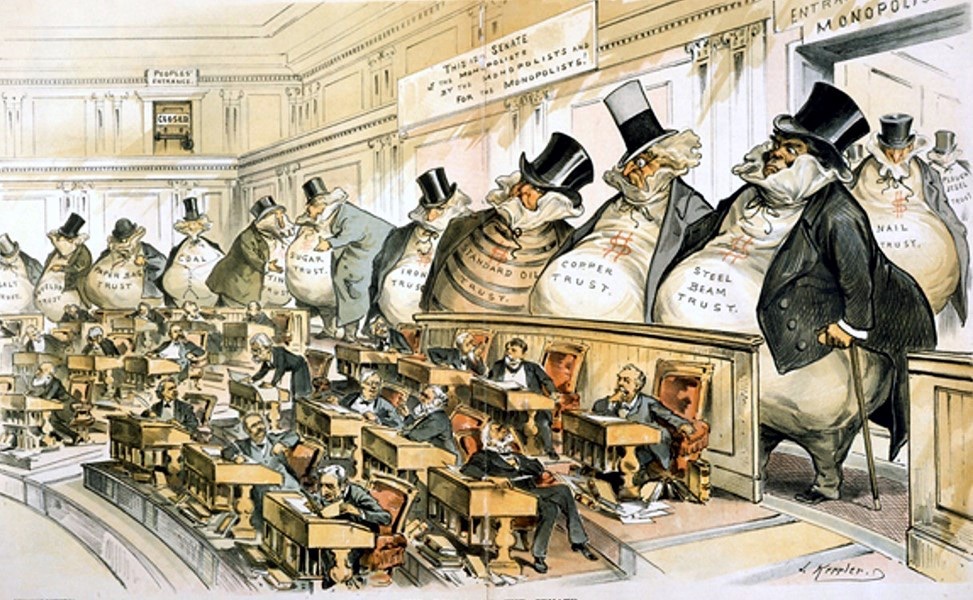

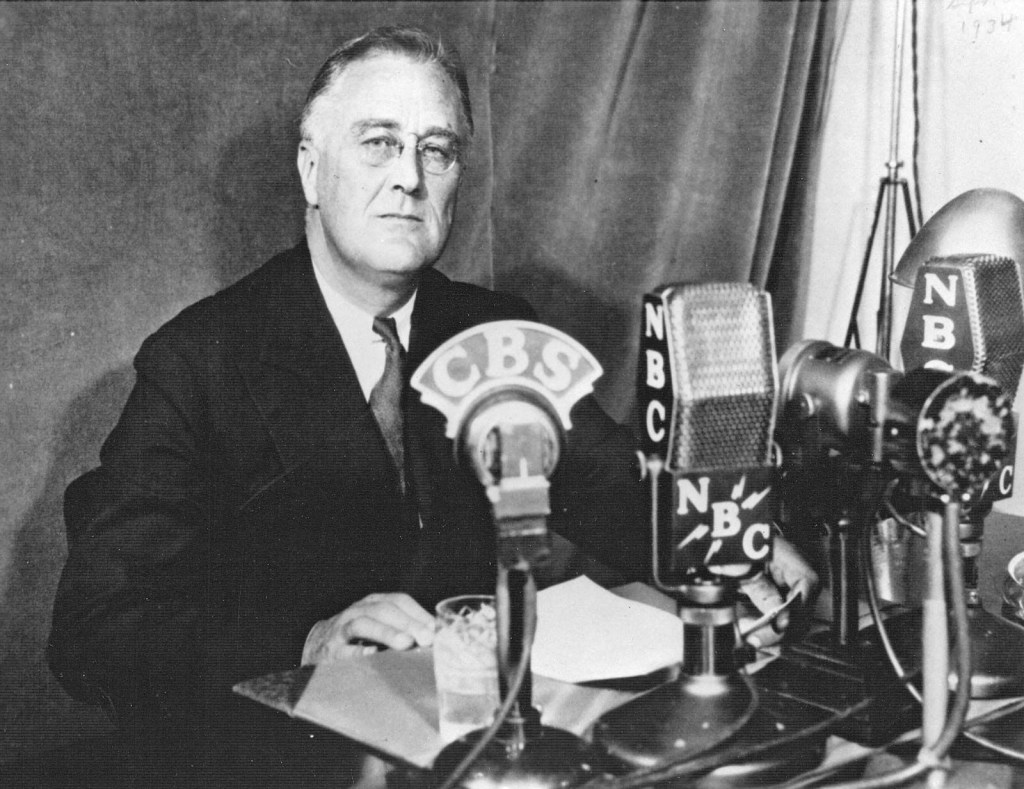
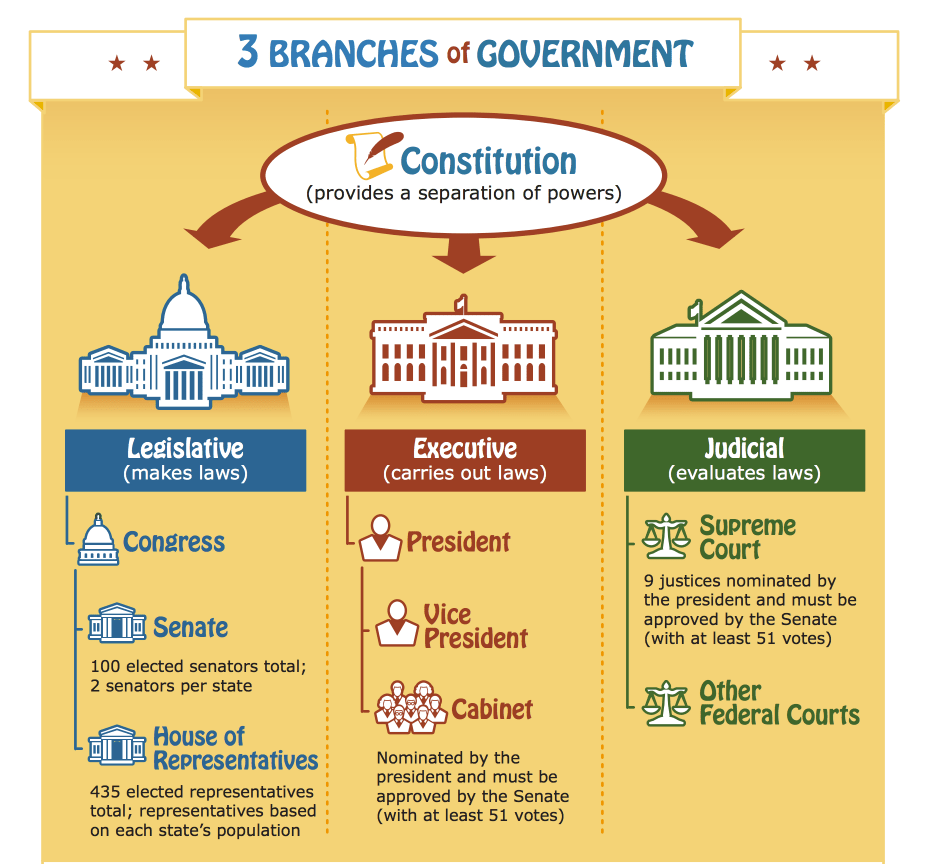











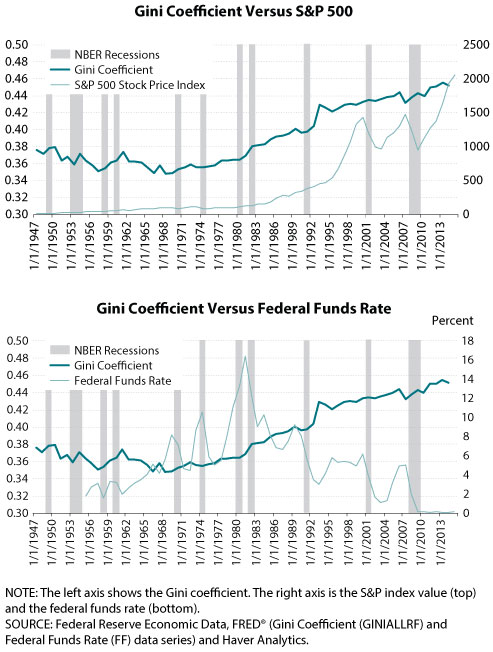
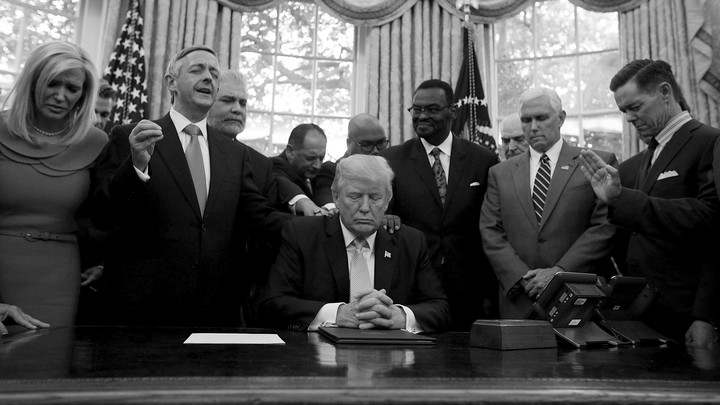



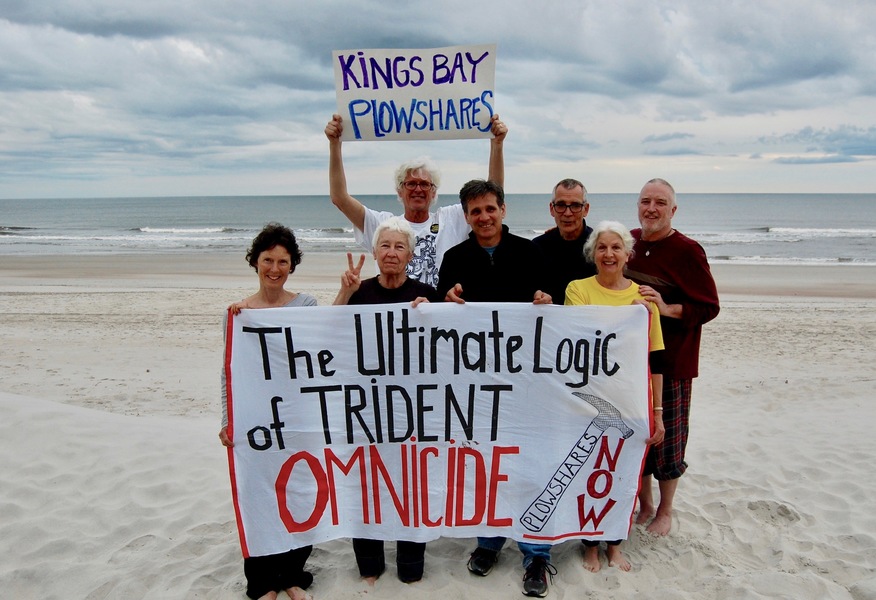
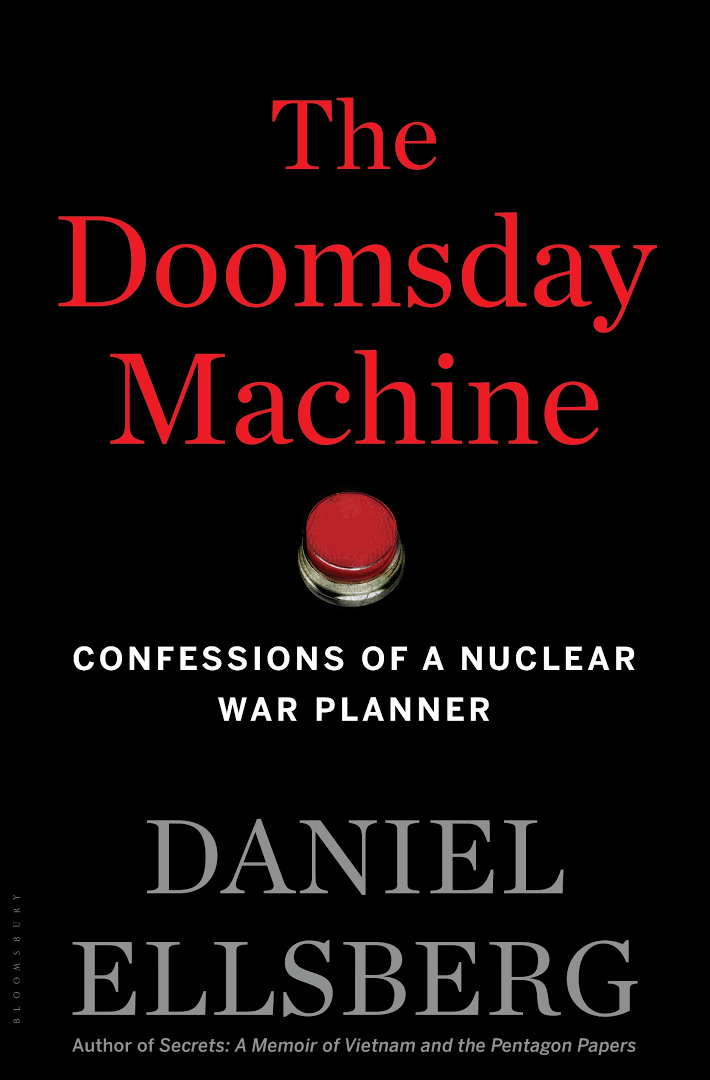


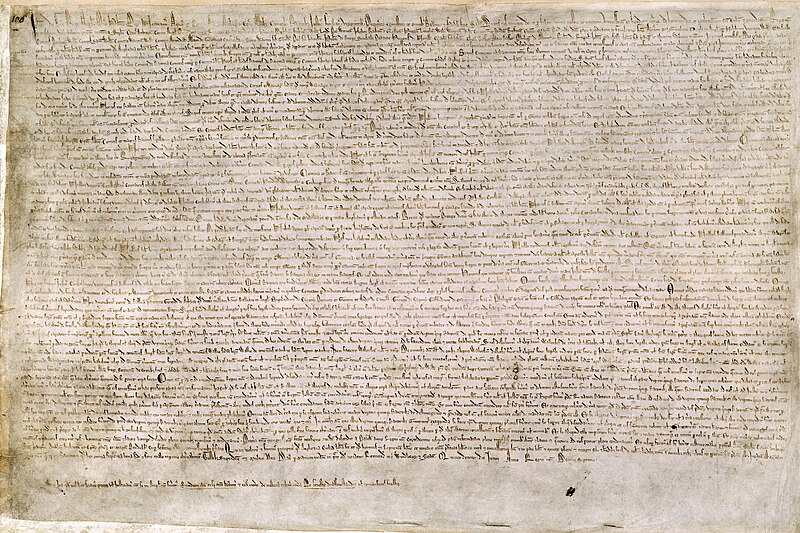

 One can note the large image of Bertrand Russell, a leading antiwar and progressive intellectual and activist in the United Kingdom, jailed for his iron opposition to the so-called “Great War,” later renamed, much like Star Wars IV: A New Hope, to World War I. Speaking of Star Wars, I recall Yoda admonishing Luke that “wars don’t make one great.” In any case, I’m seated next to the man in whose very large image I’ll have in my office, academic or otherwise, in the future. A half-century of life experience sits between us, and I’m honored beyond words.
 Further, I had the blessed opportunity to see some of my favorite schoolteachers, my calculus teacher from high school E. Clyde Yeatts, and my college US history professor Pat Ledbetter. Sadly, my other notable teachers from that region are retired and relocated (Candy, I’m thinking of you) or have passed on. See below for our reunion picture–I reminded my former professors that they are the good guys, and we need to stick together through this mess of political recklessness. Both Clyde and Pat are amazing folks, so generous with their time and stewardship, and Pat is still teaching at North Central Texas College, where she helped to utterly transform my world-view. Clyde has fully retired after an incredible career of teaching high school and college courses.


