There is No Survival Guide for the Apocalypse

Ten years ago, I created this blog as a landing zone for free, uncluttered discussions on the rise of fascism in America, and said fascism is alive, screaming, and ready to scorch our only home to cinders. No matter their deception and cruelty, fascism succeeds only if we permit it. If you read only this paragraph, and you are a voter in America, VOTE! Do not surrender to despair–that isn’t the aim of this article, and the most you can take from it is the realization that you can make a difference.

In election cycles, I try to post another long-form well-researched article–Chomsky once said that stating the appropriate things required no justification, but rejecting in favor of something controversial required a thesis and a blood draw with every source linked. Having said that, I’ll forego including every possible source next to my analyses, and besides, most of which appear elsewhere in this blog. The fact remains that if you read this, you likely agree with me on most of what I say below. But there are tidbits here and there I hope you find useful in your journey to understand the tangled mess we’ve made of our one, unique, perhaps singular home.

But let us understand the stakes: the window Nature so graciously furnished homo sapiens is fast closing. The grace periods are elapsing. The honeymoon is ending. The feast is done. Now comes the notice. The fight. The bill.

I’m not alone in my concerns: a few prominent activists and social scientists I admire lean into Book of Revelation-branding when treating with the biggest threats to our civilization, such as End Times Fascism and the Fight for the Living World (Naomi Klein, Astra Taylor) and The Rise and Fall of the Artificial State (Jill Lepore). Indeed, I wrote my own concerning the economic crash that will soon follow the cancers thriving in today’s tech sectors. I could point to an endless list of authors and thinkers who do justice to the death throes in which we find ourselves. Many of you no doubt experience apprehension and dread when confronted with what the tech sector likes to call artificial intelligence. Aside from economic implications, I personally don’t believe it represents the threat we often think of, and that’s a judgment requiring a little more care.

Introduction: Fraudulent AI and My Journey in Our One and Only Home

For almost twenty years, I worked in one part or another in high tech. My last few jobs were at Microsoft, Amazon, and even Uber for a short stint. I didn’t believe the leadership principle nonsense then, and I don’t now. I rejected deep learning as novel science back when management crammed it down everyone’s throats. I thought generative systems were little better, even if they can string together logical sounding statements. Keep in mind that we as humans desperately seek explanation and meaning, and we can win one hand in Vegas and believe both we and the game are holy instruments. I’ve struggled to accept the physical limitations my health forced upon me, but one silver lining is that I left those companies before the LLM litmus tests became a thing. I would have fought it, and I would have lost the battle. Perhaps there was more grace this way. But I raise this here to demonstrate that I understand the technology, and its limitations are clear. I’m not talking about Skynet, or that rogue robots want to destroy humanity. One of my nieces recently tried to correct me based on what she thought ChatGPT said. I answered that the same tool has encouraged people to kill themselves. She wondered why it would want that, and that’s the sleight of hand in the moronic AI overlords’ bags-of-tricks–it wants because it’s alive. I corrected her–an LLM does not nor can it ever want anything. It’s a clear problem.

Speaking of clarity, we must now accept that any humanitarian and philanthropic motivation in Silicon Valley is a mirage. Their leadership knows that the artificial intelligence nonsense is a ticket to nowhere. One cannot borrow $1M for a business, spend five years, and post $10 profit against $0. Paraphrasing Ed Zitron, I couldn’t borrow the money to open a bakery without a generous two-sided cavity search. But anyone anywhere says they’ll build a data center, and they get the key to the city. It’s a cult. It’s a madness. And it’s obvious. My tech journey is instructive. In school, I wasn’t sure what to study. Mathematics came the most easily for me, but there were insufficient resources at home to ensure deeper interest in computer science and programming. I graduated from the University of Texas at Arlington in 2005 with a master’s degree in math, and I went to work straightaway in the simulation lab at Bell Helicopter Textron. For almost five years, I worked there. It was a fun time–I learned more about coding than I had in undergrad, and after reading a book by Ray Kurzweil, I decided to return to school. This time, it had to be the right way. I was lucky to be accepted to the Georgia Institute of Technology, and I obtained a master’s in computer science in 2012. I think it was among the last year or two that master’s degrees were exclusively brick-and-mortar.

From there, I moved to Seattle to work for Amazon. Later, I moved to Microsoft. It was an interesting time for me, instructive in the wickedness of the grift. I created this blog almost exactly ten years ago to address what I believed was an abject failure of a system designed for stability. I knew what Trump was. I knew what he wanted to do. I knew evil all-too well. Narcipaths abound. I reported two managers to HR at separate companies (Uber and Microsoft), principally because they hurt others. I participated in a skip-level at Bell Helicopter to justify the massive wave of resignations under our senior manager, the majority of which were early career (myself included.) I was a target because I tried desperately to fit personality disorders into categories to allow me to argue the words, not the person. None respected me for it, and it was a terrible time that culminated in broken health on my part. It’s worth saying here that the last group in which Microsoft employed me was a good one, with much better managers. They appreciated my wholesale rejection of over-complicated nonsense like deep learning and generative crap–statistics was a mature discipline with tremendously powerful tools for the problems we sought to solve. I don’t know what’s happening now, but I’m confident that the rot of fake-eye AI has poisoned the well for everyone. Billionaires build bunkers rather than try to solve real problems that real people confront daily. The train left the station, and we’re waiting for it to derail. Having spent decades now in the high tech sector of the economy, I very much understand his quote:

The smart way to keep people passive and obedient is to strictly limit the spectrum of acceptable opinion, but allow very lively debate within that spectrum….

So, what are the narrow perspectives permitted on AI?

  1. The world is desperately wicked and must be saved. People have thought about automatons for centuries, and it was widely believed that we would one day create an artificial brain indistinguishable from the real thing. Then again, Turing himself said the notion was nonsense in the very paper dimwits have used for decades to articulate the so-called Turing test. I think so many of us fear the future that we have replaced Christ or other resurrection-style deities with an all-powerful machine. But the salvation comes with a cost: subjugate thineselves to the models and programs controlled by tawdry, doughy billionaires. Their claim: AI is the chalice of the savior, and we must drink from it. After all, unfettered greed heralds the optimal solution, right?
  2. AI can replace people, right? Not really. It might make executive types even lazier, but power isn’t the same thing as automation. Generative AI and even neurosymbolic AI hasn’t answered fundamental questions of mind and body. More specifically, they’ve yet to identify and replicate the operating principles of our neocortex. That is, the goop squishing around in the front of your head is more powerful than any known technology. Sit with that a moment. You possess a copy of the most powerful thing to arise in nature. It’s yours. Your genetic and biological heritage, refined over millennia. But this technology’s machinery has so far eluded us. Simple comparisons demonstrate that object recognition software and our brains do NOT operate the same way (deep learning fails since you can trick the model with a few pixels changed, but we still see the same thing with our own eyes). The same is true with LLMs. A human child learns language with virtually no examples. Even in the absence of examples, children will teach each other a way forward.
  3. We can and must escape Earth. That is, life here is a prison. It isn’t clear to me why these people argue this. Earth is the only world we have, and even if we pooled all resources, we couldn’t sustain a human population anywhere else in this solar system. Terra Tantum, I suppose. This is the only home most of us will ever know. What is their alternative? We should upload ourselves into data centers so we can slave away eternally beholding the ugly mugs of Altman and Musk and Trump and Zuck and Bezos? Count me out of that hell. Life isn’t a prison. Love isn’t a prison. We are a gestalt–more than the raw sum of our parts. We’re blessed with power and agency, and they cannot take it away.

Existential Threats

I will reiterate this point, and I hope the reader understands it–it is impossible to survive without Earth, and that might always be the case. And I fully admit that a lifetime of being a Trekker began with me hoping Captain Kirk and Mister Spock would beam me into the 23rd century–it would be a world forged by the liberalism they represented on their show and in their movies. But this is the meat, potatoes, and corn of it: escape isn’t possible, and that further, there is no survival guide for the apocalypse. There’s no water-hoarding, gun-wielding, chemo-therapy-gene miracle unabomber-style banana nut-bread means of surviving–nature was not meant for man once he left it. There is no desert far enough, no island sufficiently remote, and there is absolutely NOWHERE in outer space where we can live without decades if not centuries to organize and terraform. Do NOT fall for those lies.

But the threats are real, and I’ve binned them into four categories. I think most people agree that one or more of these is a genuine threat, and thus there’s no incentive to examine the others. But that’s the price we pay for living in this world: sooner or later, we’re called to account on our actions. I’m not referring to any white throne judgment nonsense–but I do believe that what we do reverberates through time and space, and squandering the miracle that is intelligent life is a cardinal sin. So here they are:

  1. Ecological Disaster
  2. Nuclear War
  3. Critical Infrastructure Dependence
  4. Adversarial Rot

None of these is trivial. They overlap. Some can cause (and have precipitated) others. The first two are desperately important, and thus they receive special attention here. The first is the only one to receive significant mainstream press and political attention in recent years, but the second remains one of the major threats we’d rather not think about. Now, before you think this list is incomplete, you’ll understand why I think it covers it. (Hint: Skynet and the terminators aren’t real, and they cannot be accomplished with generative systems.)

Ecological Disaster

We’ve covered this one to exhaustion. The world is literally burning. I don’t think any credible person can deny this–even in my lifetime, I’ve watched the ecology of north central Texas (my stomping grounds) change wildly. It used to snow once or twice a year. When I was twenty years-old, I was taken aback at a particularly warm January in which we topped 90 degrees Fahrenheit. Fireflies, horny toads, and just amphibians in general are in severe decline. When I was a kid, you could see these animals at night. Now? Nothing. Don’t believe me? Look at the charts below.
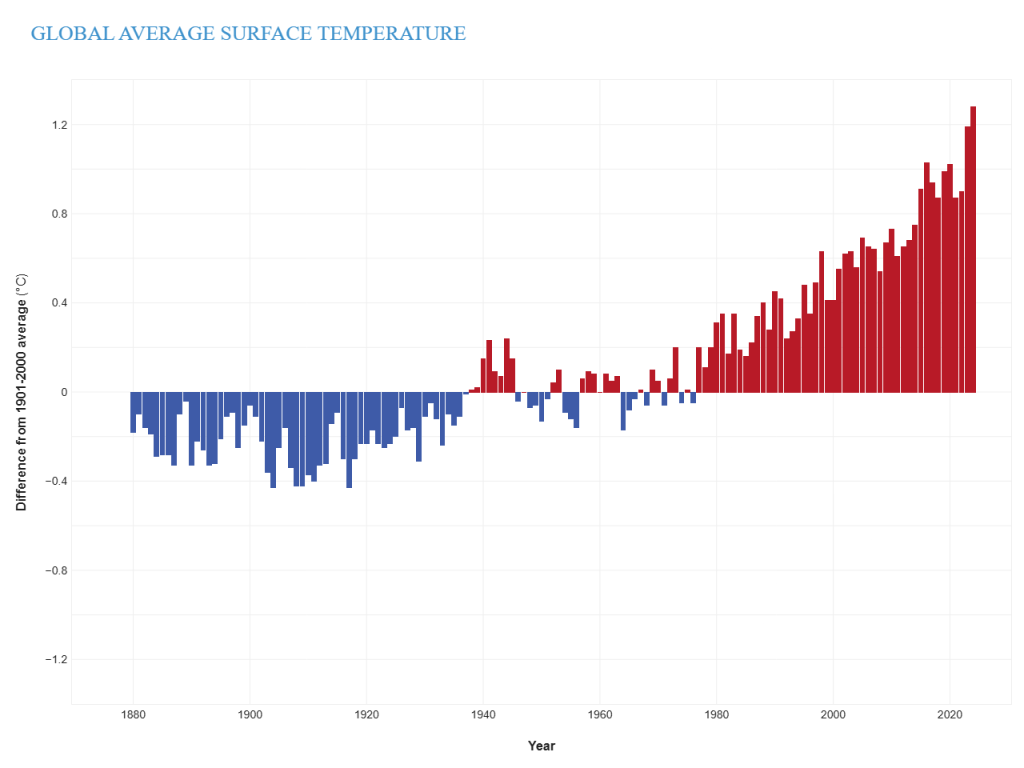
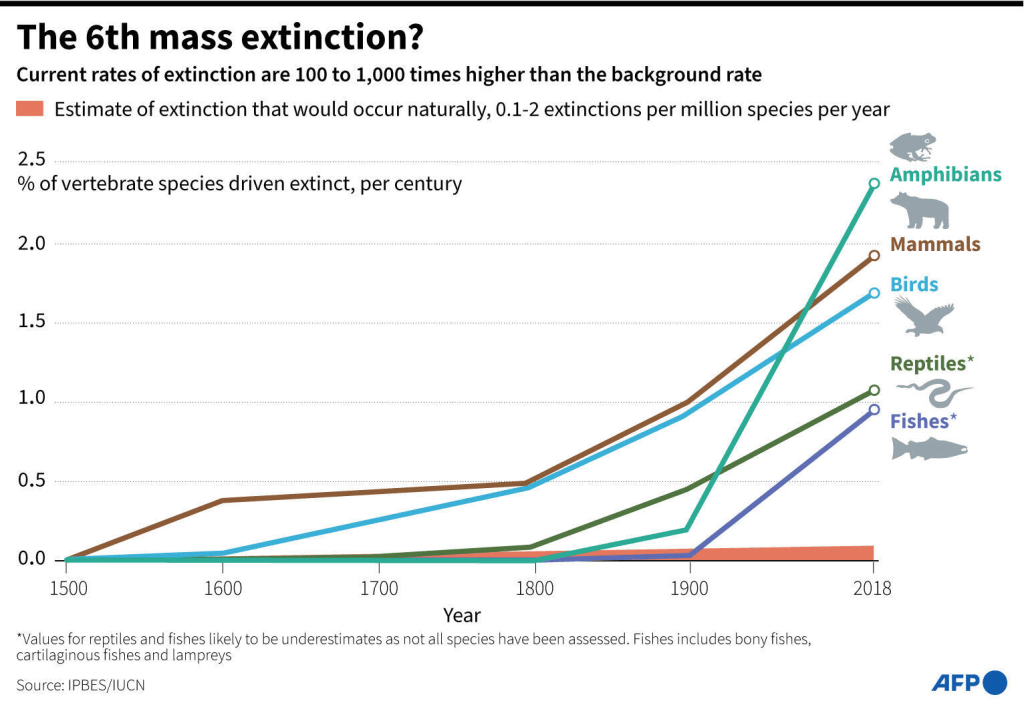
To our knowledge, life only exists on Earth. And we’re flushing it down the toilet fast and furious. Even if you think nothing can be done, every choice, tactical or strategic, can make a difference. But this demands a global rather than just an individual response. For America, this means federal. I can take all the gas meds I want before flying on a plane, but if someone else doesn’t, it still reeks of rotten eggs.

Speaking of eggs, some fall from tall chickens pretty easily. I know plenty who dispute catastrophic climate change, including semi-articulate opinion in my own family. This wasn’t the only reason for a massive schism in my family of origin, but it was a prominent one. Fools believe voter fraud is the greatest threat of today, a theory we can disprove even with the most elementary of statistics. But climatologists must ALL be lying, right? Please, if you believe that, I have two trillion hectares of Siberian tundra I’ll sell for $0.001 each! Believe it or not, it’s happening, and it might already be too late to reverse.

Nuclear Disaster

If you saw Oppenheimer, Christopher Nolan’s film adaptation of American Prometheus, you should find the regret of a man who spearheaded the construction of the first nuclear weapon to be poignant and tragic. The film was timely and the recipient of numerous awards, including Best Actor and Best Picture at the Oscars. The true Oppenheimer was aware that a change in the calculations would cause a nuclear blast to ignite the entire atmosphere–one must keep in mind that EVERYTHING is flammable at the right temperature. It turns out that even Hitler flinched at such a possibility–destroy it all, and that includes the blessed Aryans. I would recommend understanding better the experience of those who survived the attacks on Hiroshima and Nagasaki. People downwind from testing suffered as well, including American actors John Wayne and Agnes Moorehead who were filming downwind during the first test detonations in the Southwest. South Pacific communities suffered badly. Check out Runit Island. Ruinit is more like it. Read about the Chernobyl disaster; it wrecked an unprecedentedly sized region. Warmaking and infrastructure expansion can both lead to nuclear disasters, and the more we have, the less likely it is that we can prevent terminal nuclear war (terminal is superfluous here–nuclear implies terminal.)

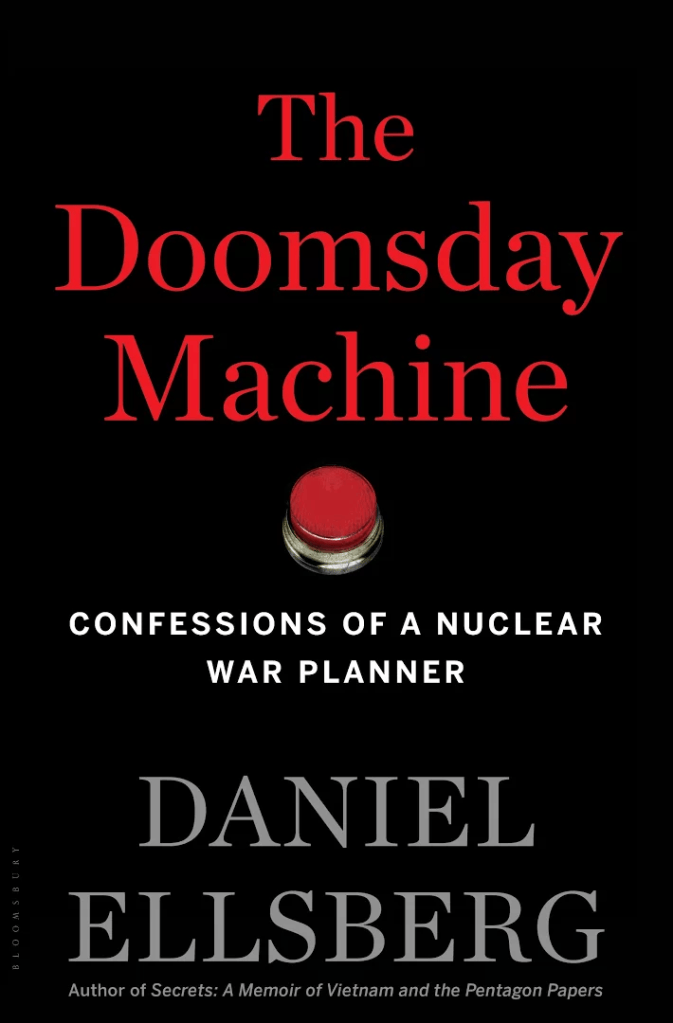
To mark our proximity to doomsday, experts at the Bulletin of Atomic Scientists have set their eponymous clock to 85 seconds before midnight. An accidental deployment, a brain-rotted rogue psychopath in the Oval Office, or an aggressive thermonuclear attack by Russia, Israel, or Chine would move the clock closer, no doubt. For more on a wickedly stupid technology and the policies governing it, I would point to Daniel Ellsberg’s excellent book The Doomsday Machine for a long-form treatise on the stupidity and incompetence of safeguarding the only omnicidal technology ever created.
Any war, nuclear or otherwise, remains perhaps the biggest cause of nuclear proliferation and risk. Even if the direct recipient of attack has no nuclear capability, it isn’t a given that they would not strike a nuclear power in retaliation. We’re now in a state of war with Iran for no reason at all–the right-wing fringe Project for a New American Century had listed it as the last of five countries America should conquer to control the flow of energy, the others being Iraq, Afghanistan, Libya, and Syria. Check, check, check, check, and check! Trump’s stooges try to negotiate what would have been a bad deal after Obama’s historic treaty. Honestly, why would Iran not create weapons of mass destruction? America isn’t trustworthy. Why should other Western nations not hit us with reciprocal tariffs? They have no reason to trust Trump. (Of course, he doesn’t have the Constitutional authority to levy tariffs, but whatever the fuck.) Iranians understand the overwhelming threat of an American or Israeli attack.

Now, in the paraphrased words of the fantastic political strategist Stuart Stevens, the 92 million Iranians will fight to the last man, woman, and child. Even our own military historians know the dirtiest secret of them all: bombing civilians pushes them to oppose you at all costs, even if it means embracing a leader they don’t particularly like. Londoners during the blitz would never have converted to Nazism, even if they were racists themselves. Germans clung to their murderous dictator when their cities were bombed. There are many very good reasons to pray our cities aren’t bombed–though Trump said that’s a small price to pay for whatever the fuck is floating in his empty skull–not the least of which our people would cling to Trump in the way they did Bush Jr. following the second September 11 attacks (the first being our supported attack on Chile in 1973.) Bush was floundering, but an attack his moronic staff could have prevented catapulted him to the national stage as a national player taken seriously by the West–he was a pig in shit, and he damn-near destroyed our civilization by attacking more countries.

The truth is plain–nuclear deployment will destroy the world, and should life arise again, I hope they’re smarter about it. Trump attacked Iran for reasons even he can’t keep straight. I find it even more horrifying that Americans are more concerned about the cost of gasoline than the murder of Iranian civilians and the bombing of critical infrastructure. Trump would be hanged if he was on trial at Nuremberg. Speaking of which, infrastructure may well be the central reason we cannot rough it in the wild.

Critical Infrastructure Dependence

The frightening coincidence of the modern population explosion with the discovery of technical devices that, through automation, will make large sections of the population ‘superfluous’ even in terms of labor, and that, through nuclear energy, make it possible to deal with this twofold threat by the use of instruments beside which Hitler’s gassing installations look like an evil child’s fumbling toys, should be enough to make us tremble. —Hannah Arendt

This year marks the sixtieth anniversary of the original Star Trek‘s first airdate in America, and they often treat with alien races who become hapless, helpless subjects of automation. They would have appeared cheesy and silly, except the science fiction authors penning their screenplays understood something we took for granted. They weren’t so silly, after all.

What is critical infrastructure? I would define it as any component of government, agency, and technology which binds us as a civilization together. The motivation for creating said infrastructure is simple–save lives, protect resources, and make our lives easier. Several subcategories emerge:

  1. Governments
    1. Municipal
    2. State
    3. Federal
  2. First-order needs
    1. Clean water
    2. Robust food supply
    3. Affordable, safe housing
    4. Medical coverage (cradle-to-grave)
    5. Early education
    6. Electricity
    7. Police and fire protection
    8. Legal protections
    9. Safety nets
  3. Second-order needs
    1. College/university
    2. Public and private transportation
    3. Career freedom
    4. Safety nets
    5. Regulatory apparatuses
    6. Media
  4. Non-government agencies
    1. Corporations
    2. Contracts
    3. Charters
  5. Research and development
    1. Medical
    2. Humanities
    3. Science

If you’re reading this, you probably already agree that these are essential. You might reorder them, and that’s fine. In any case, critical infrastructure follows an interesting history. My grandparents were born roughly a century ago, and they all four were multigenerational farmers. They knew a world without indoor plumbing, electricity, and abundance of food. Searching for work, my mother’s father hitched a train ride as a hobo back in the Great Depression. The others had some access to food, but the Dust Bowl didn’t make it easy for them. I don’t know when they first saw an automobile or what their thoughts about them were–there are so many things I wish I’d asked them when they were here. But they lived in a day of wood-burning stoves and fireplaces. My father’s family were farmers in North Dakota, and that was the true frontier. They would tie ropes between the barn and house so that milking the cows didn’t become a whiteout death sentence. This world vastly differs that one.

An interesting tale to emerge here is William Shatner’s response to younger people complaining about the recent recessions, and just how hard life had become. Like Chomsky, he pointed out that the circumstances of the 1930s were objectively far worse, but they were hopeful nonetheless. Today, with greater security, people feel more hopeless. Shatner pointed out that rather than overpriced food, there simply was none at the grocery stores. That’s a famine I pray we don’t suffer. Foodstuffs existed then, but neither the governments nor the companies owning the warehouses full of nutritious ingredients were willing to ensure it reached the right people. The companies lost more money with transportation, so they let the food rot as people starved. Jesus Christ. When I worked at Amazon, I learned that they threw out maybe a third of all the produce because of slight blemishes that didn’t affect the quality. Imagine that–we can throw it all away, but we can’t increase minimum wage even in the face of overwhelming popular pressure. We’ll strike at the heart of that problem below.

Narratives

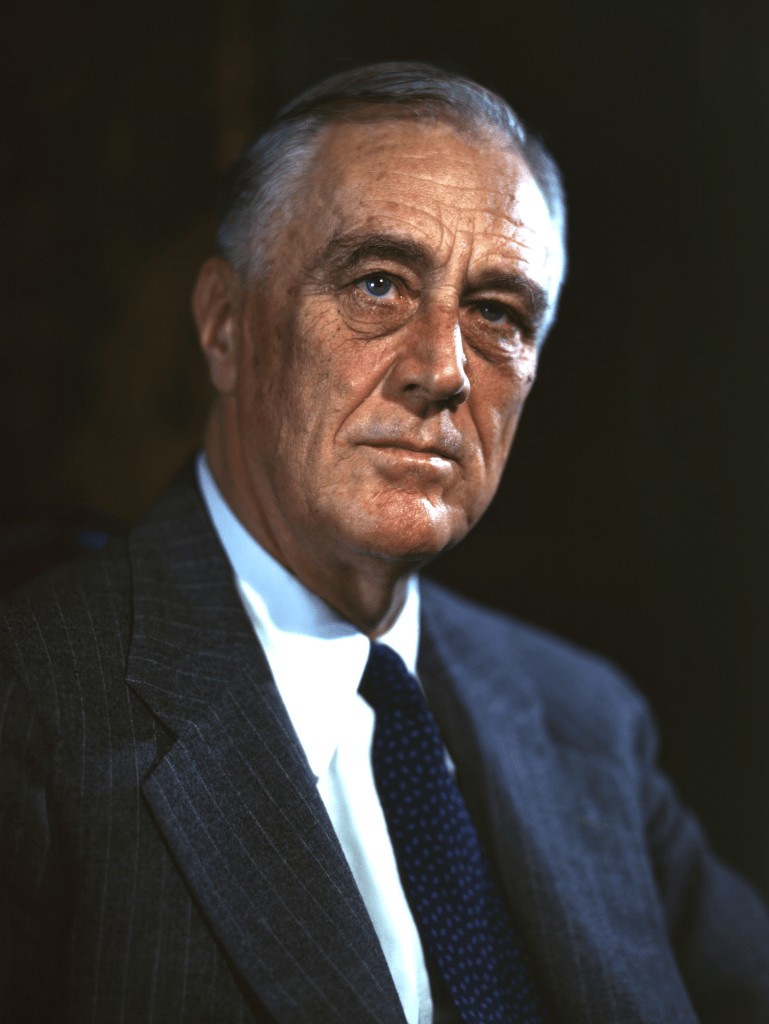
I so ordered the above because each is required, more or less, for those following to exist. Thinkers posit a constitution as a means of balancing the needs of the many with the needs of the few. I don’t think the term democracy really contributes to the first item since we’ve never had the full-participatory sort. Like purely market-based solutions, scale just isn’t possible without a forfeiture of the individual. That shouldn’t be controversial–you cannot rely on the family without offering yourself in their hour of need. But this runs contrary to the narrative we Americans tell ourselves, considering the old adage no man is an island. Narratives, per George Monbiot, play an indispensable role in explaining our place relative to one another, and various leaders and thinkers throughout our history have weighed in on the topic. Reagan said that government was the problem. FDR said we only had fear to fear. Wilson believed we were crusaders for democracy (or really Westernization) of other lands and peoples. Lincoln died for his vehemence that slavery was a moral blight on us all (and he was right.)
When I was a kid, we took it for granted that Nazis were evil. We took it for granted that a man can succeed by striking out on his own. But we experimented with the freedom of such thoughts within the safety of a unionized labor force and heavy government regulation. Following Bretton-Woods, we experienced no recessions for almost thirty years. But enormous tax breaks to the wealthy throughout the 1960s, coupled with the fizzling unsustainable growth that was the military industrial complex led to a collapse. The answer, claimed Nixon and others, was to deregulate capital. By letting it escape, it would create the economic miracle of recession cycles all over again. It’s funny that their solution to the head-cold is a shotgun–Nixon shock, they called it. In the 1980s, the power brokers decided it was better to permit women into the workforce than to struggle to fill positions–it solved two of their wicked problems, namely scarcity of labor and upward income mobility. It is ghastly to consider now, but a woman would never expect to make as much money and a man. The rich cashed in, and through so-called free trade, they wrecked manufacturing in America. We took these things for granted.

Matters are worse–we have become so dependent on modern amenities that we can’t (nor should we try to) be wild animals. We can’t live in a cabin, sequestered from all others. One accident will kill. Our teeth and nails aren’t particularly good weapons, and you can’t manufacture bullets in the hinterland. Whether you like it or not, we are stronger together. In my condition, or even fifteen years younger, I would die in the wild. True, one can delay one’s death with great effort. But where will you find water as errant radiation seeps into every root? Food will be poisoned, and the air won’t be safe to breathe. We can drive a car. My Leaf cost maybe $30K, but I couldn’t manufacture it alone for any amount I can think of. Can you build your car? Can you service the computers in it? Update firmware by writing it yourself? I don’t think of myself as a stupid man, but I have my own limitations, as do we all.

The narrative differs now. Working white men suffer, and though they know it isn’t their fault, they blame the wrong things. Truly, I once thought the Harry Potter series was silly in that a demagogue psychopath could persuade large swathes of knowledgeable music-wielders to abandon all reason. The laugh was on me–Trump and his demented MAGA movement was supposed to be impossible. The Electoral College was created for precisely that moment in 2016–prevent the (originally state legislatures, later the people themselves) rise of an existential threat. The founders were hardly saints, but they understood well that consolidated power, like wealth, is incredibly dangerous to both the beneficiary and his myriad victims-to-be. Narratives may be the most important infrastructure you disavow, because it alone can destroy us. And it has help.

Adversarial Agents

The final threat comes down to the capacity to capture attention of the individual. Whether or not you believe unions should exist, the ultra wealthy top permille should be taxed within a dime of their respective gluttonous, repugnant lives, you should know what they’re doing, even as they encourage you to accept docility and myopia.

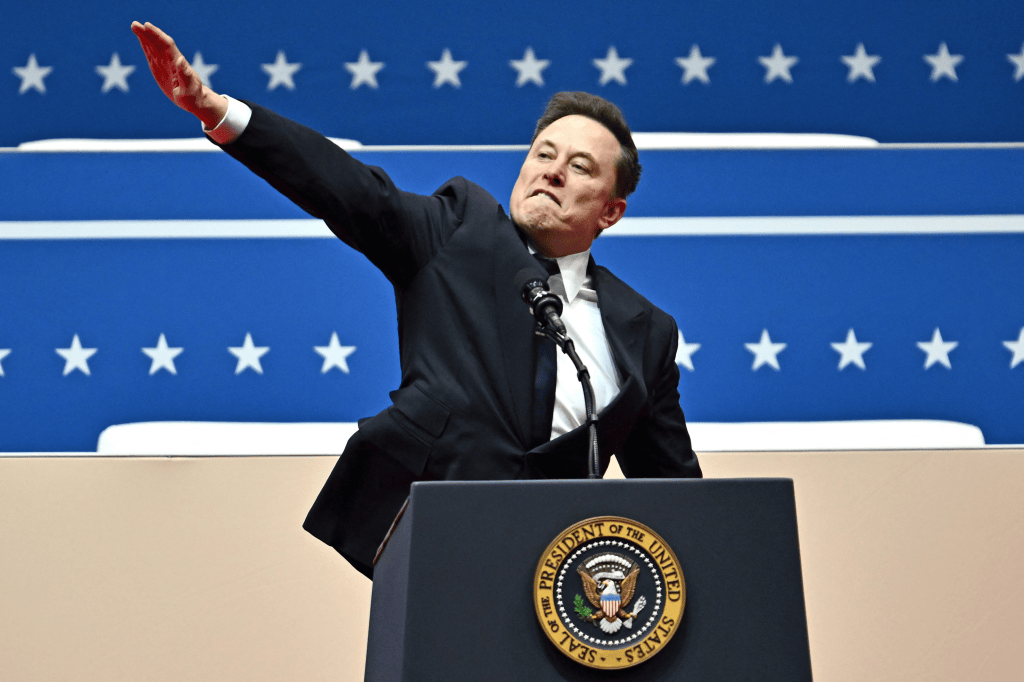
What is an adversarial agent? I’m not referring to spies, nonsense LLMs, or petty criminals. I’m referring to those who wield the might of their wealth to persuade us of preposterous lies. The tech bros. are more specifically my definition here since that’s the economic sector I know best. They angle for universal ownership. They slip their metastatic tendrils into every facet of your life. They monitor you, policing every employment decision and indiscretion. They swallow institutions, hollowing them out to the marrow. Bezos bought WaPo. Musk bought Tesla and SpaceX. All elite tech assert the overwhelming lunatic returns on generative AI models. They buy elections and candidates. Musk has spent hundreds of millions of dollars trying to defeat James Talarico in Texas. The tech billionaires stood around Trump for his inauguration, having made him king. They give him money, and he illegally interferes with the regulatory agencies holding them back from increasing $300M to $400M. Imagine how many mouths that money could feed. Instead, we have a foreign-born yipping, prancing, aryan little hyena bribing the government and buying elections for himself.
Social media is largely to blame–you need not consult news journals, history books, science books, physicians, or pretty much any other expertise or expert in your quest to make your life better. You can find all of that and more on the internet, and specifically, clickbait rabbit holes designed to hold your attention until you buy something. End-of-story. You might be depressed afterward. You might kill yourself. It’s dwell time that’s king. Is it a surprise that Facebook and its principal sack-of-shit Zuckerberg now lie at the heart of violent political unrest here and around the world? This isn’t controversial, even if you love Facebook. Examples exist everywhere, like the Rohingya Muslim extermination program. Recently, Facebook stumped for Trump, Bolsanaro, and other fascists by feeding phony outrage to disaffected, rudderless people. Why? Because Zuck wants favorable policy, and he can grease Trump’s tiny claws and tinier pole with endless cash.

Artificial Intelligence

The narrative cuts more than one way. For the past seven years, tech companies have promised that generative AI (also called LLMs) would revolutionize the world. It is no surprise that the unaccountable billionaire boys’ club have jumped off the deep end. We’re told by a virtually uncritical tech media that Altman, Amodei, Musk, Bezos, Zuck, Thiel, and so many more uglies that trillions of dollars are essential to make it all work, despite posting the tiniest profits ever conceived.
You may have thought at the beginning of the article that AI should be one of the existential threats. I don’t buy it. First, I’ve spent my career working on these sorts of technologies, and it was a gimmick then as it is now. Sure, it answers your emails, but once you’re too illiterate to read or write, it can do and say whatever it wants in your name. Second, the economics of it is insane. I could wax on about this, but instead I’d send you to Ed Zitron’s blog. I’ll bottom line it: even if the crappy tech could do everything they promise, there will never be enough money, king’s men, or horses to make it economically viable. Why? People need water, food, jobs, security. The vast data centers tech companies are underwriting can be used for little else than the pretend GPUs optimized for LLMs. In the meantime, the power and water consumption will price out pretty much everyone who can’t afford to move away. Perhaps most telling is the fact that these companies violate copyrights left, and well, right–and there are no consequences. If I stole every book ever written, then lifted phrases from it to write something else, what would you think of me? Why does this tech need to be built when it solves literally no problem anyone has, other than dead-end tech companies who’ve reached the final stages of exploitative capitalism, and, in their death rattles, are desperate to cling to relevance? I’m looking at all of them, including the ones where I worked.

I think what I would drive home is that this tech isn’t going to become Skynet and enslave us. Only people can enslave people, and only if we let them. This tech is dangerous, and the companies promoting them change all their terms and conditions to ensure your thought-out intellectual property finds its way into the Wayforward machine. AI is neither a public trust, nor are the ketamine-drenched imbeciles sitting on their booster seats any more capable than your local loan shark at safeguarding the city on the hill. I call all of this Fake-Eye for a reason, after all. Perhaps the token cost is the simplest means of understanding this–if you use the tools, they are deliberately lying about its true cost. Much like Uber attracting drivers from their careers, only to exploit them once they had nowhere else to go, the generative AI promoters capture your dependence, then surprise you with the true bill. Corey Doctorow labels this and many other deceptive practices by companies enshittification.
War on Truth

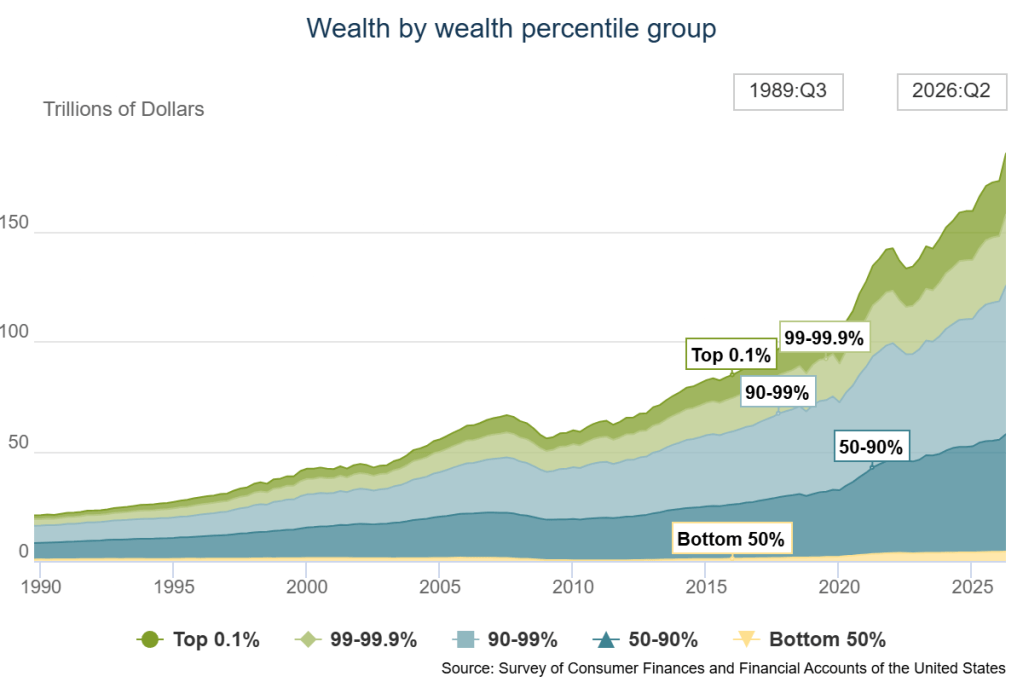
I think Horari said it best in explaining that pure democracy cannot safeguard truth: you can’t vote that two plus two is five, despite some state legislatures trying to do just that. As we make our way to the bottom of the brain drain, our electorate becomes less informed and more radicalized. Thanks to adversarial agents deployed in almost all facets of our daily comings and goings, people fear doctors, scientists, and even artisans. Violence towards political and other public figures increases steadily. One thing people know is that it’s significantly harder to make a living. The chart below makes it quite clear. 50% of Americans possess maybe 2.5% of the wealth. Costs are higher now, thanks to instability in the energy trade. Gasoline is more expensive. Tariffs only compounded this. Trump’s investment in crypto and the insider trading that makes Martha Stewart look like Donna Reed is quickly costing us. Ballrooms, institution trump-branding, and billions of dollars pour into his pockets–there are plenty of holes in his rotting brain to stick every penny. It’s never enough for him.
People aren’t as stupid as Trump thinks, but they’re plenty stupid to elect him again. The GOP’s leaders have long crusaded against truth: trickle-down, Downing Street, Obama’s birth certificate, Pizzagate, microwaves that spy on you, controlling the weather, Iraq’s WMDs, vicious treatment of trans and their allies, and hatred and suspicion of the brown person. It’s hard to imagine that we are where we are now. Truth is not a thing you can eliminate by disavowing it. We ALL had to grow up, goddammit. I certainly did.

Final Remarks

I’ve riffed on a number of topics herein, but I think you should know that there’s hope, even if the enemies are at the gates. The takeaways are simple:

  1. Participatory elections are a blessing to cherish
  2. The ship sinks only if we let it
  3. You cannot live on a sunken ship
  4. The kleptocratic system is rigged, and governments remain our only strategic tools
  5. Supporting a murderous leader is tantamount to murder itself
  6. The top permille are just vicious pickpockets who should face the regulatory consequences of their greedy choices
  7. Generative AI is a deception and a grift

That’s all I have. Perhaps the kindest thing I can do is channel Paul Krugman by supplying a musical coda. I just heard Jessica Lange sing it on AHS 13.

Algo-Stats Special : On the Responsibilities of Technologists

In April of last year, I wrote a piece on the growing crisis in the misapplications of technology in my line of work: algorithms, machine learning, optimization, and data science.  It seems appropriate to include the discussion here on my activist blog.


Slagle, N.P. “On the Responsibility of Technologists : A Prologue and Primer,” Algo-Stats, 2018-04-15.

A special thank you to S. Kelly Gupta for invaluable suggestions, and to George Polisner and Noam Chomsky for taking the time to read an earlier draft and offer encouraging feedback.

A Casting Call for the Conscientious Data Practitioner

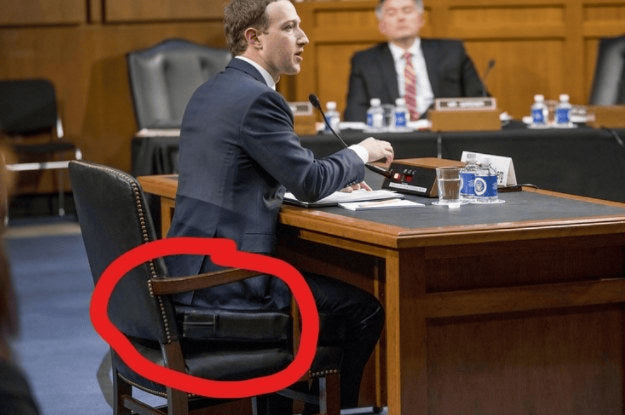
For some time now, I’ve planned on writing an article about the very serious risks posed by my trade of choice, data science.  And with each passing day, new mishaps, events, and pratfalls delay publishing, as the story evolves even as I write this.  For instance,  Mark Zuckerberg testified before the Senate Judiciary Committee this week, sporting a smart suit and a booster seat ostensibly to improve morale.  Though some interesting topics came up, the discussion was routine, with the requisite fear-mongering from Ted Cruz, the bumbling Orrin Hatch asking how money comes from free things (apparently he forgot to ask Trump about withholding pay from blue-collar contractors), and a few more serious people asking about Cambridge Analytica, such as Kamala Harris querying the lengthy delay in Facebook notifying users of Cambridge, and, surprisingly, John Kennedy panning Facebook’s user agreement as “CYA” nonsense.

The tired, public relations newspeak of the mythical well-meaning, self-regulating corporations accompanies happily the vague acknowledgements of responsibility around certain things we heard from Zuckerberg, along with references to proprietary and thus unknowable strategies almost in place.  And though I doubt Congress in its current state can impose any reasonable regulations, nor would those in charge be capable of formulating anything short of a lobbyist’s Christmas list, my intention here is to argue for something more substantial : a dialog must begin among technologists, particularly data practitioners, about the proper role of the constructs we wield, as those constructs are powerful and dangerous.  And it isn’t just because a Russian oligarch might want Donald Trump to be president, or because financial institutions happily risk economic collapse at the opportunity to make a few bucks; data has the power to confer near omnipotence to the state, generate rapid, vast capital for a narrow few at expense of the many, and provide a scientifically-sanctioned cudgel to pound the impoverished and the vulnerable.  Malignant actors persist and abound, but complacency among the vast cadre of well-intentioned technologists reminds me of Martin Luther King, Jr.’s discussion of the “white moderate who is more devoted to ‘order’ than to justice.”  So I must clarify that I’m writing not to the bad people who already understand quite well the stakes, but to my fellow conscientious practitioners, particularly those among us who fear consequences to career or suffer under the peculiar delusion that we have no power.  Consequences are real, but  we as technologists wield great power, and that power is more than additive when we work together.  The United States is unusually free, perhaps in the whole of human history, in that we can freely express almost any idea with little or no legal ramification.  Let’s use that freedom together.

A Lasting Legacy : Power and Responsibility

Fifty-one years ago last February, Noam Chomsky authored a prescient manifesto admonishing his fellow intellectuals to wield the might and freedom they enjoy to expose misdeeds and lies of the state.  Much of his discussion dwells on the flagrant dishonesty of particular actors as their public pronouncements evolved throughout the heinous crime that is the Vietnam War, and in more recent discussions, such as those appearing in Boston Review in 2011, describe the significant divide between intellectuals stumping for statism versus the occasional Eugene Debs, Rosa Luxemburg, and Bertrand Russell:

The question resonates through
the ages, in one or another
form, and today offers a
framework for determining the
“responsibility of intellectuals.”
The phrase is ambiguous: does it
refer to intellectuals’ moral
responsibility as decent human
beings in a position to use their
privilege and status to advance
the causes of freedom, justice,
mercy, peace, and other such
sentimental concerns? Or does it
refer to the role they are expected
to play, serving, not derogating,
leadership and established institutions?

We technologists, a flavor of intellectuals, have ascended within existing institutions rapidly, for fairly obvious reasons.  More specifically, those of us in data science are enjoying a bonanza of opportunities, as institutions readily hire us in record numbers to sort out their data needs, uniformly across the public, private, good, bad, large, small dimensions.  We’re inheriting remarkable power and authority, and we ought approach it with respect and conscience.  Data, though profoundly beneficial and dangerous, is still just a tool whose moral value is something we as its priesthood, if you will, can and ought determine.  Chomsky’s example succinctly captures how we should view it :

Technology is basically neutral.
It's kind of like a hammer.
The hammer doesn't care whether
you use it to build a house or
crush somebody's skull.

We can ascribe more nuance, with mixed results.

Data is Good? Evidence Abounds

I suspect I’m preaching to the choir if I remark on the impressive array of accomplishments made possible by data and corresponding analyses.  I believe the successes are immense and plentiful, and little investigative rigor is necessary here in the world of high tech to note how our lives are bettered by information technology.  Woven throughout the many successes, more subtly to the untrained eye than I or similar purists would prefer, is statistics, and the ensuing sexy taxonomy of machine learning, big data, analytics, and myriad other newfangled neologisms.  The study of random phenomena has made much of this possible, and I’d invite eager readers to take a look at C.R. Rao’s survey of such studies in Statistics and Truth.

I’m in this trade because I love it, I love science, I love technology, I love what it can do for you and me, and I’m in a fantastic toyland which I never want to leave.  So I must be very clear that I am no Luddite, nor would I advocate, except in narrow cases (see below), technological regression; the universal utility of much of what has emerged from human ingenuity has served to lengthen my life, afford me time to do the work I want, and make me comfortable.  Though the utility is so far very unevenly shared, I do believe we’ve made tremendous progress, and the potential is limitless.  So I’d entreat the reader potentially resistant to these ideas to brandish Coleridge’s “willing suspension of disbelief,” then judge for oneself.  My primary objective here is to begin a dialog.  Now for some of the hard stuff.

Data is Bad? There is Evil, and There Are Malignant Actors

Evils of technology also are innumerable, as the very large, growing contingency of victims of drone attacks, guns, bombs, nuclear attacks and accidents, war in general, and so on, will attest.  Surveying the risks of technology leaves the current scope long behind, but it’s worth paying attention to the malignant consequences of runaway technology.  I’ll be reviewing Daniel Ellsberg’s The Doomsday Machine on my other blog soon; suffice it to say the book is good, the story is awful.  The book is a sobering, meticulous analysis of the most dangerous technology ever created, and how reckless and stupid planners were in safeguarding said technology.   Here, we’ll stick just to problems arising from bad data science, and the bad actors, be it ideologues, the avaricious, the careless, or the malevolent.

We ought consider momentarily the current state of affairs : Taylor Armerding of CSO compiled the greatest breaches of the current century, attempting to quantify the damage done in each case.  Since the publication of his summary, the Cambridge Analytica / Facebook scandal has emerged, sketching a broad “psychographic” campaign to manipulate users into surrendering priceless data and fomenting discord.  Quite dramatically, a 2016 memo leaked from within Facebook shows executive Andrew Bosworth quipping,

In other words, “don’t bother washing the blood off your money as you give it to us.”  Slate offers an interesting indictment on the business model that has rendered the exigencies of data theft, content pollution, and societal discord concrete, imminent contingencies.  And most recently, Forbes reports that an LGBT dating app called Grindr apparently permits backdoor acquisition of highly sensitive user data, endangering users and betraying their physical location.  And the first reported fatality due to driverless technology deployed by Uber occurred in Arizona this month, generating a frenzy of concerns around the safety and appropriateness of committing these vehicles into the public transportation grid.  The reaction I noted on the one social media platform I use, LinkedIn, was tepid, ranging from despairing emoticons to flagrant, arrogant pronouncements that this is the cost of the technology.  I also observed a peculiar response to those unhappy about the lack of security around user data : blame the victims.  The responses vary from the above declaration of cost of convenience to disdain for the lowly users in need of rescue from boredom, discussed by one employee of Gartner, a research firm :

let's be honest about
one thing: we all agree that
we give up a significant part
of our privacy when we decide
to create an account on Facebook[;]
[w]e exchange a part of our private
life for a free application that
prevents us from being bored most
time of the day.

I’d refer this person to Bosworth’s memorandum, though he, like CNN in 2010, likely hadn’t seen it before venturing such drivel.  I interpreted their argument as a public relations vanguard aimed at corporate indemnification.  Certainly, an alarming number of terms and conditions agreements aim to curtail class action lawsuits and, where legal, eliminate all redress through the court system.  On its face, this sounds ludicrous, as the court system is precisely the public apparatus for resolving civil disputes.  Arbitration somehow is a thing, with Heritage and concentrations of private power reliably defending it as freer than the public infrastructure over which citizens exercise some control, however meager.   Sheer genius is necessary to read

[n]o one is forced into arbitration[;]
[t]o begin with, arbitration is not
“forced” on consumers[...] [a]n obvious
point is that “no one forces an
individual to sign a contract[,]”

and interpret it any other way than that the freedom to live without technology is a desirable, or even plausible arrangement; Captain Fantastic, anyone?

Maybe it’s a question of volume, as catechismic, shrill chanting that we have no privacy eventually compels educated people write the utter nonsense above.  If one were to advance the argument further, it’s akin to blaming the victims of the engineering flaws in Ford’s Pinto; after all, the car rescues the lower strata of society from having to walk or taxi everywhere they want to go, and death by known engineering flaws is the cost of doing business.  The arrogance evokes Project SCUM, the internal designation for a marketing campaign tobacco giant Camel aimed at gays and the homeless in San Francisco in the 1990s.

Governments cause even greater harm, exhibited in Edward Snowden’s whistleblowing on the NSA’s pet project to spy on you and me, code-named PRISM.  Comparably disconcerting, Science Alert reported this week that the development of drone technology leaving target acquisition in the control of artificial intelligence is almost complete, meaning drones can murder people using inscrutable and ultimately unaccountable data models.  State-of-the-art robotic vision mistakes dogs for blueberry muffins in anywhere from one to ten percent of static images analyzed, depending on the neural network model, meaning a drone aiming at a muffin would destroy one to ten percent of the dogs mistaken, and this is training on static imagery!  Imagine the difficulties in a dynamic field-of-view with exceedingly narrow time windows necessary to overcome errors.  Human-controlled drones already represent enormous controversy, operating largely in secret without legislative or judicial review under the direction of the executive branch of the American government.  Who must answer for a runaway fleet of drones?  What if they’re hijacked?

More locally, Guardian recently unmasked the racist facial recognition models deployed by law enforcement agencies, bemoaning the existence of “unregulated algorithms.”  I’d wager the capability to reverse-engineer a machine learning model to steal private data receives great attention among adversarial actors and private corporations.  I can remember in my first job many years ago being in a discussion over an accidental leak of a few lines of FORTRAN to a subcontractor, to which I naively queried, “Why are we in business with someone we think would steal from us?”  A manager calmly replied that anyone and everyone would steal, and in any way they can.  Maybe it’s true, but I’d like to believe there’s more to countervailing passive resistance than meets the eye.  In any case, data science and artificial technology are tools co-opted for sinister and dangerous purposes, and we ought try to remember that.

Data is Ugly? Errors and Injustice, Manned and Unmanned

Data needs no bad actor or vicious intent to be misleading.  Rao refers to numerous unintentional examples of data misuse within the scientific record, peppered throughout the works of luminaries such as Gregor Mendel, Isaac Newton, Galilei Galileo, John Dalton, and Robert Millikan, as documented by geneticist  J.B.S. Haldane and Broad and Wade’s Betrayers of the Truth.  For instance, the precision Newton provided for the gravitational constant is well beyond his capacity to measure, and Mendel’s genetic models could explain the recorded data only with astronomical probability, suggesting either transcription errors or blatant cherrypicking.  Rao notes

[w]hen a scientist was
convinced of his theory,
there was a temptation to
look for "facts" or distort
facts to fit the theory[; t]he
concept of agreement with theory
within acceptable margins of
error did not exist until the
statistical methodology of 
testing of hypotheses was
developed.

That is, statistical illiteracy can only compound the problem of “fixing intelligence and facts around the policy,” to paraphrase the infamous Downing Street Memo.

Statistical literacy doesn’t guarantee good outcomes, even with honest representation.  Data can reinforce wretched social outcomes by identifying the results of similar failed policies of the past.  For instance, everyone knows African Americans are more likely to be harassed by police.  Thus, they’re more likely to be arrested, indicted, charged, and convicted of crimes.  Machine learning algorithms identify outcomes and race as significantly interdependent, and new policy dictates that police should carefully monitor these same people.   Asking why we ought trust an inscrutable model is unmentionable, reminding me that earlier propagandists invoked the “will of God” as justification for slavery, and later, the “free market” requires that some people be so poor that they starve.  Maybe elites always require some ethereal reason for the suffering we permit to pass in silence.  Anecdotally on racism, a myopic cohort once pronounced triumphantly to me that racists aren’t basing their prejudice on skin color, but on other features correlated with skin color.  The Ouroboros, or some idiotic variant, comes to mind.

Weapons of Math Destruction : Destructive Models

Cathy O’Neil in Weapons of Math Destruction (WMDs) ponders such undesirable social outcomes of big data crippling the poor and the disadvantaged.  Within the trade, dumb money describes the proceeds mined and fleeced from vulnerable populations.  The money poor people have ranges from real estate to be reverse-mortgaged, poverty and veteran status to leverage for education grants and loans, desperation of the poor in the form of title loans, payday loans, and other highly destructive financial arrangements.  Myriad examples of startups and firms abound, from for-profit online education firms like Vatterott and Corinthian Colleges targeting veterans and the poor to cash in on student loans, and their enabling advertising firms such as Neutron Interactive post fake job ads to cull poor people’s phone numbers to blast them with exaggerated ads.  Thinktank Learning, and similar firms model student success, helping universities and colleges game the U.S. News and World Report ranking system, a perfect example of a WMD.  Comstat and Hunchlab help resource-starved police departments profile citizens based on geography, mixing nuisance crimes with the more violent variant and strengthening racial stereotypes.  Courts rely now on opaque models to assess risk of convicts, determining sentences accordingly, according to a piece in Wired last year.  Ought we understand the reasons why two criminals convicted of the same crime receive different sentences?  The book is very much worth a read.  Her own journey is revealing, having been an analyst at D.E. Shaw around the time of the market crash.

Data has accumulated over the years that ETS’s prized Graduate Record Examination (GRE), a test required for candidacy in most American graduate programs,

  • has disproportionately favored the white, the rich, and the male, (sounds like a WASP daytime drama),
  • may not be all that useful for prediction, and
  • operates in darkness, inscrutably like many such “psycho-social” metrics.

My own personal experience with the examination is kind of interesting and comical : I’m apparently incapable of writing.  Being a south paw, my penmanship is atrocious, but I seem to remember having typed the essay… Kidding aside, acquiring feedback from them was impossible, and they led me to believe that the essay receives grades via an electronic proofreader.  I guess no one remained who could interpret the algorithm’s outputs.

A more serious question O’Neil raises is that machine learning models suffer many of the same biases and preferences born by their architects; I think of ETS reinforcing malignant stereotypes, a kind of “graduate ethnic cleansing.”  Algorithms running for Title Max target the poor, making them poorer still.  More seriously, what are these models trying to optimize, and is it desirable behavior?

The Problem of Proxies

O’Neil offers that part of the problem with building opaque data models to inform real world decisions is that the real world objective we’d like to improve is poorly proxied: unsuitable substitutes seem to be hogging the constraints.  For instance, how can an algorithm quantify whether a person is happy?  Happiness is something we all seem to understand (or think we do), and we can generally spot it or its shaded counterpart with little effort.  Millions of years have chiseled, then kneaded the gentle ridges of the prefrontal cortex to lasting import.  Algorithms might read any number of interesting features, and unlike consciousness itself, I suspect happiness, or at least its biological underpinnings, is something an algorithm could predict, but any definition suffers limitations.  My earliest intuitions in mathematics led me to believe that any state can be reproduced with sufficient insight into the operating principles.  Though the academy has largely reinforced what I used to call the “dice theory” (and I was all-too-proud to have dreamed it up myself), Galileo lamented centuries ago, as have others more recently, including Hume, Bertrand, and Chomsky, that the mechanical philosophy simply isn’t tenable.  More narrowly, we may be incapable as we are now to effectively proxy very important soft science social metrics.  I believe misunderstanding this may be fueling the insatiable appetite of start-up funding for applications lengthening prison sentences, undercutting college applicants, burdening teachers with arbitrary, easily falsified standards, bankrupting the poor, and harassing and profiling the most vulnerable.  Is society better off with young black men fearing to walk the street at night with the justified concern of being murdered?

A striking example of poor proxying is invoking the stock market as the barometer of the economy.  And this is something I see in social media time and time again.  Missing from the euphoria is that for nearly fifty years, the Gini index is positively correlated with the S&P 500, the former measuring economic inequality and the latter indexing the “health” of the stock market.  That is, as the stock market becomes healthier, the distribution of the money supply drifts away from the uniform.  Not coincidentally, this behavior seems to begin right around Nixon shock, or the deregulation of finance and the dismantling of Bretton-Woods.  In his 2004 book The Conservative Nanny State, economist Dean Baker discusses “perverse incentives” in maximizing incorrect proxies in patent trolling, wasteful copycat drug development, and the like.  The U.S. Constitution guarantees copyright protection to promote development of science, contravened by wasting sixty percent of research and development money on marketing and replicated research.

Even in a more seemingly innocuous setting, say social media, do we see deep problems in proxies.  Shares and likes become the currency of interaction, and social desirability need not interfere for most.  I’ve noticed in my own experiences in writing comments online that a frenetic vigilance overcomes me if I feel I’ve been misunderstood or have given the wrong sort of offense, as I’m (perhaps pathologically) hardwired to care about the feelings of others.  By interacting online rather than in-person, a host of nonverbal cues and information are absent, forcing us to rely on very weak proxies.  Psychology Today touched on this in 2014, and I suspect the growing body of evidence that flitting, vapid interactions online are damaging social intelligence demonstrates that the atomization of American culture is in no way served by social media.

Admittedly, the story seems dire, but belying the deafening silence is a groundswell of conscientious practitioners, fragmented and diffuse, but pervasive and circumspect.

The Courage to Speak

When I discuss any of the above with cohorts privately, a very large fraction agree on the dangers of misusing this technology; reflexive is incorrect habituated resignation, especially in America where illusory impotence reigns supreme. And so I see very little in the way of commentary on these issues from tradespersons themselves, though a handful from my network are reliable in discussing controversy.  Perhaps the psychology is simpler : is it fear of blowback and risks to career of the kind Eugene Gu is experiencing with Vanderbilt?  Certainly even popular athletes face blacklisting, Colin Kaepernick being an exemplar.  Speaking out is risky, but silence strengthens what Chomsky calls “institutional stupidity“, of which some of the above quotes embody.

The point I’m trying to drive home is that the responsibility of we the technologists demands an end to controversy aversion; we simply MUST begin talking about what we do.  Make no mistake, the ensuing void of silence emboldens demagoguery in malignant actors, such as the aforementioned projections on unmanned, computer-controlled drone warfare, further deterioration of the criminal justice system, exploitation of the poor and vulnerable, and wrecking the global economic system.  Further, refusing to speak out assures a platform for desperately irresponsible, dangerous responses of blaming or ridiculing the victims, a sort of grinding salt in the wounds.  Consider the extreme variant of the latter : Rick Santorum, Republican brain trust, has sagely admonished school shooting survivors to learn CPR rather than protest and organize to demand safety, and Laura Ingraham, shrill, imbecilic Fox host, has gleefully tweeted juvenile insults at one of the outspoken survivors.  Why would we relegate damage done by runaway data science as the cost of doing business, if we can clearly perceive the elitism and cynicism in the above?  Silence may seem safe, but is it really?  Ignoring sharpening income inequality, skyrocketing incarceration rates, and stratification and segregation has a cost : Trumps of the world become leaders, the downtrodden looking to demagogues.

The Coming Storm Following the Dream

With each public relations disaster and each discovery of flagrant disregard for users and their precious private data, we hurtle toward what I believe are an inevitable series of lawsuits and criminal investigations leading to public policy we ought to help direct.  C.R. Rao wrote some years ago regarding a lawsuit against the government failing to act to save fishermen from a predictable typhoon, plaintiffs’ chief issue being that the coast guard failed to repair a broken buoy :

[s]uch instances will be rare,
but none-the-less may discourage
statistical consultants from
venturing into new or more
challenging areas and restrict 
the expansion of statistics.
[emphasis mine]

The General Data Protections Regulation, or (GDPR), organized by the European Union, is perhaps one of the broadest frameworks ratified by any national or supranational body.  This coming May, the framework will supersede the Data Protective Directive of 1995.  The US government has regulated privacy and data with respect to education since 1974 with FERPA and medicine since 1996 with HIPAA.  Yet court precedent hasn’t yet determined the interpretation of these acts with respect to machine learning models built on sensitive data.  What will an American variant of GDPR look like?  Practitioners ought have a say, and the more included in the discussion, the better the outcome.  But this sort of direction requires coordination, and because of the unique and difficult work we do, we are fractured from one another and more susceptible to dogmatism around the misnamed American brand of libertarianism.  The American dream is available to technologists (and almost no one else), whence a rigidity of certain non-collectivist values, enumerated in a study conducted by Thomas Corley for Business Insider : the rub is that wealthy people believe very strongly in self-determination, and assume they are responsible for their good fortune.  I think of it as the “I like the game when I’m winning” phenomenon, and like most deep beliefs, some kernel of truth is there.  We could spend considerable time just debating these difficulties, and my being married to a psychiatrist offers uncomfortable insight.  In any case, discussions surrounding this are ubiquitous, and my opinions, though somewhat unconventional, are straightforward.  Historically, collective stands are easier to make and less risky than those alone.  In semi-skilled and clerical trades, we called these collections “unions.”  Professional societies such as the AMA, the ASA, the IEEE, and so on, are the periwinkle-to-white collar approximations, with the important similarity that collectively asserting will just simply works better.  And yet, we in data science have little in the way of such a framework.  It’s worth understanding why.

Cosmic Demand Sans Trade Union

The skyrocketing demand for new data science and machine learning technology, together with a labor dogmatism peculiar to the United States have left us, so it would seem, without a specific trade union that is independent of corporations and responsible for governing trade ethics and articulating public policy initiatives.  Older technology trades have something approximating a union in the professional societies such as IEEE and the American Statistical Association; like the American Medical Association and the American Psychological Association, these agencies offer codes of ethical practices and publications detailing the latest comings and goings in government regulation, technology, and the like.  Certainly, the discussion occurs here and there, though Steve Lohr’s 2013 piece in the New York Times summarizing a panel discussion at Columbia hinted a common refrain in our trade:

[t]he privacy and surveillance
perils of Big Data came up only
in passing[...] during a
question-and-answer portion of
one panel, Ben Fried,
Google’s chief information
officer, expressed a misgiving[:]
“[m]y concern is that the
technology is way ahead of society[.]

That is, we all know we have a problem, but little is happening in the way of addressing it.  A smattering of public symposia have emerged on certain moral considerations around artificial intelligence, though much of what is easily unearthed is some older articulations by Ray Kurzweil, Vernor Vinge, and older still those by Isaac Asimov.  These often take the form of dystopian prognostications of robot intelligence, though I agree with Chomsky that we’re perhaps light years away from understanding even the basic elements of human cognition, and that replicating anything resembling that is not on the horizon.  Admittedly, my starry-eyed interest in Kurzweil’s projected singularity is what pulled me into computer science, but Emerson warns us that intellectual inflexibility belongs to small minds.  Fear-mongering of the future brings me to a spirit we ought exorcise early and often.

Unemployment and Automation : A New(ish) Bogeyman

No discussion of the impact of our technology would be complete without paying a little attention to the fevered musings and catastrophization of mass unemployment due to automation.  We as a society of technologists ought have a simple answer to this, namely that the post-industrial revolution mindset of compulsory employment as monetized by imagined market forces is illogical, inefficient, and unnecessarily dangerous to who we are and what we do.  Even less charitably, slavish genuflection to the free market mania is an obstacle, rather than a catalyst, to progress, as the complexities of civilization necessitate a more nuanced economic framework.  Though we’d need another article or so for better justification for the foregoing, I’ll skip to the conclusion to say that we must restore and strengthen public investment in technology democratically and transparently, casting off militarization and secrecy.  A good starting place is the realization that virtually all high tech began in the public sector, and that’s a model that serves both society and technologists.  It also organically nurtures trade consortia of the variety described above.  In any case, the principal existential threats we face have nothing to do with mass employment, though thwarting those threats, nuclear proliferation and catastrophic climate change, might require it.

Triage and Final Thoughts

Answering these current events demands responsible, courageous public discourse, appropriately supporting victims and formulating strategies to avert the totally preventable disasters above.  We should organize a professional society free of corporate, and initially governmental, interference, comprised of statisticians, analysts, machine learning scientists, data scientists, artificial intelligence scientists, and so on, so that we can internally by conference

  • collectively educate ourselves about the ramifications of our work, such as reading work by trade specialists such as O’Neil,
  • jointly draft position papers on requests for technical opinions by government and supranational organizations, such as a recent request from NIH,
  • dialog openly about corporate malfeasance,
  • draft articles scientifically explaining how best to regulate our work to safeguard  and empower the public (eloquently stated in Satya’s mission statement),
  • exchange ideas and broaden our trade perspective,
  • collectively sketch safe, sensible guidelines around implementations of pie-in-the-sky technology (such as self-driving cars), and
  • strategize how to redress public harm when it happens.

A few technologists, such as George Polisner, have very publicly taken stands against executive docility with respect to the Trump administration; his building of the social media platform civ.works is a great step in evangelizing elite activism, and, of course, privacy guarantees no data company will offer.  Admittedly, we all need not necessarily surrender positions in industry in order to address controversy, but we can and must talk to each other.  Talk to human beings affected by our work.  Talk to our neighbors.  Talk to our opponents.  The ugly legal and political fallout awaiting us is really just a hapless vanguard of the much more dangerous elite cynicism and complacency.  How do we ready ourselves for tomorrow’s challenges?  It begins with a dialog, today.