Ten years ago, I created this blog as a landing zone for free, uncluttered discussions on the rise of fascism in America, and said fascism is alive, screaming, and ready to scorch our only home to cinders. No matter their deception and cruelty, fascism succeeds only if we permit it. If you read only this paragraph, and you are a voter in America, VOTE! Do not surrender to despair–that isn’t the aim of this article, and the most you can take from it is the realization that you can make a difference.
And in most election cycles, I try to post another long-form well-researched article–Chomsky once said that stating the appropriate things required no justification, but rejecting them required a thesis with every source linked. But this time, I’ll spare you having to follow said links by expressing my opinions, most of which appear elsewhere in this blog. The fact remains that if you read this, you likely agree with me. But there are tidbits here and there I hope you find useful in your journey to understand the tangled mess we’ve made of our one, unique, perhaps singular home.
But let us understand the stakes: the window Nature so graciously gave homo sapiens is fast closing. The grace periods are elapsing. The honeymoon is ending. The feast is done. Now comes the notice. The fight. The bill.
I’m not alone in my concerns: a few prominent activists and social scientists I admire lean into Book of Revelation-branding when treating with the biggest threats to our civilization, such as End Times Fascism and the Fight for the Living World (Naomi Klein, Astra Taylor) and The Rise and Fall of the Artificial State (Jill Lepore). Indeed, I wrote my own concerning the economic crash that will soon follow the cancers thriving in today’s tech sectors. I could point to an endless list of authors and thinkers who do justice to the death throes in which we find ourselves. Since AI is one of many issues we must resolve, I’ll refer to it early-on.
Introduction: Fraudulent AI and My Journey in Our One and Only Home
For almost twenty years, I worked in one part or another in high tech. My last few jobs were at Microsoft, Amazon, and even Uber for a short stint. I didn’t believe the leadership principle nonsense then, and I don’t now. I rejected deep learning as novel science back when management crammed it down everyone’s throats. I thought generative systems were little better, even if they can string together logical sounding statements. Keep in mind that we as humans desperately seek explanation and meaning, and we can win one hand in Vegas and believe both we and the game are holy instruments. I’ve struggled to accept the physical limitations my health forced upon me, but one silver lining is that I left those companies before the LLM litmus tests became a thing. I would have fought it, and I would have lost the battle. Perhaps there was more grace this way. But I raise this here to demonstrate that I understand the technology, and its limitations are clear. I’m not talking about Skynet, or that rogue robots want to destroy humanity. One of my nieces recently tried to correct me based on what she thought ChatGPT said. I answered that the same tool has encouraged people to kill themselves. She wondered why it would want that, and that’s the sleight of hand in the moronic AI overlords’ bags-of-tricks–it wants because it’s alive. I corrected her–an LLM does not nor can it ever want anything. It’s a clear problem.
Speaking of clarity, we must now accept that any humanitarian and philanthropic motivation in Silicon Valley is a mirage. Their leadership knows that the artificial intelligence nonsense is a ticket to nowhere. One cannot borrow $1M for a business, spend five years, and post $10 profit against $0. Paraphrasing Ed Zitron, I couldn’t borrow the money to open a bakery without a generous two-sided cavity search. But anyone anywhere says they’ll build a data center, and they get the key to the city. It’s a cult. It’s a madness. And it’s obvious. My tech journey is instructive. In school, I wasn’t sure what to study. Mathematics came the most easily for me, but there were insufficient resources at home to ensure deeper interest in computer science and programming. I graduated from the University of Texas at Arlington in 2005 with a master’s degree in math, and I went to work straightaway in the simulation lab at Bell Helicopter Textron. For almost five years, I worked there. It was a fun time–I learned more about coding than I had in undergrad, and after reading a book by Ray Kurzweil, I decided to return to school. This time, it had to be the right way. I was lucky to be accepted to the Georgia Institute of Technology, and I obtained a master’s in computer science in 2012. I think it was among the last year or two that master’s degrees were exclusively brick-and-mortar.
From there, I moved to Seattle to work for Amazon. Later, I moved to Microsoft. It was an interesting time for me, instructive in the wickedness of the grift. I created this blog almost exactly ten years ago to address what I believed was an abject failure of a system designed for stability. I knew what Trump was. I knew what he wanted to do. I knew evil all-too well. Narcipaths abound. I reported two managers to HR at separate companies (Uber and Microsoft), principally because they hurt others. I participated in a skip-level at Bell Helicopter to justify the massive wave of resignations under our senior manager, the majority of which were early career (myself included.) I was a target because I tried desperately to fit personality disorders into categories to allow me to argue the words, not the person. None respected me for it, and it was a terrible time that culminated in broken health on my part. It’s worth saying here that the last group in which Microsoft employed me was a good one, with much better managers. They appreciated my wholesale rejection of over-complicated nonsense like deep learning and generative crap–statistics was a mature discipline with tremendously powerful tools for the problems we sought to solve. I don’t know what’s happening now, but I’m confident that the rot of fake-eye AI has poisoned the well. Billionaires build bunkers rather than try to solve real problems that real people confront daily. Having spent decades now in the high tech sector of the economy, I very much understand his quote:
The smart way to keep people passive and obedient is to strictly limit the spectrum of acceptable opinion, but allow very lively debate within that spectrum….
So, why do people want to believe in AI? It’s a simple narrative: the world is desperately wicked and must be saved. People have thought about automatons for centuries, and it was widely believed that we would one day create an artificial brain indistinguishable from the real thing. We believe all suffering will end if we subjugate ourselves to the demented billionaires. It’s an attractive, though ludicrous notion: unfettered greed heralds the optimal solution.
AI can replace people, right? Not really. It might make executive types even lazier, but power isn’t the same thing as automation. Generative AI and even neurosymbolic AI hasn’t answered the fundamental questions, namely the operating principles of our neocortex. That is, the thing in the front of your head is more powerful than any known technology. We do NOT understand how our brains accomplish the things they do. What we do know is that deep learning isn’t the path.
We can and must escape Earth. That is, life is a prison. It isn’t clear to me why these people argue this. Earth is the only world we have, and even if we pooled all resources, we couldn’t sustain a human population anywhere else in this solar system. Terra Tantum, I suppose. We should upload ourselves into a data center so we can behold the ugly mugs of Altman and Musk and Trump and Zuck and Bezos forever until? Count me out of that eternal hell. We have one home, and the enemies were always already among us.
Existential Threats
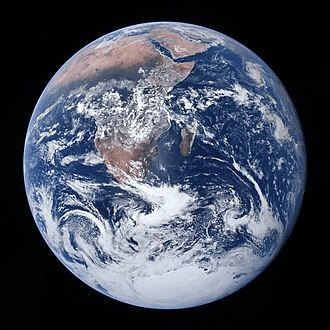
I hope the reader understands this–it is impossible to survive without Earth, and that might always be the case. meat, potatoes, and corn of it: there is no survival guide for the apocalypse, and anyone offering it is either a fool or a tool. There’s no water-hoarding, gun-wielding, chemo-therapy-gene miracle unabomber-style banana nut-bread means of surviving–nature was not meant for man. There is no desert far enough, no island sufficiently remote, and there is absolutely NOWHERE in outer space where we can live without decades if not centuries to terraform. Why do I say this? It’s relatively straightforward to understand, and it troubles me no end the degree to which we’ve lost touch. I could point to several reasons to arrive at this conclusion, but they fall into roughly four broad categories.
- Ecological Disaster
- Nuclear War
- Critical Infrastructure Dependence
- Adversarial Rot
None of these is trivial. They overlap. Some can cause (and have precipitated) others. The first two are desperately important, and thus they receive special attention here. The first is the only one to receive significant mainstream press and political attention in recent years, but the second remains one of the major threats we’d rather not think about. Now, before you think this list is incomplete, you’ll understand why I think it is.
Ecological Disaster
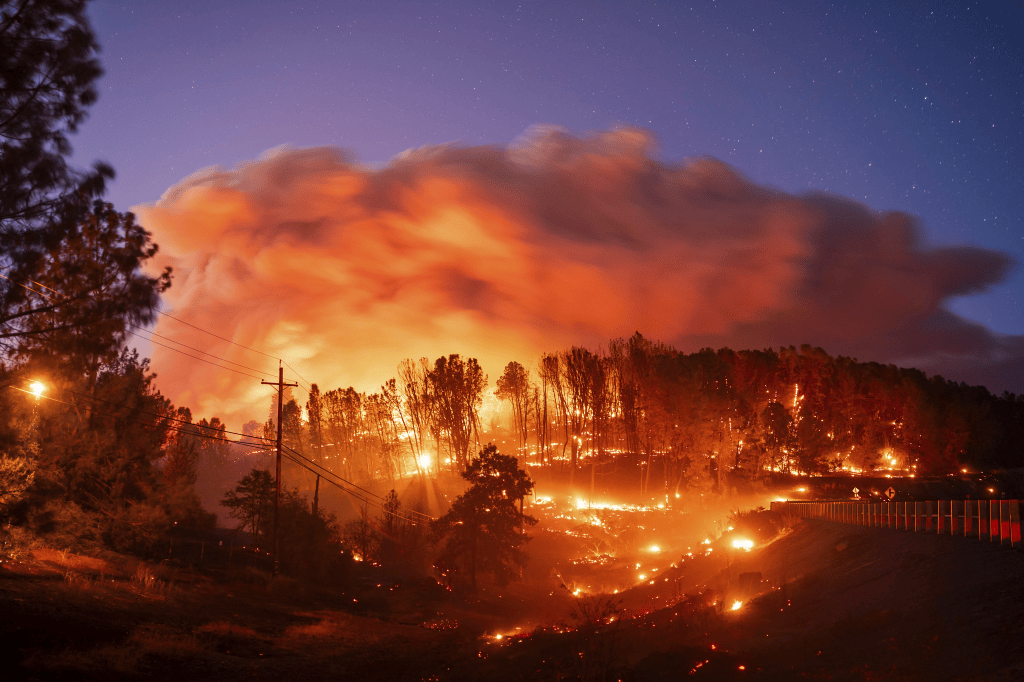
We’ve covered this one to exhaustion. The world is literally burning. I don’t think any credible person can deny this–even in my lifetime, I’ve watched the ecology of north central Texas (my stomping grounds) change wildly. It used to snow once or twice a year. When I was twenty years-old, I was taken aback at a particularly warm January in which we topped 90 degrees Fahrenheit. Fireflies, horny toads, and just amphibians in general are in severe decline. When I was a kid, you could see these animals at night. Now? Nothing. Don’t believe me? Look at the charts below.
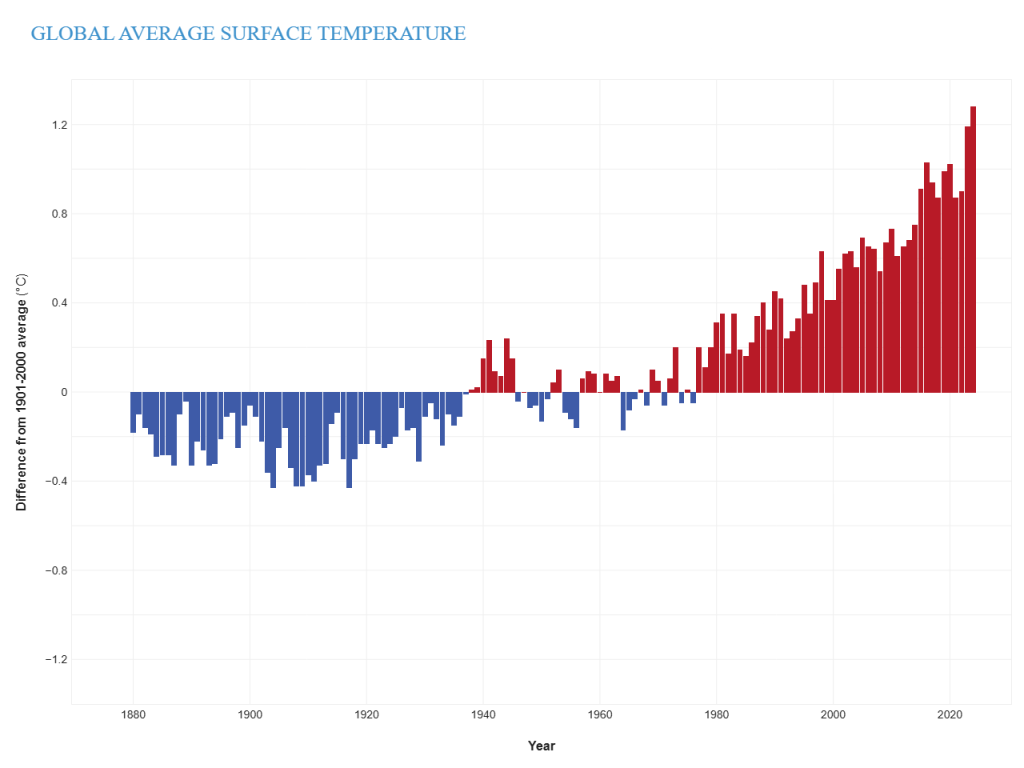
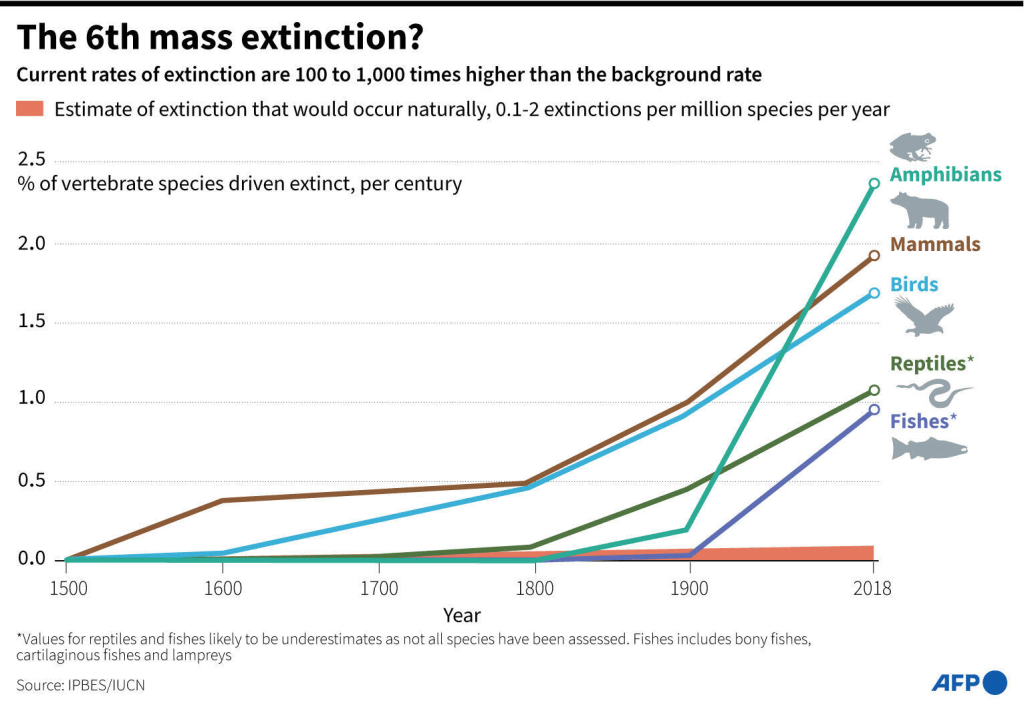
To our knowledge, life only exists on Earth. And we’re flushing it down the toilet fast and furious. Even if you think nothing can be done, every choice, tactical or strategic, can make a difference. But this demands a global rather than just an individual response. For America, this means federal. I can take all the gas meds I want before flying on a plane, but if someone else doesn’t, it still reeks of rotten eggs.
Speaking of eggs, some fall from tall chickens pretty easily. I know plenty who dispute catastrophic climate change, including semi-articulate opinion in my own family. This wasn’t the only reason for a massive schism in my family of origin, but it was a prominent one. Fools believe voter fraud is the greatest threat of today, a theory we can disprove even with the most elementary of statistics. But climatologists must ALL be lying, right? Please, buy my two trillion hectares of Siberian tundra I own, by the way!
Nuclear Disaster

If you saw Oppenheimer, Christopher Nolan’s film adaptation of American Prometheus, The regret of a man who spearheaded the construction of the first nuclear weapon is poignant, and the film was timely and the recipient of numerous awards, including Best Actor and Best Picture at the Oscars. The true Oppenheimer was aware that a change in the calculations would cause a nuclear blast to ignite the entire atmosphere–one must keep in mind that EVERYTHING is flammable at the right temperature. I would recommend understanding better the experience of those who survived the attacks on Hiroshima and Nagasaki. People downwind from testing suffered as well, including American actors John Wayne and Agnes Moorehead. South Pacific communities suffered. The Chernobyl disaster wrecked an unprecedentedly sized region. Every step we take in aggressive warmaking pushes us towards genuine extinction.
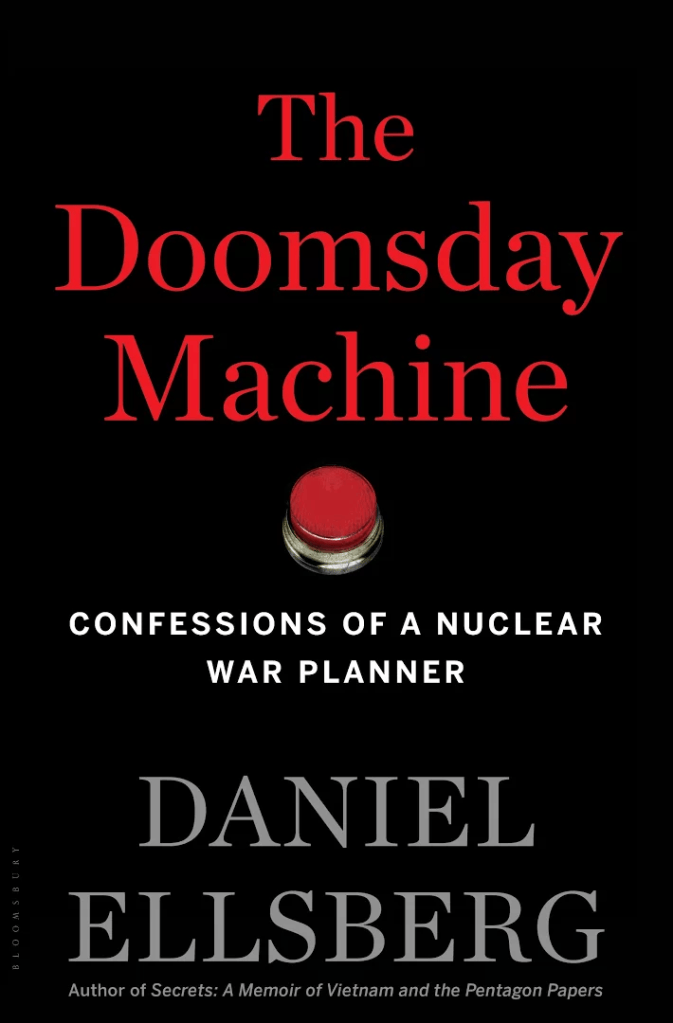
To mark this, Experts at the Bulletin of Atomic Scientists have set their doomsday clock to 85 seconds before midnight. An accidental deployment, a brain-rotted rogue psychopath in the Oval Office, or an aggressive thermonuclear attack by Russia, Israel, or Chine would move the clock closer, no doubt. For more on a wickedly stupid technology and the policies governing it, I would point to Daniel Ellsberg’s excellent book The Doomsday Machine for a long-form treatise on the stupidity and incompetence of safeguarding the only omnicidal technology ever created.
War remains perhaps the biggest cause of nuclear proliferation and risk. We’re now in a state of war with Iran for no reason at all–the right-wing fringe Project for a New American Century had it listed as the last of five countries America should conquer to control the flow of energy, the others being Iraq, Afghanistan, Libya, and Syria. Check, check, check, check, and check! Trump’s stooges try to negotiate what would have been a bad deal after Obama’s historic treaty. Honestly, why would Iran not create weapons of mass destruction? They understand the overwhelming threat of an American or Israeli attack. Now, in the paraphrased words of the fantastic political strategist Stuart Stevens, the 92 million Iranians will fight to the last man, woman, and child. Even our own military historians know the dirtiest secret of them all: bombing civilians pushes them to oppose you at all costs, even if it means embracing a leader they don’t particularly like. Londoners during the blitz would never have converted to Nazism, even if they were racists themselves. Germans clung to their murderous dictator when their cities were bombed. There are many very good reasons to pray our cities aren’t bombed–though Trump said that’s a small price to pay for whatever the fuck is floating in his empty skull–not the least of which our people would cling to Trump in the way they did Bush Jr. following the second September 11 attacks (the first being our supported attack on Chile in 1973.) Bush was floundering, but an attack his moronic staff could have prevented catapulted him to the national stage as a national player taken seriously by the West–he was a pig in shit, and he damn-near destroyed our civilization by attacking more countries.
The truth is plain–nuclear deployment will destroy the world, and should life arise again, I hope they’re smarter about it. Trump attacked Iran for reasons even he can’t keep straight. I find it even more horrifying that Americans are more concerned about the cost of gasoline than the murder of Iranian civilians and the bombing of critical infrastructure. Trump would be hanged if he was on trial at Nuremberg. Speaking of which, infrastructure may well be the central reason we cannot rough it in the wild.
Critical Infrastructure Dependence
The frightening coincidence of the modern population explosion with the discovery of technical devices that, through automation, will make large sections of the population ‘superfluous’ even in terms of labor, and that, through nuclear energy, make it possible to deal with this twofold threat by the use of instruments beside which Hitler’s gassing installations look like an evil child’s fumbling toys, should be enough to make us tremble. —Hannah Arendt
This year marks the sixtieth anniversary of the original Star Trek‘s first airdate in America, and they often treat with alien races who become hapless, helpless subjects of automation. They would have appeared cheesy and silly, except the science fiction authors penning their screenplays understood something we took for granted.
What is critical infrastructure? I would define it as any component of government, agency, and technology which binds us as a civilization together. The motivation for creating said infrastructure is simple–save lives, protect resources, and make our lives easier. Several subcategories emerge:
- Governments
- Municipal
- State
- Federal
- First-order needs
- Clean water
- Robust food supply
- Affordable, safe housing
- Medical coverage (cradle-to-grave)
- Early education
- Electricity
- Police and fire protection
- Legal protections
- Safety nets
- Second-order needs
- College/university
- Public and private transportation
- Career freedom
- Safety nets
- Regulatory apparatuses
- Media
- Non-government agencies
- Corporations
- Contracts
- Charters
- Research and development
- Medical
- Humanities
- Science
If you’re reading this, you probably already agree that these are essential. You might reorder them, and that’s fine. In any case, critical infrastructure follows an interesting history. My grandparents were born roughly a century ago, and they all four were multigenerational farmers. They knew a world without indoor plumbing, electricity, and abundance of food. Searching for work, my mother’s father hitched a train ride as a hobo back in the Great Depression. The others had some access to food, but the Dust Bowl didn’t make it easy for them. I don’t know when they first saw an automobile or what their thoughts about them were–there are so many things I wish I’d asked them when they were here. But they lived in a day of wood-burning stoves and fireplaces. My father’s family were farmers in North Dakota, and that was the true frontier. They would tie ropes between the barn and house so that milking the cows didn’t become a whiteout death sentence. This world vastly differs that one.
An interesting tale to emerge here is William Shatner’s response to younger people complaining about the recent recessions, and just how hard life had become. Like Chomsky, he pointed out that the circumstances of the 1930s were objectively far worse, but they were hopeful nonetheless. Today, with greater security, people feel more hopeless. Shatner pointed out that rather than overpriced food, there simply was none at the grocery stores. That’s a famine I pray we don’t suffer. Foodstuffs existed then, but neither the governments nor the companies owning the warehouses full of nutritious ingredients were willing to ensure it reached the right people. The companies lost more money with transportation, so they let the food rot as people starved. Jesus Christ. When I worked at Amazon, I learned that they threw out maybe a third of all the produce because of slight blemishes that didn’t affect the quality. Imagine that–we can throw it all away, but we can’t increase minimum wage even in the face of overwhelming popular pressure. We’ll strike at the heart of that problem below.
Narratives
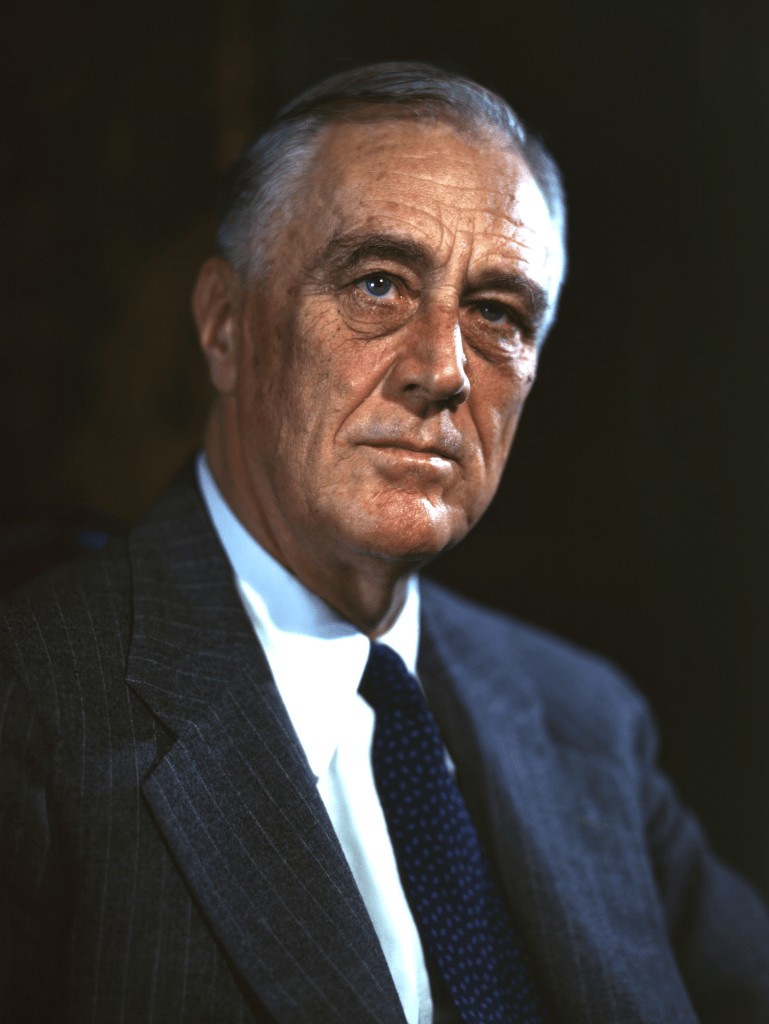
I so ordered the above because each is required, more or less, for those following to exist. Thinkers posit a constitution as a means of balancing the needs of the many with the needs of the few. I don’t think the term democracy really contributes to the first item since we’ve never had the full-participatory sort. Like purely market-based solutions, scale just isn’t possible without a forfeiture of the individual. That shouldn’t be controversial–you cannot rely on the family without offering yourself in their hour of need. But this runs contrary to the narrative we Americans tell ourselves, considering the old adage no man is an island. Narratives, per George Monbiot, play an indispensable role in explaining our place relative to one another, and various leaders and thinkers throughout our history have weighed in on the topic. Reagan said that government was the problem. FDR said we only had fear to fear. Wilson believed we were crusaders for democracy (or really Westernization) of other lands and peoples. Lincoln died for his vehemence that slavery was a moral blight on us all (and he was right.)
When I was a kid, we took it for granted that Nazis were evil. We took it for granted that a man can succeed by striking out on his own. But we experimented with the freedom of such thoughts within the safety of a unionized labor force and heavy government regulation. Following Bretton-Woods, we experienced no recessions for almost thirty years. But enormous tax breaks to the wealthy throughout the 1960s, coupled with the fizzling unsustainable growth that was the military industrial complex led to a collapse. The answer, claimed Nixon and others, was to deregulate capital. By letting it escape, it would create the economic miracle of recession cycles all over again. It’s funny that their solution to the head-cold is a shotgun–Nixon shock, they called it. In the 1980s, the power brokers decided it was better to permit women into the workforce than to struggle to fill positions–it solved two of their wicked problems, namely scarcity of labor and upward income mobility. It is ghastly to consider now, but a woman would never expect to make as much money and a man. The rich cashed in, and through so-called free trade, they wrecked manufacturing in America. We took these things for granted.
Matters are worse–we have become so dependent on modern amenities that we can’t (nor should we try to) be wild animals. We can’t live in a cabin, sequestered from all others. One accident will kill. Our teeth and nails aren’t particularly good weapons, and you can’t manufacture bullets in the hinterland. Whether you like it or not, we are stronger together. In my condition, or even fifteen years younger, I would die in the wild. True, one can delay one’s death with great effort. But where will you find water as errant radiation seeps into every root? Food will be poisoned, and the air won’t be safe to breathe. We can drive a car. My Leaf cost maybe $30K, but I couldn’t manufacture it alone for any amount I can think of. Can you build your car? Can you service the computers in it? Update firmware by writing it yourself? I don’t think of myself as a stupid man, but I have my own limitations, as do we all.
The narrative differs now. Working white men suffer, and though they know it isn’t their fault, they blame the wrong things. Truly, I once thought the Harry Potter series was silly in that a demagogue psychopath could persuade large swathes of knowledgeable music-wielders to abandon all reason. The laugh was on me–Trump and his demented MAGA movement was supposed to be impossible. The Electoral College was created for precisely that moment in 2016–prevent the (originally state legislatures, later the people themselves) rise of an existential threat. The founders were hardly saints, but they understood well that consolidated power, like wealth, is incredibly dangerous to both the beneficiary and his myriad victims-to-be. Narratives may be the most important infrastructure you disavow, because it alone can destroy us. And it has help.
Adversarial Agents
The final threat comes down to the capacity to capture attention of the individual. Whether or not you believe unions should exist, the ultra wealthy top permille should be taxed within a dime of their respective gluttonous, repugnant lives, you should know what they’re doing, even as they encourage you to accept docility and myopia.
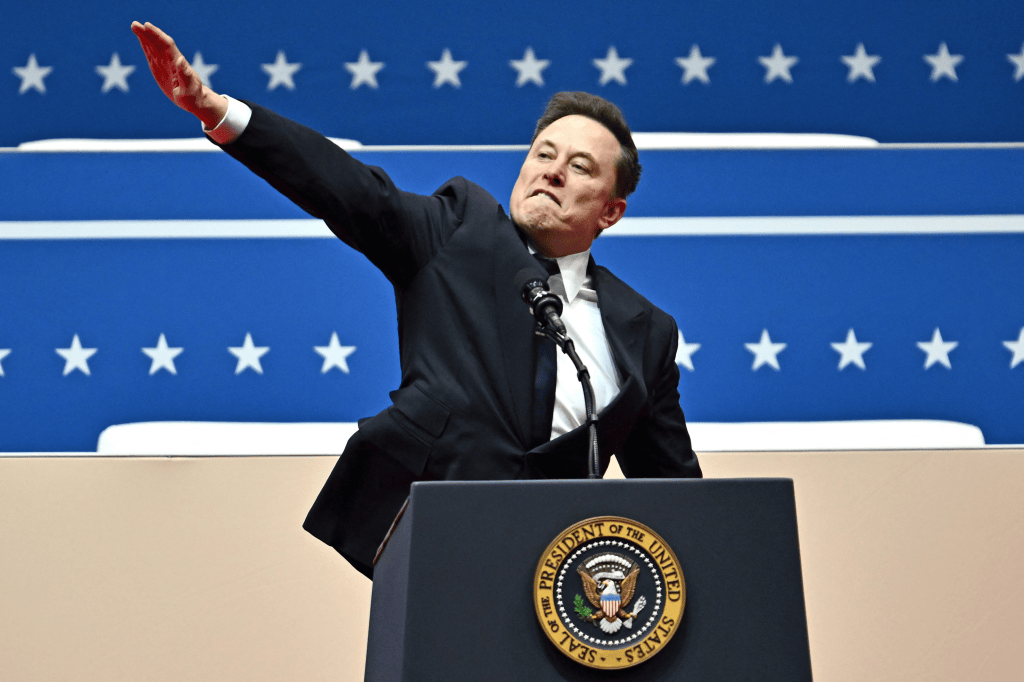
What is an adversarial agent? I’m not referring to spies, nonsense LLMs, or petty criminals. I’m referring to those who wield the might of their wealth to persuade us of preposterous lies. The tech bros. are more specifically my definition here since that’s the economic sector I know best. They angle for universal ownership. They slip their metastatic tendrils into every facet of your life. They monitor you, policing every employment decision and indiscretion. They swallow institutions, hollowing them out to the marrow. Bezos bought WaPo. Musk bought Tesla and SpaceX. All elite tech assert the overwhelming lunatic returns on generative AI models. They buy elections and candidates. Musk has spent hundreds of millions of dollars trying to defeat James Talarico in Texas. The tech billionaires stood around Trump for his inauguration, having made him king. They give him money, and he illegally interferes with the regulatory agencies holding them back from increasing $300M to $400M. Imagine how many mouths that money could feed. Instead, we have a foreign-born yipping, prancing, aryan little hyena bribing the government and buying elections for himself.
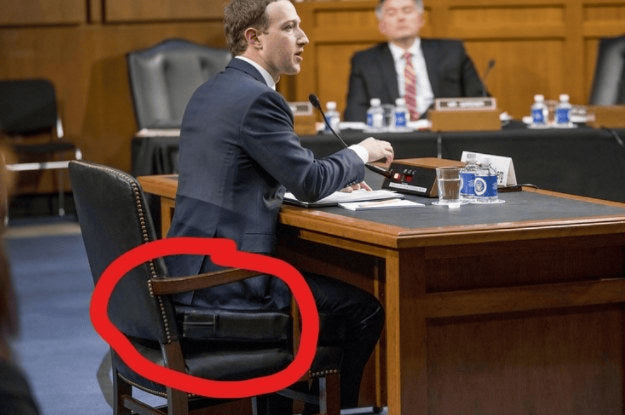
Social media is largely to blame–you need not consult news journals, history books, science books, physicians, or pretty much any other expertise or expert in your quest to make your life better. You can find all of that and more on the internet, and specifically, clickbait rabbit holes designed to hold your attention until you buy something. End-of-story. You might be depressed afterward. You might kill yourself. It’s dwell time that’s king. Is it a surprise that Facebook and its principal sack-of-shit Zuckerberg now lie at the heart of violent political unrest here and around the world? This isn’t controversial, even if you love Facebook. Examples exist everywhere, like the Rohingya Muslim extermination program. Recently, Facebook stumped for Trump, Bolsanaro, and other fascists by feeding phony outrage to disaffected, rudderless people. Why? Because Zuck wants favorable policy, and he can grease Trump’s tiny claws and tinier pole with endless cash.
Artificial Intelligence
The narrative cuts more than one way. For the past seven years, tech companies have promised that generative AI (also called LLMs) would revolutionize the world. It is no surprise that the unaccountable billionaire boys’ club have jumped off the deep end. We’re told by a virtually uncritical tech media that Altman, Amodei, Musk, Bezos, Zuck, Thiel, and so many more uglies that trillions of dollars are essential to make it all work, despite posting the tiniest profits ever conceived.
You may have thought at the beginning of the article that AI should be one of the existential threats. I don’t buy it. First, I’ve spent my career working on these sorts of technologies, and it was a gimmick then as it is now. Sure, it answers your emails, but once you’re too illiterate to read or write, it can do and say whatever it wants in your name. Second, the economics of it is insane. I could wax on about this, but instead I’d send you to Ed Zitron’s blog. I’ll bottom line it: even if the crappy tech could do everything they promise, there will never be enough money, king’s men, or horses to make it economically viable. Why? People need water, food, jobs, security. The vast data centers tech companies are underwriting can be used for little else than the pretend GPUs optimized for LLMs. In the meantime, the power and water consumption will price out pretty much everyone who can’t afford to move away. Perhaps most telling is the fact that these companies violate copyrights left, and well, right–and there are no consequences. If I stole every book ever written, then lifted phrases from it to write something else, what would you think of me? Why does this tech need to be built when it solves literally no problem anyone has, other than dead-end tech companies who’ve reached the final stages of exploitative capitalism, and, in their death rattles, are desperate to cling to relevance? I’m looking at all of them, including the ones where I worked.
I think what I would drive home is that this tech isn’t going to become Skynet and enslave us. Only people can enslave people, and only if we let them. This tech is dangerous, and the companies promoting them change all their terms and conditions to ensure your thought-out intellectual property finds its way into the Wayforward machine. AI is neither a public trust, nor are the ketamine-drenched imbeciles sitting on their booster seats any more capable than your local loan shark at safeguarding the city on the hill. I call all of this Fake-Eye for a reason, after all. Perhaps the token cost is the simplest means of understanding this–if you use the tools, they are deliberately lying about its true cost. Much like Uber attracting drivers from their careers, only to exploit them once they had nowhere else to go, the generative AI promoters capture your dependence, then surprise you with the true bill. Corey Doctorow labels this and many other deceptive practices by companies enshittification.
War on Truth
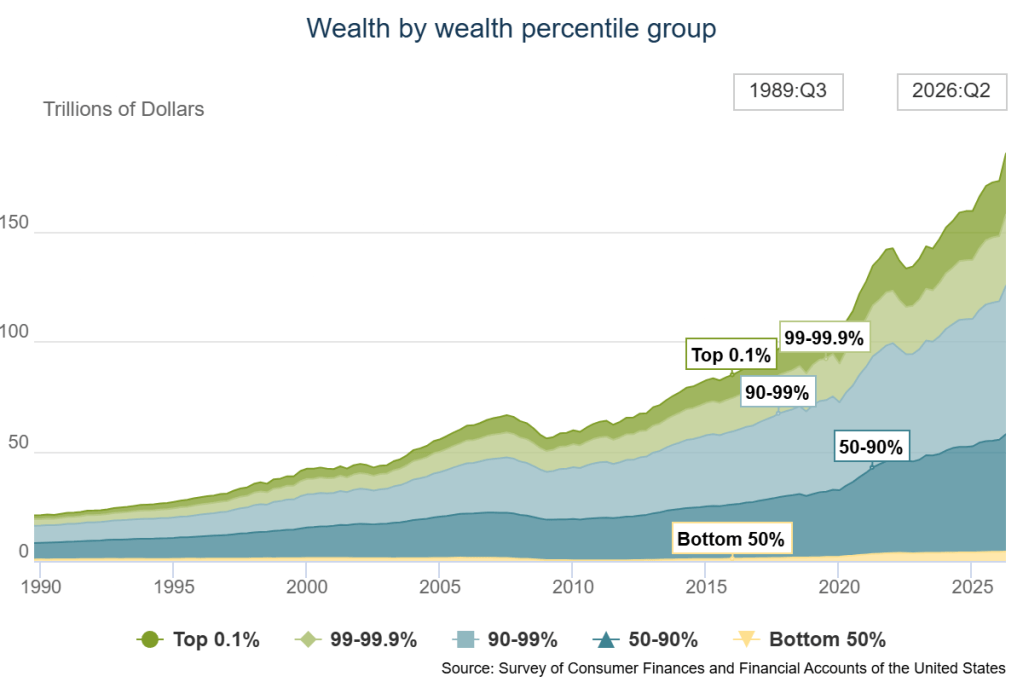
I think Horari said it best in explaining that pure democracy cannot safeguard truth: you can’t vote that two plus two is five, despite some state legislatures trying to do just that. As we make our way to the bottom of the brain drain, our electorate becomes less informed and more radicalized. Thanks to adversarial agents deployed in almost all facets of our daily comings and goings, people fear doctors, scientists, and even artisans. Violence towards political and other public figures increases steadily. One thing people know is that it’s significantly harder to make a living. The chart below makes it quite clear. 50% of Americans possess maybe 2.5% of the wealth. Costs are higher now, thanks to instability in the energy trade. Gasoline is more expensive. Tariffs only compounded this. Trump’s investment in crypto and the insider trading that makes Martha Stewart look like Donna Reed is quickly costing us. Ballrooms, institution trump-branding, and billions of dollars pour into his pockets–there are plenty of holes in his rotting brain to stick every penny. It’s never enough for him.
People aren’t as stupid as Trump thinks, but they’re plenty stupid to elect him again. The GOP’s leaders have long crusaded against truth: trickle-down, Downing Street, Obama’s birth certificate, Pizzagate, microwaves that spy on you, controlling the weather, Iraq’s WMDs, vicious treatment of trans and their allies, and hatred and suspicion of the brown person. It’s hard to imagine that we are where we are now. Truth is not a thing you can eliminate by disavowing it. We ALL had to grow up, goddammit. I certainly did.
Final Remarks
I’ve riffed on a number of topics herein, but I think you should know that there’s hope, even if the enemies are at the gates. The takeaways are simple:
- Participatory elections are a blessing to cherish
- The ship sinks only if we let it
- You cannot live on a sunken ship
- The kleptocratic system is rigged, and governments remain our only strategic tools
- Supporting a murderous leader is tantamount to murder itself
- The top permille are just vicious pickpockets who should face the regulatory consequences of their greedy choices
- Generative AI is a deception and a grift
That’s all I have. Perhaps the kindest thing I can do is channel Paul Krugman by supplying a musical coda. I just heard Jessica Lange sing it on AHS 13.

