Because, Not Despite: The Myth-Con and Other Reflections

Reader discretion advised.

It happened because of our disbelief, not despite it.

It’s been some time since I’ve contributed to this blog–a long crippling illness has kept me running low, and I genuinely believed 2024’s election would go differently. If you’re reading this, it’s most likely that you will agree with me in my profound concern about the ghoulish fascism mooring itself on the national soul. Eight years ago, I wrote my first blog post in the wake of Trump’s surprise victory in 2016. The charter of this blog has been to explain, imperfectly, the complex ecosystem of people, power, and history. More concrete, my purpose was varied: to explain to my contemporaries and peers in high tech why such an event could happen and to connect with the activist community eager and willing to invoke needed change. I feel I accomplished the first objective by reaching many. The second led to friendships to activists working for change, like George Polisner and Noam Chomsky. Chomsky read my work, and now that we’re in what essentially is a post-Chomsky world, I would happily put on my own headstone that Noam would reply to my posts within 90 minutes. Today is his 96th birthday, and a fitting day for my post to appear. Whether decent existence still awaits us after this remains to be seen. I’m tired, aging, and vulnerable.

Despite the ubiquitous works of others whose importance and prominence outstrips mine, we have found our way back to a horrifying outcome. My tendency would be to offer compassion to the weary in dark times. A refrain comes to mind after I spent a few days with my college history professor over the week of election: it is because, not despite. What do I mean? The virulent madness spreads because of its suicidal march to extinction, not despite. On the other hand, we refuse to give up, because it is perhaps hopeless, not despite.

My Own History

As I’ve written earlier, I was raised in north central Texas in a moderate-to-conservative family. My birth father (whom I’ve not seen in 28 years) proudly wore his confederate flag-emblazoned shirt around town, and my mother struggled to better herself through education. He was a drunk who abandoned his children; she pushed us to seek a better life through college.

We were evangelicals, though my parents’ divorce in 1987 earned our family certified letters that we could no longer attend our Assembly of God home church. We sought spiritual matters through a few other smaller churches before conceding perhaps our souls were already lost. I say it as a joke since I don’t believe most of it these days.

A quarter century ago, I sat in Pat Ledbetter’s American history class 1302 to study Reconstruction until the 1990s. It’s rare that I can point to any one class which guided my adult awareness of the world, the wokeness, if you will (or won’t since woke is now a racist epithet belonging to the class nigger.)

I learned about American exploits in Cuba, Central America, Africa, the Middle East, Malaysia, and East Timor. I learned that Reagan, Nixon, Eisenhower, McKinley, Kennedy, and Johnson ordered their surrogates to murder, pillage, and plunder in far away places. I wept at these facts; we were raised to believe Reagan had restored the Christian dignity of America, yet I learned of the thousands of people murdered in Grenada, Nicaragua, the Congo, and Indonesia.

How could a nation of the righteous do these things to the rest of the world? The implication was simple in my 19-year-old brain: if America committed atrocities, and the righteous would not, then America was not righteous. This crushed me–I felt helpless rather than empowered, despite the many men and women who struggled to achieve expansion of rights and to civilize a species rife with misery and mayhem. The typical 19-year-old wants the quick and sometimes dirty solution. Well, enough said about that.

I learned later that doing is more important than being; despair undermines the operation by dumping the manure of cynicism all over us. But movement doesn’t happen without motion; it’s a soundbite, but sometimes they comfort.

During the 2000 election cycle, I convinced myself that most everyone studied the same history imparted to me. I was a fool–millions of people voted against their interests for a failed businessman with the presidential name. I believed people would never vote to restore to power the chickenhawks like Cheney, Rumsfeld, and Wolfowitz after their hijinks in decades prior. Of course, if the votes had been counted, Al Gore would have been president. The Brooks Brothers riot astroturfed the malcontents during the recounts–these were not locals with genuine concern around voting tabulation. They were staffers from the RNC. It isn’t that different from the thousands of Trump signs blanketing Tucson and other swing state cities. No, it was because rather than despite.

September 11, 2001 reworked the system. I cried that day, but not just for the Americans lost. I knew our history–I knew we would destroy the lives and families of millions as our lumbering military bungled its way through the Middle East in search of apocryphal bogeymen. And that is exactly what happened: an ineffective, easily manipulated leader eagerly donned his cowboy hat and spurs as he claimed a fan favorite of politicians–a wartime president. Now, mind you, Congress did NOT declare war on Afghanistan and Iraq. But they signaled they would fund whatever Bush 2 wanted. Or rather, what Cheney wanted.

Reshaped Government Roles
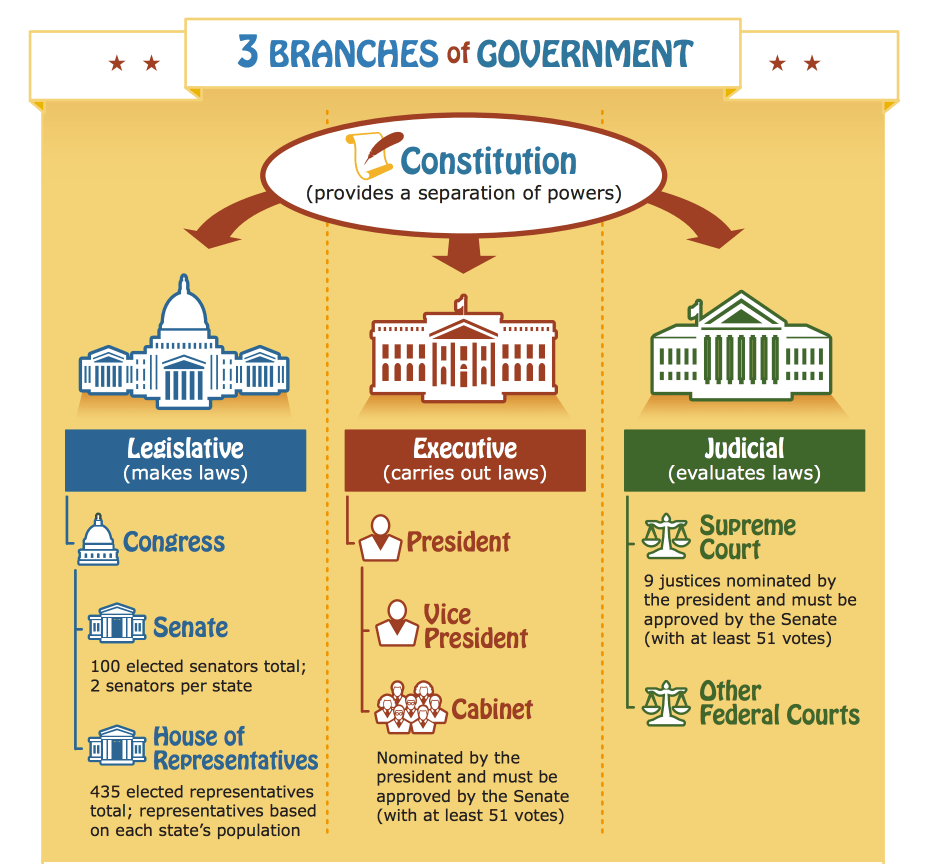
The grisly truth is worse. The legislative branch is supposed to be the sole decider in whether we march into war. At least, that’s what the founding fathers intended. But something happened at the close of World War 2–the first and last deployment of nuclear weapons against a wartime foe. Fat Man and Little Boy rearranged military might in a way unforeseen by the founders. Though some debate the necessity of the bombings, I believe Japan was defeated. They floated the idea of surrender, but the Allied Powers refused, just as Bush 2 would refuse to treat with the Taliban when they offered to surrender Bin Laden. You might think America dropped the nukes despite their horrendous consequences, but, once more, think of because. Truman chomped at the bit, even when Hitler balked at wielding power some physicists believed would ignite the atmosphere. The late Daniel Ellsberg wrote a great book about the existential threat no one ever mentions during election season. The point here is that Congress abdicated its war-making power as subsequent presidents of both parties launched aggressive wars against third world nations.

Since that time, it seems that every president receives his opportunity to set the “legislative agenda.” I might be old-fashioned, but it seems that we should rename the branches of the federal government if the president decides what Congress passes. True, he can veto whatever he doesn’t like, but unlimited terms for the legislators means they would rather abdicate their authority than take the fall for the inevitable buyer’s remorse many voters feel each time we do this again. The president can serve two terms (though Trump has insisted otherwise.) He becomes a lame duck in term two, so America can reserve its ire for him when circumstances deteriorate.

There have been several campaigns to consolidate power within the executive, with Project 2025 being the most recent to receive prominence. Unitary executive theory was a predecessor, as were the works of People for the New American Century (PNAC). They range in scope, with all advocating for a fascist transformation of the federal government and society itself. The fact that 77 million people would vote for such an outcome screams disenchantment and fury.

The system is broken, but not because the institutions have failed people–people have failed the institutions. Mitch McConnell was booed by the Trump thugs at the RNC, despite paving the way for SCOTUS to overturn Roe v. Wade and grant sweeping, jaw-droppingly absurd immunity to all POTUSes, current and past. Worse yet, he could have prevented this mess by upholding his oath to protect the Constitution: the Senate should have convicted Trump after January 6. Instead, he bemoaned the lack of accountability, despite shaping SCOTUS and refusing to press his colleagues to ban Trump from office thenceforth. Why did they jeer him? Because he spoke against Trump, despite playing power games sufficient to coronate Trump for all time. But that’s just it–kissing the ring once isn’t enough. And his inner circle has sheltered numerous allies now in jail for the rampant corruption they shared with him.

Trump Was and Continues To Be No Biden

In 2016, cock-eyed optimists with wispy straggle beards could argue that Trump might make changes to improve the outlook for the labor class. I heard arguments about his outsider-ness, his stubbornness, and his success in business. I knew none of those would serve American interests since he was a Thanksgiving table of government handouts in his business dealings, that he couldn’t back away from even the most indefensible position, and that he somehow could straighten the whole of the federal government by knowing nothing about it. His people started a flag-craze, erecting thousands of TRUMP and MAGA flags. I don’t remember anyone putting a president’s name on a flag to fly alongside Stars and Stripes. Despite my doubts, I started the blog to share my perspective on the forlorn, forgotten working class. I could understand that part of their intentions, even if the xenophobia and misogyny took the lead. I attempted civility, steering away from the baser insults all of us might feel.

For those four years, I blogged regularly on Trump’s escapades and the stories of many who stood strong against him. I don’t want to rewrite what I wrote, so feel free to look at past posts yourself.

Decision 2024 is different. We’ve endured a Trump term, and the policy choices during COVID alone rise to the level of boneheaded, chaotic blunders, if not “high crimes and misdemeanors.” Over one million Americans died, and many others, myself included, suffer with long-term consequences of the first run. Even if grandma and grandpa are expendable (and I heard plenty say so), the job losses were catastrophic in 2020. Those of us who paid attention to those ugly four years cannot deny how much worse our world was. Everyday was filled with insanity–he was vicious, cruel, incompetent, and a disaster. Kamala’s words will come back to haunt us.

Biden assumed as president in January of 2021, and he made enormous headway in both undoing the damage of Trump’s term and advocating hard for student borrowers, victims of gun violence, infrastructure improvements, and much more. Politico‘s article explains it well. His accomplishments include strengthening the CDC and hardening our response to future pandemics, passing infrastructure bills, working to reduce financial burdens on student borrowers, and presiding over an economic recovery. What did he do wrong?

For four years, Trump’s surrogates (such as hyenas like Elon Musk and Vivek Ramaswamy) and MAGA clowns in Congress have schemed and plotted, obstructing Biden and congressional Democrats. These rightwing ideologues spent countless dollars demonizing transgendered Americans and immigrants, persuading people even in Tucson 60 miles north of the border that we are awash in immigrant crime. Newsflash for anyone who cares–there is no migrant crime problem that’s any worse than it was when Trump was president. It’s stunning, but I assume social media remains a lifeline for people looking for things to hate and fear. The RNC spent $250M on attacking the trans community, and Democratic pundits and politicians claim this led to Kamala’s defeat, despite her saying almost nothing on it. The heartless ads produced show pictures of huge men in wigs towering over women basketball players and ballerinas. Why support such cruelty? It was because, not despite.

Their attack ads originally focused on Biden’s age, despite Trump’s very clear cognitive decline. Or rather, because: Trump is easily manipulated with flattery, providing an opening to the greedy among his inner circle. One of his attorneys is already cashing in, selling administration posts to the highest bidder. Trump’s Caligula cabinet picks are so ridiculous, I won’t delve into the details here. It suffices to saw that national security and smooth access to government agencies will be longer term casualties in Musk’s war on America. Even the mainstream media paid excessive attention to Biden’s gaffes while ignoring Trump’s lunacy. After the attempted assassination of Trump, his supporters claimed that Democratic rhetoric was to blame. Nevermind Trump’s own violent diction, fantasizing in public about shooting Liz Cheney, executing immigrants, and jailing all his opponents. Nevermind that it was a Republican who tried to kill him. Nevermind… Ah, whatever.

The point I would make here is that Trump is NOT an unknown quantity this time. We know what his years were like, and several million people stayed home on election day rather than help choose the first woman president. She, like Biden before her, would play with everyone, not just her friends. She didn’t lose because she ran her campaign badly–she articulated her plan well, she was civil, and she was the sole major candidate to treat with the Republican’s central issue: immigration. She was a prosecutor–law and order conservatives should have cheered this. Instead, they chose a convicted felon who stole and imperiled national secrets, who attempted to overthrow the government with violence, and who attempted to change the outcome of an election he didn’t like.

Trump supporters had ample evidence of the harm he could unleash. They chose him in any case, and it means America failed that class and we have to take it once more. I never believed Trump would shock and awe his critics into joining his cause. Does that mean I am among the “enemy within” Trump promises to eliminate with the military?

New (or maybe old?) tactics include:

I could list more, but I think it’s better to leave my past posts as a testament to his many failings; they are numerous like the stars in the heavens and fleas on a dog. It’s important to take a step back to consider his campaign “promises.” Tariffs and ending illegals’ stay in America will wreck the financial market and cripple the consumer base. The point I would make here is that his plans aren’t really plans at all, and his supporters who scream about it don’t understand the first thing about them.

Localizing the Effort

Rather than learning about how things work, Americans stew and seethe in crippling anger. Pew and other polling organizations have reported this for some years now. What is new to me is the degree of hoodlumry even in the very nice neighborhood I call home in Tucson. Signs blanket-astroturfed Tucson drawing inane comparisons: Trump=Low Prices, Kamala=High Prices, and the like. I thought voters were smarter. My physical limitations notwithstanding, I placed $200 worth of Harris/Walz signs on the two thoroughfares near my home, and they were stolen and defaced within 24 hours of their placement. Keep in mind this is a 60 Blue/40 Red spot in Tucson, yet a thousand or more Trump signs went up. Some of those were stolen, but ALL of my signs were destroyed. These aren’t brown hoards rushing us from the border–they’re middle-aged and older white men (like myself) who think nothing of tearing up another’s property and right to speech. Kelly and I replaced the signs on two occasions, and we were met with harassment and derision by some of the passers-by. Though I voted by mail, an elderly friend of mine needed to vote in-person, so I drove him there. In the fifteen minutes I sat in the waiting area, conspicuously MAGA folk appeared to harass the poll worker and pull others around them into the grand show of it they were putting on. Again, these are white men. Grown narcissistic men with nothing better to do.

In the five years since moving to Tucson, I’ve experienced only a few instances of crime committed against me. It was almost always a white man (once an old white woman), NEVER a brown illegal or trans person or bloodsucking schoolteacher with designs on your kids or whatever else gives these people nightmares. This is anecdotal, but it’s very much worth pointing out.

Tilting at Them Thar Windmills

I visited my hometown Gainesville in Texas around the election to be with a dear friend in the hospital. In the years since I moved away, a few windmills have sprouted northeast of town. And what attempt at green energy would be without the hysterical signage of fools afraid of it? But I was immediately struck at the utter lack of political signs anywhere in town. Of course, it’s a safely red district, so the Musk/Ramaswamy/Koch money machine didn’t direct their deepfake signs there. But there were a few choice markers, like one deriding Tim Walz as a klutz. My brother Robin often bemoans that there are few things “to put one’s back up against” anymore–it used to be that Republicans would delight in a candidate retired from the military over a draft-dodger like Trump, but it is no more. They swing at everything, including the constituencies they once praised. In my hometown, they posted a billboard of Walz with the word “KNUCKLEHEAD” painted beneath him. To be clear, Walz has much more in common with my old Gainesville than Trump or even Vance. But is this a surprise? Trump ridiculed John McCain, a man who once meant something to Republicans. It’s now just power lust, feral, aimed at everything, and bent on domination.

The numbers are interesting: Harris received roughly 74.5M votes to Trump’s 77.0M. In 2020, Biden received 81.3M to Trump’s 74.2M. When adjusted for the growth of the electorate, neither party scored as well as they did in 2020. Trump came closer with an increase of 3.7% voter share, but this still lagged the 5% true growth from 2020 to 2024. What does it mean? The 2024 election simply attracted many million fewer voters than did the event four years ago. A narrative frequently pushed by progressives is that if everyone voted, we would win. At the least, this year’s election affirms this. 66.6% of the electorate voted in 2020, versus 63.7% in 2024. The raw difference in the electorate was 12 million, but the difference in voting blocks was 4 million, down from the 8 million required to meet 2020’s same percentage. True, these are the sorts of facts we progressives claw and pick over to find that one thing we can safely place our backs against. If anything, it underscores the lack of a mandate for the Republicans (and they have failed to earn a majority of votes cast since 2004.) But the ‘winner-takes-all’ feature of our system assigns power to the winning side with little power resting with the losing party. In other words, Trump, as has been true in all elections with him at the top of the ticket, will rule as if he received a majority of the popular vote. Both Biden and Obama, by contrast, won with majority popular votes.

It’s worth taking a moment to look at deltas one cannot obtain without painstaking data entry. First, I computed the number of votes lost from 2020 to 2024 for each state and party. Second, I determined the number of votes needed to flip a state from red to blue. Finally, I calculated the share of lost votes needed to accomplish that change. The states where this was even possible appear below–the hill was a little steep but quite possible. The conventional wisdom that Democrats win if more people vote does seem to be correct.

It doesn’t affect the pragmatics one wit–Trump will govern as if a supermajority of Americans wanted him. He barely did better than his previous outings, succeeding because millions didn’t vote. The challenge for minority rule is treating with the disenfranchised. More people voted for Hillary in 2016 than Trump, but our voices were more than just stifled: he delayed aid to California during wildfires (and he promises to do worse the second time around.) The real problem is that Trump is crazy, and if others tell him that he won, like the perpetual victim Kari Lake, he finds himself needing to believe it. It’s part of the myth-con.

But with the good medicine comes the bad: Trump’s hold on sanity is gone, along with any hope that the two coequal branches can place him in check. The billionaires backing him are in agreement with Harris: Trump is weak and easily manipulated. He’s already picked a grab-bag of cabinet toadies claiming they’ll do his bidding, though the real litmus test requires them to shower him with praise. His choices are inept and reckless: they don’t know the first thing about leading an organization of any kind, let alone a federal agency. The ensuing chaos will suit Trump to a tee.

Speaking of billionaires, it’s worth mentioning that Elon Musk’s embrace of all things Trump following the assassination attempt last summer didn’t mark the off-the-deep-end moment for the world’s richest person. In the past few years, he’s made increasingly crazy statements, fueling his promotions with his wealth and a folk-hero status to the technocrats. He is a splendid example of the danger of believing one’s own press: he’s the richest person, so he must know what he’s saying. No, he is insane because of his wealth, not despite it.

Narcissist Musk tilts at them thar windmills: destroying Twitter in the name of free speech, enforcing illegal and hazardous constraints on Tesla workers to make the otherwise unprofitable business viable, and fighting literally dozens of suits brought by states and the federal government for workplace violations while executing and bankrolling dozens more suits against his enemies. His true skill is playing the Machiavellian, arguing for his own First Amendment while blasting others for speaking up. He and DEI-foe Ramaswamy plan to destroy the civil service, replacing it with workaholics who faint after 12-hour shifts. Good luck finding that.

Musk’s insanity makes him a true enemy within, an immigrant playing cuckoo bird as an innovator and savior to humanity. He has, like Rupert Murdoch before him, invaded our country on a quest to hollow us out from the inside. Vance is another cuckoo, claiming an Appalachian homespun origin while attending ivy league schools. Like George Santos, he has learned the Roy Cohn art of saying whatever is necessary to win.

This is a pattern: Trump’s inner orbit attracts the same sort of myth-conning that has propelled him to the presidency now twice. RFK, Jr. fits the bill–he’s unscientific, narcissistic, and just plain nuts. He believes vaccines cause autism, that wireless tech causes cancer, and that COVID is a conspiracy against whites and blacks designed by the Chinese. Jesus, I don’t know what else to say. He will lead the FDA.

What more? A wrestling exec will lead the Department of Education, a news host the Defense Department, an NFL alum the Department of Urban Planning, another news host the Department of Transportation. Ugh, never mind. Bob Woodward squinted as hard as he could to find the micron of optimism, but he’s since changed his mind.

Woke and DEI to Blame?

And we mustn’t stop there: Harris’s defeat led pundits to proclaim the death of wokeness, blackness, diversity, and inclusiveness. Maybe Harris’s blackness and woman-ness kept people home, but I don’t think so. It takes genius not to see it, to quote Chomsky. One would never say that a cancer survivor losing an election means that we can’t treat cancer anymore–such a fool would be laughed right off the soundstage.

Blaming wokeness for Kamala’s loss is no less idiotic than blaming oncology because a cancer survivor loses an election.

It comes down to the narrative that Trump’s supporters pushed from the beginning–he’s better with the economy. People are tired of paying more for less, despite the requisite cycle to recovery from recessions. Allan Lichtman and his keys predicted Harris to win based on indicators that should have been in her favor. I believe the true culprit is in the “doppelganger” world I described a few years ago. Naomi Klein wrote a book of the same name last year. Information is asymmetric, preselected by unaccountable algorithms running in social media platforms. People genuinely believe that the immigrant crimewave is real. They believe trans people are perverted men wanting to push their way into women’s sports and bathrooms. They believe DEI initiatives undermine the fabric of business and family. They believe immigrants are roasting America’s dogs and cats. How does this happen? Why do people believe these things without actually seeing them happen?

I think it comes down to a very human need to manage anger and despair. People know eggs cost twice as much as they did four years ago. They’re angry that the rich continue to get richer while everyone else pays more for less. Trump’s backers know this all-too-well, and refocusing extant anger is propaganda 101.

DEI is an enemy for Ramaswamy and Musk: in the latter’s view, it is discriminatory. Of course, these are not data-informed positions–they’ve fallen for a gimmick as old as civilization itself: conflating rare, good fortune with wisdom. Money is the thing that matters to Trump in any case.

Musk has given us plenty of samples of his inner workings, threatening federal workers and anyone he perceives as the enemy. It turns out that he’s also quite stupid, targeting employees who work on ecological diversification rather than diversity and inclusion. No matter the brain rot gnawing at him, his tactics mobilize Trump’s brownshirts to drive these people from their homes. The DOGE (department of government efficiency) promises to purge the civil service of practically all expertise, with half-wit loyalists prepared to take up residence. It is a grim portent of what Trump’s second term promises: cruelty and vengeance.

How Goes the Myth-Con?

Rallying otherwise decent people to do evil isn’t new. As we’ve observed before, totalitarianism begins not with a twirling mustachio and his manifesto to do harm, but rather a white knight claiming to want to save those decent people. The most tyrannical regimes in the world invoke their authority from democracy, divinity, and freedom. They don’t appear in the shadows, twirling their mustaches. Except when they do: Trump isn’t popular, nor has he ever been. But he is a hero to his ardent supporters. While visiting Phoenix, I came across a lot with twenty or so American flags, together with a poster of Trump which canonizes him by the two impeachments and one assassination attempt. (This replaced a “Let’s Go Brandon” flag this brain trust flew over his house.) In other words, the bad guys wanted Trump gone, so that means he’s a good guy. I call this the myth-con. He is deified precisely because of consequences deriving from the response he’s coerced from others.

Like Hitler before him, Trump’s attempted assassination was carried out by a rightwing gunman who snapped. His surrogates were quick to blame the Democrats and their rhetoric for the attack, despite his very, very long history of ratcheting up violent threats. He even went so far as to threaten Liz Cheney’s life by firing squad. She voted with his bloc over 95% of the time, but resisting the rise of fascism is just a bridge to far.

To be clear, the conservative chicken hawks of yesterday are to blame for Trump, even if they decided he was bad news later on. Karl Rove, Donald Rumsfeld, Paul Wolfowitz, Dick Cheney, George HW Bush, and many others sought to radicalize the federal government through their Congressional allies and, of course, the figure-heads George W. Bush and Ronald Reagan. Former Republican strategist Stuart Stevens says this was always the core of his party’s intent. I remember the Bush administration destroying careers of CIA Agent Valerie Plame and her husband Joseph Wilson because the latter opposed the war in Iraq in his capacity as US diplomat. The release of her identity imperiled her contacts, but we already know that the fascist calculus demands total obedience. Though Scooter Libby took the fall, it’s possible the conspiracy rose all the way to the vice president’s office.

I don’t remember believing it was as consequential as the millions displaced and murdered by Bush’s illegal wars in Afghanistan and Iraq, but it demonstrates a hatred even for the sacred cows who oppose the feral party. Trump (the draft-dodging crook) belittled John McCain (the veteran and tortured POW), despite the military sitting atop the conservative pantheon of what is good and right. McCain died, and his Arizona voted Trump back to power in 2024. The myth-con requires key ingredients: the gladiator struggles against a corrupt system with nothing less than divine calling to save the marginalized and disaffected from aggressive hoards. Hitler had his Jews, Trump has his Mexicans.

Let’s take these ingredients: Trump is a gladiator. He swings at everything because, not despite his moral and personal failings. The system is corrupt: Americans know that the economic order is unfair. Many work hard, few receive rewards. For years, they’ve paid more for eggs and gasoline–though these aren’t the only metrics of value, they’re enough to enrage ordinary people. The white working and uneducated classes are deeply disaffected–DEI and wokeness appears to benefit brown women, and that bothers them. Jordan Peterson and Joe Rogan tell young white men that they’re victims, too. Because they’re already unhappy, it’s easy to blame the deepfake hoards pouring across the border. Immigrant crime is almost nonexistent, but social media locks people online by triggering the most powerful emotions. They decide that the Haitians eat American pets because they’re angry about longer working hours with less pay, and the regressive sales tax that is inflation. The “otherness” easily depicts the Democratic choice–she’s a black woman. Never mind that she ran one of the most conservative Democratic campaigns of the past fifty years. The myth-con can succeed on the strength of well-intentioned pollsters and pundits who play to the state narrative, as you can see in Bill Maher’s recent interview with Jane Fonda. Rather than admit that Trumpism is avarice and bigotry, his surrogates would insist that Kamala is for “they/them”. Biden was more openly pro-LGBTQ, but he’s an old white dude with a good Christian name.

The myth-con can succeed on the strength of well-intentioned pollsters and pundits who play to the base narrative.

The last ingredient is actually the hardest for me to understand: the divine calling. Trump himself claimed that God saved him from assassination so he could save the country. I would argue that people believe lionize Trump despite his cruelty and utter absence of morality. But I believe, like my history professor before me, that it is because of these things. Fanatical apologists believe he will repair their faith in decline. Others call him King David, Jehu, or Moses: his failings are the reason for his deification. Trump’s appointments to SCOTUS overturned Roe v. Wade, a long-sought event celebrated in most quarters of conservative Christendom. It doesn’t matter what Trump says or does. Abusing women, paying porn stars, and elevating to powerful positions the most corrupt among us augments rather than diminishes him in their judgment.

It’s unfocused, raw anger. And they’re easily manipulated, like Trump himself. All the ingredients are there, despite much of the mess following Trump’s botched COVID response. But there’s no taste for thinking things through, as disappointing as it is. Even mainstream media fails spectacularly in hitting the salient points hard enough. They announce dispassionately that Trump will seek revenge against his many real and imagined enemies, as though this is normal. Ignorance seems necessary for a demagogue to ascend. Ladies, gentlemen, and everyone else: we’ve been myth-conned.

The how of the myth-con is pretty clear. But why do this? Is being the richest man in the world insufficient for Elon Musk? Can Trump not just enjoy his last years with adoring mobs and merchandise? No, and no: no amount of money will ever satisfy Musk, and nothing short of the throne is good enough for Trump. It is because, not despite. Trump learned long ago from Roy Cohn that leaning into the accusations is the way to beat them. Bob Woodward said in 2020 that he didn’t believe Trump knew the difference between fact and fiction. I would tend to agree–Trump just emits shit, and his lapdogs scarf it down. They twist and twirl to keep it pieced together, but the whole of it will fall.

But Why? For God’s Sake, Why?

When my grandmother and her older sister were growing up in Oklahoma in the 1920s and 1930s, they fought from time to time, as children often do. But there was a sharp difference between their respective tenors: when her sister was angry, she broke my grandmother’s toys; when she was angry, she refrained from it. Her rationale was, “I knew we wouldn’t be mad later.” That is, for anyone who cares to know, perhaps the biggest difference between the two political parties in America. The Democrats play to the mainstream to get work done, while the Republicans obstruct and destroy when not in power, then grasp and claw once they persuade the electorate that the Democrats are responsible. Don’t believe me? Mitch McConnell wasn’t the first obstructionist; one can go back to the 1990s for the shitshow that was Gingrich’s Contract with America. Clinton was as close to a classical Republican as we’ve had in that office since the Reagan years, and they still spent years investigating and slandering him. Many of those same hyenas are still in Congress, and they think Trump’s actions are just fine.

Soon, we won’t need the Republicans to break all our toys–catastrophic climate change and nuclear proliferation remain the two greatest threats to our biosphere with no coherent mainstream message.

But it isn’t satisfying enough to say that they’re rotten apples–we progressives often strain to find the silver lining, that one explanation or motivation that can save their souls. But I’ll say it here–my grandmother’s sister was just plain bad. Sure, she was mentally ill (probably schizophrenia), but she was monstrously abusive to her daughter. Long after her sister’s death, my grandmother felt for her. She was charitable in that regard, even when it was repaid with viciousness.

Soon, we won’t need the Republicans to break all our toys–catastrophic climate change and nuclear proliferation remain the two greatest threats to our biosphere with no coherent mainstream message. The former dwells only in the minds of thinking people, utterly disregarded by Trump and his flunkies. But I believe the Rupert Murdochs and the Elon Musks have surrendered hope that this world can be saved. But I’ll repeat it: if the world cannot be saved, it is because rather than despite their unbelief. The money Musk dumped into Trump’s war chest could have been spent solving rather than creating problems. The billion dollars spent on the election itself could have fixed a plethora of issues throughout the world. Instead, that money finds its ways into deeper pockets.

Taking Our Lumps

As I said earlier, I’ve tried to explain the outcomes precisely because I am a progressive–I want to believe that there is redemption for the wicked. But the 77 million people who chose Trump, along with the 50 million who refused to vote, know now what they’re getting. For another term, we will contend with lawless chaos with an even sharper edge. The evangelicals who selected a sex offender can kneel at all the crosses they want. The attack dog brownshirts answering Trump’s call to chase good people out of their own homes can gush at the flag and praise law and order as they step on Capitol policemen’s faces. SCOTUS has assured Trump everlasting immunity, and therefore he has nothing to fear. I wish I could say the same for us.

Is there a next move? Biden is thinking of pardoning Trump’s intended victims–that isn’t the reason the president has this power, but it exists to permit him the opportunity to cure legal failures. The usual folk will oppose Trump’s batshit crazy agenda. Musk will help him weaponize the soon-to-be-gutted bureaucracy to isolate and eradicate enemies. The House once more voted to supply the president with unilateral power in classifying nonprofits as terrorist. With AI tools, they plan to eliminate the “enemy from within,” or the ordinary folk French revolutionaries claimed to represent, even as they killed them during the Reign of Terror. Obviously, opposing the use of unaccountable technology will become a staple. The one silver lining I can find in all this is that Trump’s lone contribution to any enterprise is the sowing of discord and chaos. It might be difficult for him to execute an agenda while riding the highs and lows of dementia and insanity. But I’m running low on hope. I’m aging, ailing, and grieving.

Are there steps forward? Yes!

  1. Read about American history. Zinn’s A People’s History of the United States features many ways forward, none of which are secret. Labor unions, solidarity, and mutual support make it possible to build strength.
  2. Listen to sensible sources of information. Timothy Snyder, Robert Reich, and Amy Goodman supply that, along with inspiration and wisdom. The day is dark, and though cruelty seems to have won a major victory, people can surprise us. But it isn’t enough to just sit and wait for the world we want–it requires dedication and very hard work.
  3. Kick nihilism to the curb. I was once told by a brother that kindness to a person with terminal cancer was a waste, because, “He was gonna fucking die anyway.” I disagree–that’s when we have the opportunity to show the universe who and what we are. Candles burn brightest in the darkest spaces.
  4. Education is a categorical imperative. Learn all you can. The generative networks used to cheat on homework and manipulate users will drain brains everywhere. You’ll be rare as hens’ teeth if you know anything about anything.
  5. Support independent media. Join sites like civ.works and Democracy Now.
  6. Boycott the bad actors.
  7. Talk to each other. People will surprise you if you give them a chance.
  8. Protect each other. Stand in solidarity with trans, immigrants, women, blacks, gay people, elderly people, and, well, people.
  9. Strengthen education. Generative AI has hurtled us closer to educational bankruptcy. It is unaccountable and dangerous, designed principally to retain platform users until they convert (buy something.)
  10. Do NOT fall for the myth-con, no matter who promotes it. Take sociopaths at their word.
  11. Love each other.

This will be my final post for a season. I’ve spent considerable time researching and writing, and though the work is far from finished, I’m exhausted. I will still be here, so don’t feel as though you can’t reach out. I hope for better health, a return to my career, and a better world. Because, not despite.

The Conservative Nanny State : A Book Review Part Six : Small Business, Taxation, Public versus Private, and Roots of Mythology

In our concluding article analyzing Dean Baker’s The Conservative Nanny State, we touch on the role of the archetypal small business, taxation, and the persistent, seemingly immortal debate on private versus public infrastructure, all with respect to the pantheon of the mythology.

Small Business Blight

Baker argues that the small business occupies a unique, critical niche within the mythology : nanny state purveyors sell policy decisions often on the basis of how said policies affect small businesses in aggregate, based on the pervasive perspective that small businesses are a highly desirable feature of the economy.  Analysts across the political spectrum laud small business in editorial after editorial, such as left-leaning Huffington Post and right-leaning Forbes.  It’s so deeply embedded in our framework that to even ask whether small businesses are, in fact, better for the economy remains anathema.  Arguments range from job creation, financial independence, patent creation relative to big businesses, and the like.  Of course, we previously discussed whether patents really do represent innovation, to say nothing of encouraging it.

Before answering either way, Baker lists cases in which nanny state enthusiasts leverage the widely accepted propaganda to argue policy.  For example, Congress very nearly repealed the estate tax in the early years of George W. Bush’s administration, offering up the hapless small farmer as a would-be victim of the vicious “death tax.”  Baker argues reasonably well that the example is mostly nonexistent, owing largely to the zero bracket and the fact that most of the so-called small businesses affected are not genuine small businesses, but rather partnerships designated to be tax shelters, defined by the Congressional Joint Committee on Taxation.  The New York Times remarked in 2001 that the American Farm Bureau was unable to locate any families who lost their farms due to the estate tax.  The Center on Budget and Policy Priorities suggests recently with Donald Trump’s mad push for dissolving the tax that the true effect of repeal is shielding most inherited wealth from any taxation, as much accumulated wealth among those touched by the tax is untaxed income.  A similar argument applies to Trump’s insistence that most taxes, incidentally perhaps the only taxes he’s paid recently, should be lower to encourage economic growth.  Another interesting discussion on this topic is Nicholas Johnson’s article analyzing the actual effects of a 2012 tax break in North Carolina, promoted of course disingenuously as small business support.

In any case, Baker moves on to argue that the job creation precept of small businesses is actually misdirection, echoed later by The Fiscal Times : small businesses destroy perhaps as many jobs as they create, promoting uncertainty and churn in employment.  Further, he observes that tenure at larger firms is longer, benefits are better, and stability is greater.  More recently, a refrain from critics of the Affordable Care Act is the would-be damage to small businesses.  And yet the mandated requirements actually nudge employment quality in small businesses closer to that of larger firms.

The ACA debate hints at a larger argument that regulation inherently hurts businesses, reliably trumpeted by the conservative Heritage Foundation.  Of course, their arguments, promoted by debunked supply-siders, mandate we accept that a job is universally good, irrespective of the quality or pay.  Their predictable argument is that regulations

may be treated as "unnecessary"
if (1) the costs they impose
exceed the benefits they produce,
or (2) even though they produce
benefits that may exceed costs,
they do so in an unnecessarily
costly manner because of an
inefficient method or approach[.]

Their optimization strategy places money first, captured nicely by the following : if I successfully lobby the government to revoke that pesky “regulation” preventing me from lawfully confiscating my neighbor’s cache of groceries, I’ll save money.  Further, it is indeed inefficient for me to simply not have access to my neighbor’s food, as I have to obtain my own food otherwise.  How does this differ?  Multiply this argument into “externalities” such as dumping lead and other toxins into the water supply and relaxing safety regulations in manufacturing, and one begins to appreciate that more than the job is at stake.

Baker argues further that small businesses receive powerful nanny state protections, such as adjusted tax framework, reduced interest loans, lax safety protocols, minimum wage exemptions, and laughably ineffective self-disclosure regulation of environmental violations.  It turns out that the tax framework permits small business owners to deduct all manner of goods and services, perhaps required regardless of whether that person is a business owner (such as an automobile or a computer), costing the taxpayers.  Further, government subsidies for loans to failed small businesses can be staggering, described in Forbes and a few more hysterical right wing libertarian blogs.  That is, we the taxpayer foot the bill for unstable, mostly failed businesses who enjoy nanny state protections against labor, wage, and environmental regulation and means of pocketing breaks.  He correctly observes that citizens requiring TANF benefits to feed their children receive near universal excoriation while failed businesses and illegal deductions rarely enter the discussion, let alone suffer bad press.

Admittedly, small businesses contribute some desirable dynamism to the economy, but the usual question is whether they are an optimal instrument within free market or social experiment framework; if they were, they wouldn’t require such strong protections to succeed.

Taxes, Taxes…

Baker argues rather holistically against the ignorant perspective of nanny state promoters, that taxes are a voluntary donation.  I’ve listened for decades to family and friends bemoaning of the prospect of a single red cent of their hard-earned money finding its way to welfare recipients.  I remarked that the rate of welfare fraud, coupled with the infinitesimal fraction of discretionary spending moving into the hands of these people is virtually zero; money of higher orders of magnitude flows freely into the mass murder machine of the military and, as suggested earlier, giant tax deductions by corporations.  Tax evasion is rampant in the U.S., a partial list of which appears in Wikipedia; Baker cites a study by the IRS reported in the New York Times in 2006 demonstrating an escalation in high-dollar evasion.  It shouldn’t be a surprise that most evasion cases never reach prosecution.  What’s worse, as of 2006 thirty percent of federal taxes remained uncollected, meaning that if the evaders paid their fair share,

tax rates could be reduced
for everyone by twenty-five
percent, and the federal
government would have the
same amount money.

By contrast, if all TANF recipients, as the nanny state supporters like to suggest, got jobs and got off the government dole, we could reduce our tax burden by a whopping 1.4%.  The conservative nanny state mythology appears more and more to be a carnival mirror of stupidity.

More recently, Trump has stumped for lowering the corporate tax rates, arguing as expected that the current burden is overwhelming to American companies.  And yet the assertion, like most parroted by Donald, is patently false, as documented in April by the Center on Budget and Policy Priorities.  Corporate profits are growing, and the rich are getting richer.  How would reducing a largely unpaid tax burden help working people?  It’s worth remembering the the top individual income tax rate in 1944 was ninety-four percent for earnings above $200,000, or $2.5 million in 2017 dollars.  Innovation, economic growth, and a vibrant technology sector generated by state spending were humming along nicely.

Baker points out that this nanny state gentlemen’s agreement on evasion doesn’t extend to filers requiring the Earned Income Tax Credit (EITC), discussed by the New York Times; audit rates are readily available by income level from the IRS, documented by USA Today.  The gist is that twenty percent of those filing for the EITC receive requests for additional information, akin to a mini-audit.  By contrast, less that twenty percent of earners with income above $10 million ever receive an audit.

Baker continues with a discussion on internet sales, quite interesting in and of itself; suffice it to say that retail giants such as Amazon had escaped paying sales taxes because of ambiguities in managing purchases across state lines.  The public relations defense against self-disclosure was simply that the administrative burden was too high; this is patently false.  When I worked in Amazon Last Mile Logistics, we routinely handled varying jurisdictions in the company’s deliveries.  The complexity of operating in multiple geographies scales easily, as anyone familiar with the space should know.

Finally, he tackles the curious distinction between stock trading, casino gambling, and ordinary scratch-off and lottery tickets.  The taxation rates are astonishingly regressive, ordinary lottery wins being roughly thirty percent, casino gambling seven percent, and stock trading a brutal 0.003%!

Why is Private Better?

We’ve argued at length in previous posts about state capitalism, the economic system, despite all smoke and mirrors, under which we operate.  A pervasive argument of conservative pundits and nanny state babies is that private corporations can easily outperform public agencies because of waste intrinsic to their structure.  That is to say, without the pressure of profit mandates, shareholder backlash, and market principles, government agencies can profligately expend resources enriching themselves and preserving their positions.  By contrast, private organizations, we’re told, operate more efficiently with minimal largess.

I shouldn’t even have to quote statistics or studies to undermine this absurd notion, as anyone who’s ever worked in corporate America knows this simply isn’t true.  It isn’t to say that customer service, after a fashion, might be better in private agencies, as public agencies are generally quite underfunded, part of a scheme by conservatives to “starve the beast,” a notion to which we’ll return.  But this suggests not that all products and services are more sensibly driven by markets, as the destructive nature of markets is well-understood (and there would be no nanny state if this weren’t the case), rather perhaps customer service itself is better left to private organizations.

Donald Kettl, professor at the University of Maryland, penned an interesting op-ed in Excellence in Government, arguing a dual blame to so-called liberals and conservatives : liberals forgot to work out the details of their big ideas, and conservatives have actively, successfully fought to starve and dismantle the administrative state, an oft-mentioned strategy in connection to the recently fired Steven Bannon.  I’d disagree on some of the terminology, but Kettl correctly argues that the political left in this country ceased to operate among the political elites many decades ago.

Baker’s key arguments are that Social Security and Medicare operate on remarkably low overhead, as marketing and monstrous compensation packages for executives simply don’t exist.  He goes on to sketch an argument we’ve mentioned previously, that health insurance ought to be nationalized for the sake of the population.  As David Swanson so aptly put it, Americans can discover, oddly, that other countries exist, and that they’re leveraging universal health insurance programs, as Physicians for a National Health Program have long advocated.  We need not repeat all the arguments here, but as Noam Chomsky so often describes our current, fragmented joke of a system, it’s

an international scandal.
It’s roughly twice the per
capita costs of comparable
countries, and some of the
worst outcomes, mainly because
it’s privatized, extremely
inefficient, bureaucratized,
lots of bill paying, lots of
officials, tons of money wasted,
healthcare in the hands of
profit-seeking institutions,
which are not health
institutions, of course.

Considering, as we have previously, that virtually all technology which we take for granted originated in the state sector, and that no private agency would underwrite such long term investments, it should be glaringly obvious the role the nanny state plays in generating technology, then handing it off to private interests once it’s become marketable.  The nanny state mythology, astonishingly, convinces even highly educated people that the market somehow spins all of this from whole cloth.

Summary : Why A Nanny State?

In summary, Dean Baker’s book is an awesome read, filled with powerful arguments of which we can only scratch the surface.  He has many more recent works with additional facts and figures worth perusing, but The Conservative Nanny State is a primer for many a discussion on the proper role of government in the economy.

So why does the mythology tickle so many ears?  I grew up hearing so much of the rhetoric, and I’ll admit it seemed reasonable at the time.  With much research, I must confess the answers are quite disturbing.  As Chomsky mentions quite frequently, the rise of the public relations industry under Edward Bernays was a product of the remarkable success of the Department of Information (later the Ministry of Information) in convincing not particularly violent citizenry into warring against their white brethren in World War One.  Walter Lippmann and other premiere intellectuals of the day discovered that the power to “manufacture consent” was the only tool remaining in the toolbox, as violence eventually won’t work in an increasingly democratic setting.  Relegating the rabble, the “meddlesome outsiders” to passive spectatorship in policy and active villainy in war is a monumental achievement, and crucial to this effort is a series of scares, beginning with Wilson’s Red Scare, the propaganda around Cuba’s communist roots of the 1920s mentioned earlier, McCarthyism, and the like.  I can remember my uncle reminiscing about listening to records of Ronald Reagan during elementary and middle school, in which Ronnie explained that universal healthcare is a thing of the communists.  Of course, he neglected to mention that his government positions ensured glorious medical care well into his sad last days of Alzheimer’s dementia; unfortunately, he neglected to offer an appropriate avenue for poor white brethren to secure similar, reasonable old age accommodations, to say nothing of the black and brown.

The gist is that the conservative nanny state mythology is a remarkable feat of propaganda and avarice, designed effectively to persuade poor spectators into stumping for obscenely wealthy men with whom they’ll never associate.  Rush Limbaugh, one of the principal advocates for said state, has argued that income mobility ensures egalitarianism in our system.  Would that his variant of egalitarianism cure his stupidity.

The simplest explanation, as William of Ockham once suggested, might be correct.  Power and money has enabled an overclass to systematically hijack the debate, reframing policy discussions in their own image, just as is suggested in the Powell Memorandum.  As for the book, read it.

The Conservative Nanny State : A Book Review Part Five : Richly Bankrupt and Terrific Torts

In our penultimate article in the series on Dean Baker’s The Conservative Nanny State, we examine his discussion on bankruptcy, so-called tort reform, and “takings.”

Bankruptcy : A Nanny State Protection for Me But Not You, But Where is Personal Responsibility?

Bankruptcy has long been a feature of Anglo-American law, owing to creditors’ need for a lawful, orderly way of involuntarily dispossessing debtors, all merchants, of properties and freedom in the late sixteenth century.  In the United States, most bankruptcy laws passed within the first half of the nineteenth reflected this philosophy, exhibited in court battles wherein state-directed debt relief remained under debate.  With the ascent of the Whig party in the 1840 elections, the federal government established voluntary bankruptcy protections in an 1841 act; the government repealed the act a mere two years later, but the philosophy clearly was shifting.  By 1867, debts of the confederate states left northern states clamoring for more legislation.  It turns out that the many pushes for changes to bankruptcy laws often follow an economic downturn, generally at the request of large creditors; this ping-pong persisted well into the twentieth century, with repeal efforts following any slight accommodation for debtors.  In 1910, Congress offered corporations voluntary mechanisms for voluntary debt discharge, something fought vehemently by creditors hoping for harsher provisions.  For twenty years, the battle waged on, edging finally into the Great Depression during Herbert Hoover’s administration.  As expected, creditors and debtors alike rushed to the nanny state for new protections in light of unforeseen, devastating economic realities.  By 1938, sufficient support was available to pass the Chandler Act, named for its primary advocate Congressman Walter Chandler, Democrat from Tennessee, reviewed in an article appearing in The Fordham Law Review in 1940.  Though we’ll pass over the technical details, suffice it to say the Chandler Act represented a study-driven overhaul aimed at updating the Nelson Act of 1898.  For forty years, minor changes appeared here and there, until the passage of the Bankruptcy Reform Act of 1978, a culmination of ten years of hearings and studies, replacing the Nelson Act entirely.  In the years to follow, Congress continued adjustments here and there, representative of the dual difficulties in corporations and creditors fighting to further ensnare debtors while often suffering the same fate themselves.  The complete history is quite interesting, and one can find a worthy read in Charles Jordan Tabb’s The History of the Bankruptcy Laws of the United States.

Dr. Baker’s discussion focuses more on the most recent overhaul of bankruptcy law, the constructively-named Bankruptcy Abuse Prevention and Consumer Protection Act of 2005.  Nanny state apologists suggest individuals who file for bankruptcy are irresponsible spend thrifts who deserve to suffer, but shareholders can escape such difficulties through mechanisms described above.  Well understood is that medical bills sit nicely in the plurality of causes, as described in a report in 2013 by CNBC.  Baker frames the issue quite effectively, describing the large jump in total credit card debt from $100 billion in 1980 to $800 billion in 2004, the time of his writing.  Value Penguin reports more recent statistics gathered from the Census Bureau and the Federal Reserve, exhibiting a peak of $900 billion at the time of the financial crisis, a slump, but later exceeding the 2004 level as of 2016.  Baker argues that the explosion of this kind of volatile debt indicates

that the risk of default on these
loans was not a serious obstacle
to credit card lending[.]

Further, according to Jeremy Simon while writing for CreditCards.com , the so-called bankruptcy reform passed in 2005, misleadingly called “Bankruptcy Abuse Prevention and Consumer Protection Act,” increases the deluge of credit offers to recent filers of bankruptcy : the longer waiting period and tighter restrictions for a subsequent filing offers these sharks the opportunity to bathe in the blood of consumers.

Baker attacks the absurd bankruptcy reform from a different perspective : first, true proselytes of the free market should not want government protection for lenders who make bad choices; in a free market, they would naturally default themselves.  Second, this very protection expands conservative nanny state’s role in the economy rather significantly by empowering it further as a debt collector, contravening further the argument that smaller government is a genuine objective.  As suggested above, the leap in national credit card debt in recent years can’t possibly follow the capacity for repayment, so these lending institutions generally need not concern themselves with stated objectives of offering credit; upon failure to collect bad debts, they can, as Noam Chomsky says, “run cap in hand to the nanny state.”  The bankruptcy bill is one such startling example, though the ugliest hypocrisy of all followed with the bank bailout during the financial crisis : banks need the government to help them crush consumers, but when they run aground, they require a big, powerful state to save them.

Any discussion on bankruptcy leads to consideration of the International Monetary Fund (IMF), a financial agency designed to protect financial institutions in international exchanges.  Baker describes some of the history, particularly how the IMF originally regulated exchange rates under the Bretton Woods system until 1973; the IMF thereafter played the role of international debt collector.  We’ve discussed Bretton Woods before, an international framework designed by Harry Dexter White and John Maynard Keynes in 1944 to prevent repeats of the Great Depression.  For nearly thirty years, the United States experienced tremendous economic growth with no recessions.  In 1971, Richard Nixon eliminated the dollar’s status as a commodity currency, or currency based on gold, transmuting our bills into fiat currency, or currency by governmental decree.  With that and other unilateral decisions in what historians call Nixon Shock.  Though a more thorough treatment of the history of Bretton Woods is instructive (see Chomsky’s discussion), suffice it to say that both purposes of the IMF serve at the pleasure of the nanny state, though the latter day purpose as debt collector serves the financial sector more directly.  Free of the Bretton Woods regulatory apparatus, the financial sector has become extremely wealthy with unrestricted flow of capital diminishing regulation.  The IMF, to Baker’s point, imposes harsh austerity (discussed in a previous post) on nations if they refuse to meet terms imposed by creditors; that is, the IMF protects collectively foreign investors, much like that institution we’re taught is so destructive : the union.  Baker says it best, arguing that

[i]n a free market, there is no place
for a supranational institutional
like the IMF to rewrite the rules to
ensure that creditors are protected.

In a more competitive environment, any creditor could loan any nation needed funds, easily undercutting adversary firms with lower interest rates.  Creditors instead unionize through the IMF to drive nations into bankruptcy.  Baker argues that risk is the business of lenders, and they should suffer the consequences for making bad choices.

Fat Lawyers Gave You McDonald’s Coffee Lawsuit

Baker takes up the topic of tort reform, a favorite windmill the quixotic chicken-littles of the nanny state frequently fan in the faces of the public.  We’re told frequently that greedy lawyers and ne’er-do-wells are robbing hardworking industrialists blind, and that the nanny state must artificially curtail the requisite damages paid by these innocent business elites.  It’s most reminiscent of Ronald Reagan’s inane, racist complaint that “welfare queens” are driving “welfare Cadillacs”.  In fact, the conservative nanny state caters to a host of fascinating topics losing the good hard-working conservatives hours of sleep at nightly, including criminal innocence-by-insanity, lazy people loafing off disability benefits, and, most recently, insistence that illegal immigrants are committing vicious, hideous crimes, a blatant and highly destructive lie repeated ad nauseum by Donald Trump.  It turns out, quite expectedly for anyone willing to devote a paltry few minutes to research, that none of these would-be blights on society actually exist to any appreciable extent.  In fact, tax fraud by wealthy elites is a far more pervasive problem than any of the strawmen aforementioned.

And yet these myths leave an indelible imprint on the impressionable minds of the nanny state’s protectors.  Take torts for instance; Baker describes two stories I remember growing up hearing, the black woman who sued McDonald’s for burning her with coffee, and the story of a property owner sued by an intruder who was injured on the owner’s property in the course of a burglary.  Astonishingly powerful is the propaganda surrounding the cases, as we in a poorer segment of society literally would fall over ourselves to defend the honor of McDonald’s and this property owner.

I happened upon the McDonald’s case again during a legal presentation at Southern Methodist University; the legal scholar offered a piece of the case I hadn’t heard in my household : the woman only asked for medical coverage from McDonald’s, as they had received hundreds (more likely thousands) of complaints through the years that coffee served at 180 degrees Fahrenheit is dangerously hot.  Baker points out one more piece of the puzzle : McDonald’s served their coffee at such a high temperature to mask the bad taste of a cheap brew, thereby increasing profits while distributing the cost to burned consumers.  Again, this is reminiscent of the Ford Pinto case we discussed previously.

The Consumer Attorneys of California offer a good read on the McDonald’s case; suffice it to say a 79 year-old woman spilled the coffee on her thighs, burning herself so badly that she required skin grafting.  McDonald’s, putting customers first, refused to help her until a court compelled them to make up for their mistakes.  The case of the burglary really was about a high school student climbing on the roof of a gym on school property, and a skylight, painted over, gave way when he stepped on it.  A court correctly asserted that public facilities ought to have better protections in place.

Both of these cases are rare instances in which a court awards damages for torts, or wrongs leading to civil liability.  It turns out that less than three percent of civil cases ever lead to a jury trial, as most are decided much earlier, generally through settlement.  It’s revealing to consider a favorite of the tort reformists, medical malpractice.  In the last four decades, tort reform aimed at streamlining the malpractice liability system has managed to shift larger and larger profits into the pockets of insurance companies; Kenneth Thorpe, professor at Emory, published an article in Health Affairs discussing trends in states adopting caps on medical damages, finding a statistically significant decrease in premiums but inconclusive on whether the liability system is genuinely deterring substandard care.  Further, it might come as a surprise that few victims of malpractice actually sue; a Harvard study published some years ago found that only one in eight victims ever leverage the court system.  More recent work appearing in Medscape suggests the number is closer to one in twelve, and that doctors have at their disposable proven means of reducing the probability of lawsuits.  Interestingly, members of my family have had opportunities here and there to sue for malpractice, yet they never did, often citing the “litigious” nature of society, a win for propagandists.

Baker continues the discussion with a partial explanation of the more general costs associated with the current legal system, and that standardizing law and removing much arcane procedure could drive down prices.  But he contends, I think correctly, that limiting fees for lawyers’ services contravenes market ideology.  Fighting corporations is nasty business, as anyone who’s ever had to deal with a medical insurance company knows.  And despite what nanny state conservatives may tell us, the deck is very heavily stacked in their favor.

He also points to the importance of punitive damages, in that suing and punishing a corporation for endangering the public is, in fact, a public service.  It’s hard to even quantify the damage done by McDonald’s broiling hot coffee policy, all in the name of profits.  I’m reminded of all the time one waits on hold when trying to reach customer service for any company, be it cell phone providers, internet providers, or, as mentioned before, insurance companies.  In the interest of profits, these companies understaff their departments, using badly recorded music and automated menus to delay customers for several minutes, sometimes hours.  These hidden costs, or externalities, don’t directly figure into their budgets, as someone else pays that price.  Punishing them for bad service seems perfectly in keeping with market ideology.

Takings : Gimme More, Take Less…

Baker ends the chapter with a short discussion on “takings,” or costs exacted by the government in exchange for property confiscation or laws and regulations which reduce the value of property.  That is, so-called property owners, or corporations, might be quite unhappy when the government enforces regulation limiting how much they can pollute on their property, perhaps cutting down profits or lessening the value of owning the property.  And yet, when government intervention substantially increases the value of property through infrastructure and habitat clean-up, property owners happily accept the benefits without a direct repayment to the taxpayer.  For instance, farmland along the major interstate near my hometown, Interstate 35, was not particularly valuable before the interstate was constructed.  Commercial zones along the interstate are quite a boon for landowners, as gas stations become quite important along long stretches of highways.

The major point here is that nanny state conservatives dislike any regulatory action diminishing property value but freely accept every last penny they can bilk from beneficial government action.  Baker nicely suggests that true devotees of market ideology ought to accept freely that lessening of property values due to government intervention is a cost of doing business, and if they were savvier customers, they’d have foreseen it, harkening to the dogma of personal responsibility they hold so dear.

Next time, we’ll conclude this series with a brief summary of Baker’s discussion on small businesses and taxes.

The Conservative Nanny State : A Book Review Part Four : Demonized Unions and Glorified Patents

Continuing our series analyzing Dean Baker’s The Conservative Nanny State, we’ll touch on a few key features quite effective in funneling wealth upward with no obvious systemic advantage : undercutting of collective bargaining and bestowal of monopoly status for intellectual property.  Baker argues, astutely, that neither of these features really make sense in a free market system, as collective bargaining is a market-based strategy for assuring at least a living wage for tradespersons vying for limited jobs, and government-conferred monopolies are illogical when producing, say a life-saving drug, is incredibly cheap.

Repeat After Me : Unions are Evil, Unions are Evil…

Baker touches briefly on elite hostility to organized labor for mid-to-lower income tradespersons, arguing that it’s an important feature of the conservative nanny state.  It’s certainly easy to see why, as trade unions, as we’ve discussed previously, generated most of the benefits we derive from employment, including paid holidays, vacation, healthcare, weekends off, and the like.  Yet the prevailing sentiment is often quite negative, as documented by Gallup since 1936.  Even in my own work experience have I witnessed the effects of this propaganda.  In working for the aforementioned defense contractor, I remember a strike executed by union members when the parent company chose to slash benefits.  Coworkers scoffed at and mocked the picketers, bemusing of the scabs and the internal contortions to cover the labor loss.  I heard internally that an upper level manager actually physically assaulted one of the picketers after a heated exchange.  The strike failed, the union workers sustained a more undesirable benefits package than had been offered previously, a remarkable victory for anti-unionists among the elites.

My own personal experiences in corporate America offer further revealing data regarding elite hostility toward unionization : both in working for corporate Uber and Amazon, I encountered many of the low wage employees (dubiously mislabeled as free contractors) among the drivers, cabbies in the case of Uber and delivery drivers in the case of Amazon.  I met probably seventy drivers while working for Uber, as the company would spring for free Uber rides home if I remained in the office past ten o’clock at night.  Though the drivers were understandably reticent to discuss with me, a corporate employee at the time, their opinions on Uber’s downward pressure on their wages, I generally could ease them into opening up after I shared the long labor history of America with them.  The picture was universally bleak : living, breathing people trying to survive sharp increases in the cost-of-living in San Francisco found themselves in a harsh, highly competitive trade with a quite hostile corporate sponsor.  Uber routinely would fire drivers with little or no warning, all based on a very arbitrary rating system with very little means of disputing a bogus negative rating.  Uber also sharply cut wages on these drivers.  The picture among Amazon drivers was very similar : no benefits and fast firings were the law of the jungle, true even in more liberal democracies such as the United Kingdom.  I informed virtually all of these drivers I met that the only proven means of driving wages upward is collective bargaining through unionization, something the drivers tell me Uber harshly demonizes; see The Verge for a discussion on Seattle’s efforts to protect Uber drivers.

America’s sordidly violent labor history features an unusually sharp hostility toward trade unions for semi-to-unskilled labor, as they are harmful to profits.  A rather salient piece to the puzzle is the National Labor Relations Act (or Wagner Act) of 1935, conferring the right of private sector employees to organize unions and participate in collective bargaining; the National Labor Relations Board received special attention during my Uber employee orientation, as one of the chief legal officers lambasted the committee as desperate bureaucrats hell-bent on squeezing money out of the innocent drivers.  In remarkably effective legalese rhetoric, she argued that the NLRB is out-of-touch and irrelevant in a world where Uber drivers can nab a fortune in driving, thus, it’s a charity to classify drivers as contractors.  Though she aptly described the experience some of the earlier “contractors” enjoyed, an unnervingly large fraction of latter-day drivers never managed to attain this golden driver’s seat.  Certainly, Uber represents something of a revolution in ride-sharing, but why not support one’s workforce?

Returning more to the historical context, the Taft-Hartley Act of 1947 outlawed secondary strikes, strikes instigated by workers of one trade expressed in solidarity with another trade’s ongoing strike.  You read that correctly : a painter’s union cannot legally strike in solidarity with carpenters participating in a union strike.  Though there is much to discuss on the topic of organized labor (and we’ll touch briefly on a few of Baker’s further points momentarily), suffice it to say the corporate nanny state mythology somehow manages to convince highly-compensated workers that not only is labor solidarity unnecessary (the market argument), but that they themselves derive no protectionism from said nanny state or any other well-to-do analog of the trade union, the former of which is a remarkable feat of propaganda, the latter of which Baker quite powerfully decimates as we discussed earlier.

Patent Trolls and Copyright Cows : The Geese Laying Golden Eggs

Baker turns attention to two extremely powerful, state granted protections for individuals and corporations : patents and copyrights.  Again, conservative nanny state apologists might consider these instruments to be laws of nature, naturally forming optimal strategies in the fantasy land of free markets.  By contrast, Baker aptly describes them correctly as “government-granted monopol[ies].”  That is, an agency, be it individual, government, non-profit, or corporation, can apply for patent or copyright protection on an invention, idea, artistic expression, and so on, ensuring that agency time-limited monopolistic control over usage and sales.  The argument in favor of these anti-market practices is that they encourage innovation and creativity, generally socially positive notions.  In fact, the power derives directly from the U.S. Constitution : under Article I, Section 8, we have that Congress has the power

[t]o promote the Progress of Science and
useful Arts, by securing for limited 
Times to Authors and Inventors the 
exclusive Right to their respective 
Writings and Discoveries.

This power owes to the guild and apprentice system from the Middle Ages, Baker explains, as a means of increasing innovation and scientific discovery.  Yet, are these the most optimal means of doing so?  Certainly, executives of Merck, Pfizer, Apple, Google, Amazon, and a lengthy list of other companies are quite wealthy.  But do these state-guaranteed monopolies efficiently generate innovation?  My own background includes an understanding of the evolution of software development, and the open source standard (free and open to the public) has grown tremendously in popularity in recent years.  Well-known to software developers is the superior reliability in Unix-based operating systems relative to that of proprietary models.  It’s reasonably understood history that the biggest software firms in large part owe their success to IBM’s PC open architecture strategy, suggesting an open OS standard could have created a proliferation of competitive products in both basic kernel (OS) space operations and those in the user space.  Though we have many advances now in personal computing, much of the game-changing advancement has occurred either in the state sector (discussed in previous posts) or in highly competitive, less monopolistic settings.

Baker describes an interesting economic parallel : dead-weight loss is the difference between patent-protected and market-based prices, though he scoffs that his fellow economists find no fault with this loss with respect to pharmaceutical prices, despite their hostility toward the same loss incurred in tariffs.  Technical economics aside, Baker poses the critical question : are patents and copyrights the most optimal instruments of their kind for encouraging and rewarding innovation?

To answer the question, Baker points to a highly controversial beneficiary of the patent system : the drug research lobby.  If we are to believe conservative nanny state apologists, he argues, the patent system should be the most capable protection in assuring innovation in medical advances and lifesaving technology.  Patents account for a factor four multiplier in drug costs, meaning if a generic costs one dollar, the corresponding brand-name drug costs four dollars, according to the final Statistical Abstract of the United States, the 2012 edition.  (We could discuss the highly politicized, stupid decision to discontinue this long running report published by the U.S. Census Bureau, but we’ll defer for now.)  As of the publishing date of the book, the factor was three, meaning the divide has grown by thirty-three percent.  Pharmaceutical companies offer exactly the argument as described above, despite large fractions of profits wasted on marketing and executive salaries.  Overall, Baker reports $220 billion in drug sales in 2004, confirmed by the aforementioned report.  By 2010, this number grew to nearly $270 billion.

Because patent protection ensures higher drug prices than could otherwise be paid, literally millions of Americans each year skip medications to save money.  Harvard Health Publications reported in 2015 cites a survey by researchers Robin Cohen and Maria Villarroel that eight percent of all Americans fail to take medications as directed because of lack of money.  As expected, older and less well-insured Americans missed dosages in higher numbers, but astonishingly, six percent of Americans with private insurance skimped on their medications.  That is to say, the private insurance system, adored by conservative nanny state apologists, forces Americans further into poverty and costs too much.  A report in 2012 by The Huffington Post indicates that these pharmaceutical companies spend nineteen times as much on marketing as they do on research, suggesting that the huge windfall of patent protection isn’t really going to good use.

Baker points to an even more serious consequence of artificially ballooning prices : black market drugs.  A strategy comparable to “medical tourism,” discussed earlier, leads Americans to order potentially dangerous drugs from foreign countries.  This steady flow of both illegally and legally obtained medicines is completely expected under a system in which these millions of Americans self-report failing to take drugs for lack of money, a failure of the patent system.

Perhaps most damning is Baker’s argument with regard to copycat drugs, or drugs designed to mimic the behavior of a patented, available drug.  Pharmaceutical companies have discovered that hitching themselves onto bandwagons of popular, patent-protected drugs of high import (such as allergy, diarrhea, and heartburn medications) is extremely lucrative.  That is, rather than invest money and energy on new lifesaving drugs and technologies, they try to replicate something in the mainstream by tweaking a few formulas.  As of 2004, two-thirds of all newly approved drugs in America were copycats, according to the Food and Drug Administration.  That leads to a startling number with regard to where the research money goes : sixty percent of research dollars goes to such wasteful creations.  So sixty percent of medical dollars, private and public, do not promote innovation at all, because of the patent system.  Other inefficiencies of said system appear in a 2015 report by BBC : for instance, many drug companies employee “floors of lawyers” to fight in court for patent extensions, a strategy interestingly called evergreening.  Dr. Marcia Angell, former editor for The England Journal of Medicine, discussed in The Canadian Medical Association Journal drug companies copying their own drugs for patent extensions, an example being Nexium and Prilosec developed by AstraZeneca : the drug company hiked the price on the outgoing to migrate patients onto the incoming, hoping to retain marketshare once the patent expired on the outgoing.

The aforementioned pair of drugs are examples of enantiomers, or drug molecules equivalent in structure and form, one a mirror image of the other.  These arise naturally in the course of development, often with very similar physiological interactions; thus, the practice of patenting both separately is rather suspect.  In “Enantiomer Patents: Innovative or Obvious?” appearing in the Pharmaceutical Law & Industry Report, Brian Sodikoff, et al. discusses the legal standards in doing so, suggesting the patent system overly caters to the corporations.  A few other examples of double-dipping are Lexapro and Celexa, and Ritalin and Focalin.

It turns out that drug companies leverage several tricks in the spirit of the foregoing to stretch the lifetimes of patents, including

  • rebranding mixtures of existing drugs, such as Prozac and Zyprexa to obtain Symbiax,
  • morphing generic drugs into new drugs by adjusting dosages, such as Doxepin into Silenor,
  • repackaging an existing drug as is for a new purpose, such as Wellbutrin and Zyban, and Prozac and Sarafem,
  • creation of extended release variants of existing drugs by established mechanisms, such as Ambien and Ambien CR, and Wellbutrin and Wellbutrin XL,
  • changes of delivery mechanisms, such as Ritalin as a pill and Daytrana as a topical patch,

among others.  In each of these cases, big pharma manages to hike the price substantially, even when cheaper generics are available with adjustable dosages.  These corporations argue they should receive full patent protection as though they devoted the same amount of resources for researching the copycat as they did for developing a brand-new therapy from scratch, a preposterous claim. What’s worse, drug reps, or prettified agents armed with high discretionary credit routinely accost physicians, offering expensive samples and lavish luncheons for free; NPR reported earlier this year that the drug rep interaction significantly increases the number of costly prescriptions written by doctors.  Though we could discuss these inefficiencies and contradictions more, we’ll leave it at that.

By the previous arguments, we certainly can begin to believe that patents and copyrights probably aren’t the most efficient means of promoting innovation, as Baker correctly asserts.  So how does one promote innovation?  Baker suggests raising government investment in research, establishing a grant and prize system aimed at spurring innovation.  Researchers would strive toward successful development of lifesaving medical technology, competing jointly for grants to fund their work.  Upon successful innovation, they could receive prize money commensurate with the societal benefit.  Upon acceptance and approval, their contributions would become public domain, so drug manufacturers could compete on the open market for the cheapest way to produce the drugs, much like application developers could leverage IBM’s open architecture.  As Baker observes, this isn’t the only approach, but it certainly is worth trying, considering the current system is so remarkably wasteful.  Since the government confers the patents and copyrights for the public good, the government could ostensibly leverage other instruments to promote “the Progress of Science and Art.”

Next time, we’ll consider Baker’s arguments on bankruptcy, torts, and takes.

Shyam Kirti Gupta and Shyam Kelly Gupta contributed to this article. 

The Conservative Nanny State : A Book Review Part Two : Job Protectionism and Differing Sets of Rules

Continuing our discussion of Dean Baker’s The Conservative Nanny State, we’ll address a powerful function of the nanny state : job protectionism.  Conventional wisdom among the elite and intellectual sector is that though lower income earners face harsh competition because of a heightened labor supply (read : too many people vying for the same job), we in the higher income brackets don’t face competition because we were sufficiently lucky or prudent to seek work for which little labor supply exists.  It turns out that this self-congratulation is a bit premature.

Poor People Should Compete with Foreign Workers, But I Don’t Have To… I Shouldn’t Have ToHelp Me Nanny State!

Baker begins with discussing a rather well-known feature of the neoliberal program : the offshoring of labor and the import of foreign labor which pits low-to-mid income earning tradespersons in the United States against very cheap labor in the third world.  Thus, despite close to a doubling of the economy and worker output since 1980, these income earners’ wages have quite predictably stagnated.  Despite this, those of us in the top five percent have experienced great wealth gains in the same period, also a rather well-known but perhaps harder to explain phenomenon.  Baker suggests that the stock answer to why this is the case tickles the ears of the purveyors of the conservative nanny state, as highly compensated persons in the aforementioned bracket are important in maintaining the mythology : go to school, work hard, then make big bucks; those who ignore this advice deserve poverty.  In fact, highly educated acquaintances of mine from across the political spectrum often happily claim that the sum total of their income is due to their substantial, innate value after heeding the mythology, yet poor people either should get off their lazy asses (the conservative version) or utilize government incentives for vocational training (the so-called liberal version), a dichotomy Baker coincidentally references almost verbatim.   So what is the truth?  Baker offers a rather astonishing observation : the U.S. immigration policy, discussed in Eric Freeman’s Barriers to Foreign Professionals Working in the United States, along with protective licensing agencies and diffuse, indeterminate standards, ensures that fewer highly skilled professionals are available than are needed.  A few years ago, both the New York Times and The Atlantic offered a discussion of the difficulties facing foreign doctors in obtaining licenses to practice medicine in the U.S., describing the labyrinthine procedural hurtles depriving these competent, well-trained, desperately needed professionals of a career here in the States.  The New York Times reported in 1997 that the U.S. government actually paid hospitals in New York not to train foreign doctors.  Imagine if the U.S. government actually paid an automotive firm not to offshore manufacturing?  Baker continues by spelling out the cost of this protectionism, coinciding nicely with its very justification :

[i]f free trade in physicians brought doctors'
salaries down to European levels, the savings
would be close to $100,000 per doctor,
approximately $80 billion a year... [ten]
times as large as standard estimates of the
gains from NAFTA.

It’s worth remembering that the absurdly mislabeled “free trade agreements” NAFTA and CAFTA have virtually nothing to do with higher-compensated trades such as doctors, lawyers, and technocrats.  After all, it wouldn’t do to compete with every competent Chinese or Indian doctor, even if the healthcare savings conferred to the weary working class would be immense.  Yet anecdotally, doctors tell me that skyrocketing tuition, malpractice insurance, and the cost-of-living require much higher salaries.  Baker doesn’t address tuition and rising costs-of-living directly in this book, though I speculate he’d attribute at least the former if not both to the conservative nanny state.  Noam Chomsky has speculated that tuition hikes are a mechanism for control of young college students rather than an economic necessity in sustaining the university system.  Baker’s point here is that the protectionist barriers for doctors, lawyers, and technocrats have absolutely nothing to do with market principles, as none of us could compete in an absolutely free and open market with the wages we receive today.  The incredibly high cost of the American medical system drives hundreds of thousands of people into bankruptcy each year, roughly sixty percent of the 1.5 million people who file each year, according to The Huffington Post in 2015, no doubt partially explaining a phenomenon known as medical tourism, or Americans traveling abroad to receive medical treatment.  CNN reports that the increasingly growing industry grants Americans access to world-class healthcare at maybe thirty to forty percent the cost of the same care here.

Yet another device of protection for physicians is the American Medical Association, an organization of physicians with substantial political clout, largely responsible for ensuring tough immigration standards and difficult standards.  It turns out we have another label for this : a trade union.  “Union” has become a terribly dirty word in Americana, as what should be a revered, indispensable public institution has largely succumbed to a massive, unremitting campaign of propaganda; we’ll return to this topic shortly.

So is this really happening?  Baker suggests that denialism is the most widely cited defense against these allegations.  He refers to hilarious anecdotes such as “my doctor is Pakistani” as the defense mounted by those who stand the most to lose by acknowledging this protectionism.  I could make the same observation that I’ve worked with many foreigners over the course of my career in technology, so even my initial knee jerk response was disbelief.  Baker retorts that citing a Mexican avocado in an American grocery store as proof that the U.S. government doesn’t restrict agricultural trade would receive unbridled derision and heart laughter right out of the economics profession.  Per Baker, we should treat this denialism in kind.  He argues, rather poignantly, that

[t] truth is that the "free traders" don't
want free trade--they want cheap nannies--
but "free trade" sounds much more noble.

So what can we do?  First, we recognize the protectionism extant in our own fields; next, we recognize the solidarity we should share with those less fortunate tradespersons not conferred the enormous benefits of said protectionism.  Finally, we fight for a better path forward.  Baker’s proposal, which he by no means claims is the only means of improvement, is to enact true free trade agreements which establish international standards meeting or exceeding our own in each industry.  Further, highly-skilled professionals migrating to America could pay a percentage of their incomes back to their home nation for the purpose of training other professionals; many repatriates send money home to their families in any case, generating demand in third world nations, an obviously desirable feature if we’re to speak of serious market application.

Baker ends this section with an important point about a more egalitarian market-based approach reducing salaries for highly compensated earners : if the cost of doing business falls because of an increased pool of workers, the cost transfers to the population at large.  This, in turn, tends to reduce the cost of living for everyone.  None of these changes would happen immediately, but it’s nonetheless worth remembering that reductions in healthcare costs means more money for wages for everyone, including those of us in the technocracy.

The other point worth making here is that protectionism, if applied at all, ought to apply equally.  Factory workers, welders, and janitors ought to receive equal protection for their livelihood.  As we’ve suggested before, the rise of Trump easily follows from a highly disenchanted working class marginalized by globalization and a hostile overclass enemy; these are issues not just critical to good citizenship, but now perhaps for the very survival of our species.

Never Make a CEO Compete…

Before moving on, I feel it’s important to address thoroughly one point Baker omits in his discussion on protectionism for the well-to-do (though he picks up the general topic later in the book) : the most highly-compensated sliver of the economy, particularly CEOs.  I’ve worked in technology companies for over a decade, some of whom are in the Fortune 500, and an (admittedly) anecdotally pervasive theme is the frustration with, disapproval of, and devaluing of each respective executive leadership team.  Generally the sentiment is that chief executive officers (CEOs) and their directs are pampered, overpaid, egotists whose positive contribution dwindles as the machine grows : by the time corporation reaches a slow stage of monolithic decay, say as in a defense contractor, the CEO doesn’t seem to serve any function except to drain resources from the remaining parts of the business.  My first job, stated before, was in precisely such a company, and we referred to the executives collectively as “mahogany row,” owing to the rather beautifully polished paneling in their luxury, separate-but-not-equal building complete with covered parking (fellow Texans understand that perk, considering heat and hailstorms).  Our offices, by contrast, reminded me of my elementary school : seemingly ancient construction with doubtless asbestos-filled flooring and lowered ceilings to conceal the cigarette smoke stains, an artifact of the smoke-filled days of yesteryear.  In any case, my thinking is somewhat more elementary : whatever skills an executive requires to perform his duties no doubt exist elsewhere.

Considering the well-documented, exorbitant increase in CEO pay with no obvious, market-based cause, we might suspect they somehow are gaming the system.  Baker describes CEO pay later in the book, referencing L. Mishel, et al.’s The State of Working America, an exposition on the stunning explosion of the CEO-to-average worker pay factor, roughly forty in the 1970s, obscene three hundred in late 1990s, then back to still obscene two hundred as of the mid 2000s.   He also points to The Growth of Executive Pay by Lucian Bebchuk and Yaniv Grinstein, a discussion measuring pay of the top five executives in each of 1500 corporations over 1993 to 2003; they conclude that CEO pay jumped at least twice as quickly as could be explained by a number of success metrics, including company profits, industry mix (concentration by region of business types), and market capitalization (the total value of the corporation).  That is to say, scarcity and demand of a business, value of the business, and profitability of the business fail to explain skyrocketing executive pay over the period studied.  Continuing with Mishel’s analysis, Baker explains that CEO pay in the United States is two-and-a-half to five times larger than that of CEOs in Canada, France, and Japan, despite industry leaders in these nations wresting substantial market share from their American competitors, meaning the American system somehow rewards incompetence with skyrocketing wages.  Worse yet, American executives often enjoy zany contract clauses conferring the so-called golden parachute, a severance package so exorbitant that ordinary Americans could easily retire on it.  Imagine living in a world where taking a job is win-win; even if you find yourself fired for aforementioned incompetence by the board of trustees, you’ll depart with barrels of cash.  Aside from the astonishingly anti-market nature of this practice in principle, there are many measurable, deleterious effects in action as well, documented in Bebchuk et al.‘s “Golden Parachutes and the Wealth of Shareholders” appearing in the Journal of Corporate Finance.  In any case, the practice persists : what a country club indeed.

So what explains stratospheric CEO pay?  It seems rather elementary, as American CEOs can raise their own wages by appointing friends to his corporate board, the body responsible for setting his wages.  He, in turn, serves on their respective boards, returning the favor in a spectacularly golden tsunami of quid pro quo, unaccountable to shareholders because of the difficulties of organizing them and the many shenanigans encoded in the corporation’s charter, such as stock proxying; that is, if the shareholders hold a vote on replacing the current CEO, any shareholder who fails to vote by default votes for the CEO to remain.  Imagine if that were common practice in our government elections : the incumbents would be virtually unbeatable!  Baker concludes his chapter on CEO pay with suggestions on how to improve the system, including tying executive pay not to profits only (such as what happens when the cost of oil skyrockets), but relative performance to the industry, and more Congressional oversight.  He cites the Private Securities Litigation Reform Act, passed by Newt Gingrich’s Congress in 1995 over Bill Clinton’s veto to further diminish shareholders’ access to the courts when executives manipulate stock prices, as an example of the power Congress can exercise, though this was in a destructive direction.  As usual, empowering the super-rich and undercutting everyone else somehow receives the lyrical moniker “reform”, a staple of the conservative nanny state’s propaganda.

It turns out there’s more to the story on how CEOs siphon vast cash reserves from corporate profits above and beyond what first-order effects can explain : anecdotal discussions with corporate insiders reveal a rather odd practice of organizing compensation committees intent on basing CEO pay on some arbitrary percentile, say the seventy-fifth, of market pay.  Any astute data scientist understands such implications : a steady-state solution requires CEO pay to grow until all resources deplete.  That is, if a CEO joins a company, the committee decides his pay should target the 75th percentile.  By increasing the rate of pay of a single CEO, the 75th percentile gradually eases upward independent of other market metrics.  Recent scholarship by the Economic Policy Institute lends credence to rather dodgy practice, apparently owing to what economists call “rents”, or excessive increases in market cost for whatever purpose. Aside from the silly, baseless justifications for this practice, why not let CEOs compete on the open market?  Again, to one of Baker’s central theses, markets simply aren’t the desired mechanism for these folks.

So how can we make these folks compete?  We’ll touch on corporations in an upcoming part of the series, but suffice it to say there are many examples of worker owned businesses, documented by the National Center for Employee Ownership in 2016, designed often so that if employees want management changes, they fire their leadership.  Imagine if an incoming CEO recognized fully that he is accountable to the employees?  It turns out that employee-owned companies could be a means of requiring the shareholders and the stakeholders to be more closely aligned.  Another key question is to what extent an organization of employees needs a CEO : decentralized autonomous organizations represent one extreme possibility, in which leadership largely follows computer-encoded rules; some of these organizations exist as of the time of this writing.  Certainly, a robot CEO wouldn’t ask for extreme pay.  In any case, it seems as though more democratic control within the organization could ensure that unnecessary leadership overhead vanishes, and where leadership is required, greater control would rest with the employees; perhaps employees could take turns playing the CEO.  In the world of start-ups and technology, businesses could operate more easily in this mold, adopting as part of their charter a constitution, if you will, fostering a more egalitarian, democratic operating principle.  As Baker points out, and we’ll discuss it more thoroughly later, the classic corporation framework isn’t necessarily the optimal solution (and we have pretty good evidence to the contrary), nor is it a law of nature.

We’ll continue in the next discussion with trade unions, and Baker’s definition of the Federal Reserve.

The Conservative Nanny State : A Book Review Part One : An Introduction

In a series of posts, we’ll be analyzing and reviewing Dean Baker’s The Conservative Nanny State, an excellent discussion of the mythology of conservatives with respect to the government, corporations, and economics.  Instructive is how this mythology can apply in recent events, a review of which follows.  Donald Trump may serve an ideology of nothing more than “me first,” but behind the scenes, the nanny state machine continues to perpetuate a heavily propagandized mythology of markets, capitalism, and government..

All in a Day’s Work : Conservative Market Mythology

Donald Trump’s recent tantrums around the Republican failure to “repeal and replace” the Affordable Care Act adorn the craven, viciously insipid strategy of the Paul Ryan / Mitch McConnell crowd : for eight years, they’ve vowed incessantly to supplant Obamacare with a better version upon gaining both majority power in Congress and a rubber stamp in the White House, yet in those eight years, they’ve managed to formulate absolutely nothing in the way of a cogent substitute.  This bears repeating : despite more time than is necessary to complete a doctorate in the most abstract, difficult theoretical fields in mathematics, the devout acolyte of Ayn Rand that is the vapid Paul Ryan has formulated absolutely no solution to our healthcare quagmire, aside from the tired, intellectually bankrupt admonishments of impotency about poor people being lazy and workers not trying hard enough.  Subject to the market fanaticism they worship so completely, they should be fired immediately for such astonishingly blatant incompetence.  Trump, by slight contrast, seems to care nothing for the details, wanting only to piss all over every last accomplishment of Obama; never mind all the campaign promises of universal healthcare.  He prefers to destroy Obamacare now, perhaps unaware of the malevolence and cruelty in destabilizing the exchange and kicking off coverage at least twenty to thirty million people, a estimate reported by NPR.  He’s apparently too busy

and so on.  His character assassination of Sessions for attention seems to be the last straw among a mountain of bundles, drawing ire from his shrieking media base of support (documented in The Atlantic) since Sessions is an alternative right folk hero.  Noteworthy is a quote from an arch-conservative writer for The American Conservative, Rod Deher, who didn’t support Trump but bears rather preposterous ideas :

I believe the Democratic Party today wants to
do as much damage as it possibly can to social
and religious conservatism. I believe the
Democratic Party would empower some of the worst
people in America. But at least you know what
they’re going to do. Trump really is an unstable
lunatic whose word means nothing, and who sees no
higher obligation than serving himself.

Certainly, the fact-free fantasy land of the conservative establishment is nothing new, ranging from the Powell memorandum discussed in earlier posts, to Reagan’s supply-side blather denounced even by George H.W. Bush as “voodoo economics”, to Trump’s mind-numbingly stupid insistence of widespread voter fraud by illegals, to Mike Pence’s insistence that smoking isn’t harmful,  to Pat Robertson’s claims that Trump represents God’s will, and the list continues.  Supply-side economics, like the young earth hypothesis, seems immortally immune to the colossal three-decade record of failures, long documented by the Center for American Progress.  Take the recent shenanigans in Mississippi and Kansas : both state governments slashed taxes with the promise of economic boosts, and both states have subsequently slashed services, some with disastrous import, such as curtailing of medical school faculty salaries.  Astoundingly, the party of so-called “fiscal conservatism” seems not to understand why less water flows when one turns the faucet down.

Big Government and the Poor : Supervillains

Conservatives and so-called new Democrats have long argued that so-called “big government” is universally a bad thing, indicative of avaricious largesse at best and vicious totalitarianism at worst; from my early life, I’ve heard conservatives in my home state of Texas bemoan the overwhelming burden of government regulation and taxation asphyxiating an otherwise highly efficient, wealth-and-job-creating small businesses. They argue further that welfare, otherwise known as Temporary Assistance for Needy Families (TANF) poisons the resolve of potential workers and feeds a lazy, repulsive underclass always in the market for cheating hard-working business owners out of their hard-earned profits.  So deep was the racism and disdain for welfare recipients that we greatly feared the marginalized black community in my hometown, despite having been on the welfare rolls ourselves soon after my mother and father divorced back in 1987, the irony being that we as poor whites had more in common with the poor blacks than we did upper middle class Texans.  Despite my college curriculum lifting partly the veil of ignorance, at least with regard to history, I nonetheless took my first “big-boy” job at a defense contractor believing, rather naively, that the conservatives there really were serious about eliminating government waste and pursuing honest efficiency to benefit the organization.  Imagine my surprise to discover that almost the exact opposite is the case : with some notable exceptions (see my LinkedIn connections), the organization was rife with effete, wasteful protectionists, all-too-willing to bend contractual obligations with the U.S. government to butter their own bread and conceal their incompetence.  Supplanting genuine concern for the government customer was a sneering cynicism at even their most sacred public institution of all : the military.  They held contempt even for arch-conservative Dick Cheney himself, as he had a long history of opposing the Osprey V-22 program in the first Bush administration.  In the more religious pockets of my social sphere of those days, welfare recipients were the target of ire, with the lobotomous justification that “the heart is desperately wicked… who can know it?”  That is, the innate wickedness of the human creature discussed in the Bible suggests that helping a poor person ever is a mistake contravening the will of the Most High; only the filthy rich deserve a second thought.  Then again, local faith leaders in my home community offered social commentary on a vast array of topics, including dubious claims that Santa Claus, in fact, is a woman masquerading as a jolly old man (Santa somehow sounded female), that Rudolph the Red Nose Reindeer, is in fact an alcoholic (owing to a condition known as telangiectasia), and perhaps most intriguing, that devotees of Catholicism are, believe it or not, addicted to cats.  Serious analysis aside, ahem, Pat Robertson would no doubt explode with pride, as wealth is godliness in his refined estimation; after all, why else would Operation : Blessing feature more return shipments of diamonds from than food shipments to impoverished Zaire?  His cozy relationship with bloodthirsty Mobutu Sese Seko clearly paid dividends.  All of this seems underscores a profoundly destructive paradigm in which we measure a person’s worth, exclusively, by her capacity to generate capital.  Whether the means by which she raises the capital is good for society is largely irrelevant, but if she fails to generate said capital, she’s discounted.  The industrial revolution heralded this cruel dogma; Noam Chomsky suggests that though feudalism and slavery were horrendous, brutal tyrannies, the intrinsic value of a person in each caste at least wasn’t taken for granted; the caste values were viciously low,  but the value wasn’t questioned.  Post-industrial revolution and with the abolition of slavery, industry leaders discovered more profit in shrinking compensation for workers below that of a living wage.  Though the natural knee-jerk response to such a statement is understandable, one must bear in mind the effects of our state capitalist system on the global population, not just those in our own country.  Also bear in mind this is in no way an endorsement of either of the aforementioned antiquated, monstrous frameworks, but it’s worth noting the shift in values and its origins, something we’ll discuss later in this series.

Enter Dean Baker, Economist

It turns out that laissez-faire market ideology and small government are, in fact, grand hoaxes, the former of which we’ve discussed in a little depth previously as we referenced American-flavor state capitalism.  Quite instructive on the latter topic is The Conservative Nanny State : How the Wealthy Use the Government to Stay Rich and Get Richer, written by Dean Baker, economist and co-founder of the Center for Economic Policy and Research.   Weighing in at just over one hundred pages, the book is a treasure trove of powerful evidence-based arguments targeted at refuting the myths surrounding what he calls the conservative nanny state, an apt and resonant depiction of big government in support of the overclass.

He discusses in awesome detail

  • the sly yet devastatingly powerful protectionism for upper-income earners such as doctors, lawyers, and technocrats accompanying the better-known globalization and immigration policies leading to downward wage pressure on lower-income earners,
  • the union-busting governmental muscles flexed to diminish collective bargaining in America,
  • the skyrocketing CEO pay in the United States stemming from the corporation, a legal fiction conferred enormous power by the government,
  • the government supplied monopolies on inventions and creative work through patents and copyrights,
  • the government punishment of debtors down on their luck accompanying happy-go-lucky freedom from debt corporations enjoy, both a product of a thing dubiously labeled “bankruptcy reform,”
  • the government crackdown on individual’s capacity to sue run-away corporations and the decidedly one-sided nature of the two-way street of eminent domain and government investment,
  • the government protections for small businesses which are actually quite harmful to the economy and the environment,
  • the government coddling of high-dollar tax evaders while systematically demonizing recipients of the safety net,

among many others.  In this series of posts, we’ll analyze his arguments, addressing additional points and more recent evidence.